

Poultry House Ventilation Guide: How to Improve Airflow and Reduce Heat Stress
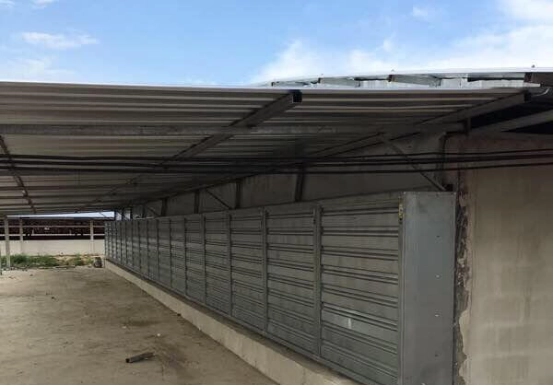
Poultry house ventilation is not just a matter of switching on more fans. The aim is to move air through the bird zone while controlling heat and moisture. In a hot climate, a house can remain stressful for birds even when exhaust fans run at full speed. Poor airflow distribution can leave stagnant areas and creates drafts elsewhere.
Fresh air should reach the birds. Hot and humid air should leave. At the same time, the system should use energy efficiently.
How Poor Ventilation Affects Poultry Health and Farm Performance
Heat stress changes bird behavior before production losses become obvious. Birds may pant, spread their wings or crowd near an opening. Feed intake can fall. Wet litter and ammonia follow when humidity is not removed.
Common Warning Signs
Walk through the house at bird level. Look for birds gathering in one section. Check whether the center feels warmer than the side walls. A strong ammonia odor near the litter may indicate insufficient air exchange. Condensation can also indicate excessive moisture or poor ventilation.
Why Heat Stress Requires an Airflow Strategy
Birds lose heat through air movement and evaporation. High humidity reduces the effectiveness of both processes. A fan can show impressive outlet airflow yet do little for birds behind a feeder line or in a dead corner.
Air needs a planned path: controlled inlets, movement across the house and exhaust. Cooling equipment cannot compensate for poor airflow distribution.
Assess Your Existing Poultry House Ventilation System
An equipment upgrade should start with the building, not a product catalogue.
Check the Main Design Factors
Record house dimensions, bird age, stocking density and production stage. A broiler house at peak density has different needs from a young-bird house. Review local temperature and humidity. Inspect fan locations, inlets, doors, curtains and roof joints. Air leaks reduce effective fan capacity.
Measure More Than Temperature
Use readings at bird level near the inlet, center and exhaust end. Check air movement around feeders and drinkers. An anemometer can help identify low-airflow areas, while ammonia measurements can indicate inadequate air exchange.
Five Principles for Better Poultry House Airflow
The principles are simple. Applying them consistently is the engineering work.
1. Create Consistent Air Exchange
Exhaust fans must remove stale air at a rate suited to house volume and bird population. Insufficient air exchange allows heat and moisture to build up. Too much during mild weather wastes energy and creates drafts.
2. Use Negative Pressure Correctly
Negative-pressure ventilation draws fresh air through designed inlets. The inlets should direct air into the house instead of dropping onto birds. Cracks around doors or panels disrupt the path.
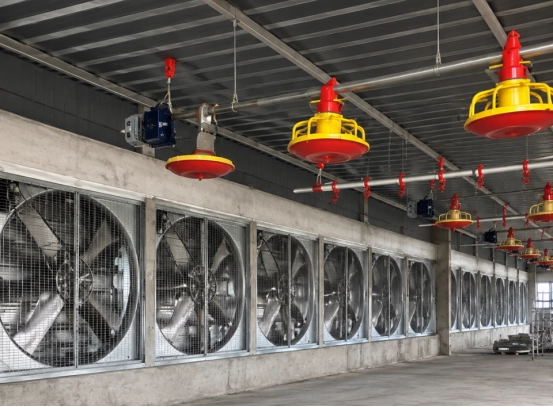
3. Distribute Air Evenly
Air should travel across the bird zone. Fan placement, inlet direction and building sealing all affect the airflow pattern. Circulation fans can smooth temperature differences, but should support the exhaust design instead of compensate for design problems.
4. Adapt Airflow to Bird Age
Young birds need fresh air without excessive drafts. Older birds need stronger movement as body heat increases. Ventilation settings should be adjusted according to bird age and weather conditions.
5. Combine Ventilation with Cooling
Fans remove heat and moisture. Evaporative cooling can reduce incoming-air temperature when humidity and water quality suit it. In very humid periods, extra water may bring little benefit. Mechanical cooling can suit enclosed rooms.
Choosing the Right Equipment for a Poultry House
Once the airflow pattern is understood, equipment selection becomes more precise. A poultry ventilation system may include several fan types.
Industrial Exhaust Fans for Heat and Moisture Removal
Wall-mounted and cone-style exhaust fans are commonly used for high-volume exchange. Check airflow under static pressure, louver performance and cleaning access. Motor rating alone does not predict performance after dust builds up. DAIHO Ventilation’s heavy-duty agricultural fans are designed for demanding poultry-house conditions; sizing still depends on the building and ventilation requirements.
Circulation and HVLS Fans
Circulation or HVLS fans reduce hot spots in wide buildings. Location matters: a poorly aimed fan can push air along the ceiling while leaving the bird zone still.
Evaporative Cooling Systems and Cooling Pads
Evaporative cooling uses water evaporation to remove heat from incoming air. It often works well in hot, relatively dry conditions and can support tunnel ventilation. Pad cleanliness, water distribution and drainage need attention.
Review evaporative cooling systems alongside exhaust-fan capacity. Pads cannot compensate for inadequate air movement.
Air Conditioners and Dehumidification Equipment
Air conditioners may suit control rooms, hatchery areas or enclosed zones. Dehumidification helps when humidity remains high after ventilation improvements. DAIHO Ventilation provides humidity control equipment for these applications.
A Practical Hot-Weather Ventilation Strategy
Hot-weather operation should be staged. Use lower ventilation in mild conditions and increase fan operation as heat and humidity rise. During the hottest hours, higher air speed can provide relief even when measured temperature changes little.
Use Staged Ventilation
Set operating steps for different temperature ranges. Inspect belts, shutters, motors and pads before hot season. Keep paths clear. Have a power-failure response plan and backup power where the risk justifies it.
Prepare for Hot and Humid Conditions
Check pad water quality and wetting. Watch humidity as closely as temperature. A wet house with high humidity may need more air exchange rather than more water, a common challenge in coastal and monsoon climates.
How Better Ventilation Can Improve Energy Efficiency
Energy efficiency starts with correct system sizing. A fan chosen only by motor power may deliver poor airflow under static pressure. Sealing leaks, cleaning blades and maintaining louvers can restore capacity without another unit.
Staged operation or variable-speed control reduces runtime in mild conditions. Compare energy use with temperature and humidity records. A lower bill is not useful if bird comfort deteriorates. An experienced supplier can match fans, cooling and humidity control to the building.
Poultry Ventilation Maintenance Checklist
- Inspect motors, belts, blades and louvers.
- Remove dust and feathers from fan assemblies.
- Clean cooling pads and check water distribution.
- Test air inlets and negative-pressure performance.
- Check for corrosion, vibration and abnormal noise.
- Calibrate temperature and humidity sensors.
- Record seasonal airflow and energy-use changes.
- Schedule preventive maintenance before peak summer production.
When to Work with a Poultry Ventilation Supplier
Professional input is worthwhile when temperatures remain uneven after adjustments, heat stress continues despite higher airflow or a building is being expanded. It is also useful when ventilation, cooling and humidity control must work as one system.
DAIHO Ventilation combines equipment manufacturing with system integration for industrial and agricultural applications. Its project references include chicken house ventilation in Bangkok. Start with a house layout, climate profile and operating target, not a generic package.
Frequently Asked Questions
Q: What is the best ventilation system for a poultry house?
There is no universal package. House size, bird density, climate and building design determine the suitable combination of exhaust fans, controlled inlets and cooling equipment.
Q: Can exhaust fans reduce heat stress in chickens?
They remove hot and stale air and increase air movement. During extreme heat, evaporative cooling or another supplementary method may be needed.
Q: How often should poultry ventilation equipment be maintained?
Inspect and clean equipment regularly. Dusty houses require more frequent checks.
Conclusion
Effective poultry-house ventilation depends on balanced airflow, heat removal and humidity management. If the current system leaves hot spots or wastes energy, request a poultry ventilation assessment from DAIHO Ventilation. Share the house layout, climate and production requirements so the equipment can be sized for the actual job.
 English
  Russian
  Arabic
  Spanish
  French
  Italian