

Tunnel Ventilation for Poultry Houses Fan, Pad, and Airflow Basics
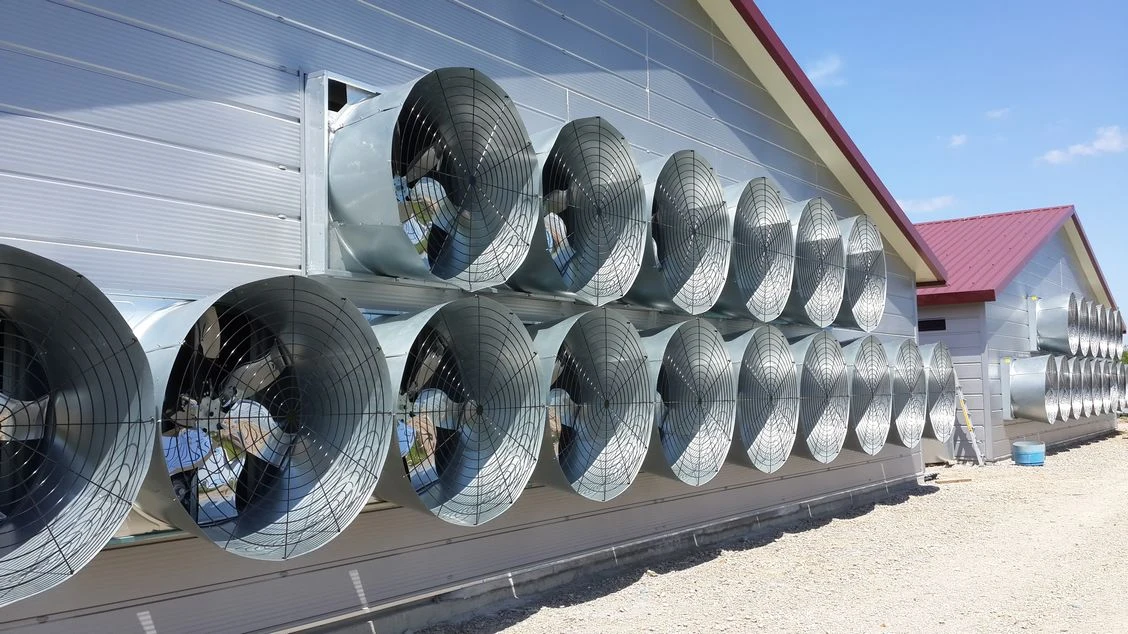
By pushing fast-moving air down the length of the house, it acts like a cool breeze. This airflow helps birds release body heat more effectively. It is a great way to stop heat stress, which is a major reason why performance drops in the summer. Good ventilation also helps the whole flock grow at the same rate and keeps more birds alive. Many farmers achieve better production results after improving tunnel ventilation systems.
Key Components of a Tunnel Ventilation System
A standard tunnel setup uses a few main parts: exhaust fans, evaporative cooling pads, air inlets, and control units. Each one is vital for keeping the right temperature without wasting power.
Exhaust Fans: These create negative pressure to pull fresh air into the house.
Cooling Pads: These use water evaporation to chill the air coming in.
Air Inlets: These control how air enters so there are no harsh drafts.
Control Units: These run the fan speed and water flow automatically.
When these parts work together, they form a cooling system that saves energy. It can change with the weather while keeping the birds safe and productive.
The Role of Exhaust Fans in Tunnel Ventilation
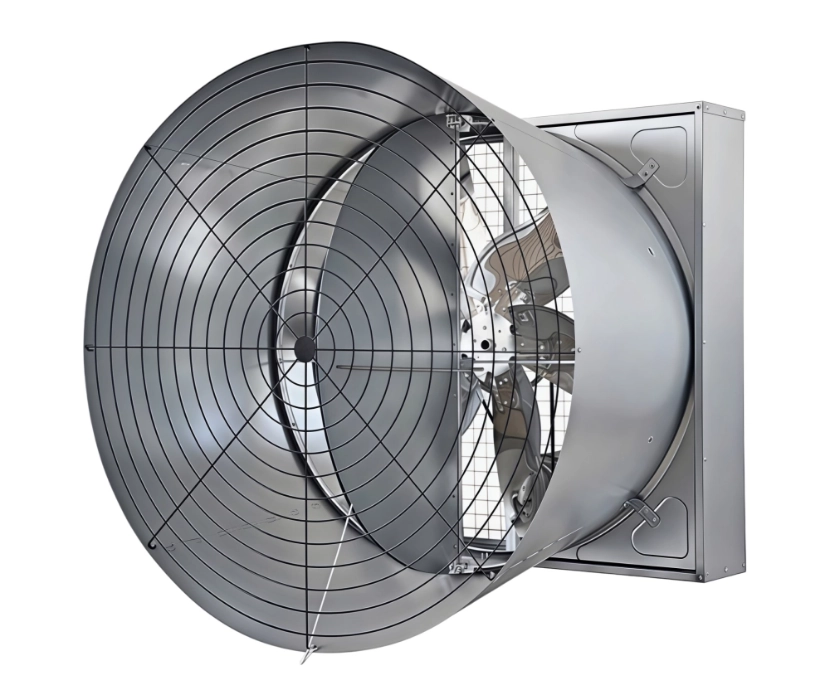
Exhaust fans are the core of the ventilation system. If they are not the right size or in the right spot, the house will have hot spots or areas where air does not move at all.
How Exhaust Fans Drive Airflow
Exhaust fans build negative pressure inside the house. This force pulls in cool air from the outside through the pads. The incoming air moves toward the exhaust fans, it picks up heat from the birds and the room. The exhaust fans then discharge the warm air outside the building.
Selecting the Right Fan for Poultry Houses
Picking a fan is about more than just motor power. Several factors should be considered during selection:
Airflow capacity (CFM): This tells you how much air the fan moves every minute.
Energy efficiency: Good axial or cone fans move a lot of air but use less power.
Noise level: Quiet fans keep the birds calm and reduce stress.
Durability: Parts that resist rust last much longer in damp farm air.
Regular cleaning is also necessary. A clean system saves money on bills and keeps the climate steady when birds are growing fast.
| Factor | Typical Range | Impact on Performance |
| Airflow Capacity (CFM) | 20,000–40,000 | Sets the total air swap rate |
| Fan Efficiency (%) | 70–85 | Lowers electricity bills |
| Noise Level (dB) | 60–75 | Helps with bird comfort |
| Maintenance Interval | Every 2–3 months | Keeps the flow steady |
Cooling Pads: Enhancing Temperature Control Through Evaporative Cooling
Fans pull the air out, but cooling pads fix the air before it gets in. Both systems operate together to support effective tunnel ventilation.
The Function of Cooling Pads in Tunnel Systems
Cooling pads operate through the principle of evaporative cooling. Water runs over the pads while hot air passes through. As the water turns to vapor, it takes heat out of the air. The process lowers air temperature before it reaches the birds.
This method gives you cold air without needing expensive air conditioning systems. The system performs well in high-temperature conditions. Even when it is 35°C (95°F) outside, the inside of the house can stay quite comfortable for the flock.
Choosing and Maintaining Cooling Pads for Efficiency
To get the best results, you must look at the design and the upkeep:
Pad Thickness & Material Quality: Thicker cellulose pads usually provide better cooling performance.
Water Distribution System: Water must cover the whole pad. Dry spots reduce overall cooling efficiency.
Maintenance Practices: Regular cleaning prevents dirt and algae buildup. It also maintains proper airflow.
Automation: Smart pumps keep the pads wet without someone having to watch them all day.
Poor maintenance can block airflow through the cooling pads. This hurts the birds when the summer heat is at its worst.
Airflow Dynamics Inside Poultry Houses
After the fans and pads are set up, you have to watch how the air moves. This is the key to fine-tuning the house.
Understanding Air Movement Patterns
Smooth airflow makes sure the temperature is the same from one end to the other.Poor system layout can create localized hot spots. These areas can make birds sick or stressed. Engineers use CFD models to predict airflow patterns before construction begins. By fixing these issues early, the real-world results are much better.
Balancing Airspeed for Bird Comfort and Energy Efficiency
Airspeed is very important for both birds and costs. Small chicks need soft air, around 1–1.5 m/s. Larger birds can tolerate airflow speeds up to 3 m/s during hot weather. Excessive airflow can increase airborne dust. It may also cause cold stress in birds. If it is too slow, the heat stays trapped. Modern controls use sensors to find the right speed. This keeps the birds happy and saves on power costs.
Integrating Smart Control Systems for Optimal Performance
High-tech tools now help manage the environment better than ever. These systems reduce manual decision-making during daily farm operation.
Automation in Tunnel Ventilation Management
Modern barns use sensors to check heat, humidity, and even ammonia. The controllers look at this data and change the fan speed or water flow right away. They do not wait for a human to notice a change. This speed keeps the house steady and cuts down on mistakes. Large poultry farms benefit from more precise environmental control. This can improve feed conversion ratio (FCR) and reduce bird mortality.
Energy-Efficient Strategies for Sustainable Operation
Saving energy is a big part of modern farming. Variable frequency drives (VFDs) change motor speeds to match what the birds need. The motors do not operate at full speed continuously. Using natural air when the weather is mild saves a lot of money on bills.
High-quality parts meet new welfare rules and help the farm last for years. These strategies reduce operating expenses. They also support environmental sustainability. This is becoming more important for buyers and the industry today.
How DAIHO Ventilation Supports Advanced Poultry Climate Solutions
Effective poultry ventilation systems require reliable equipment. Farm ventilation equipment must withstand dust, moisture, and demanding operating conditions. DAIHO Ventilation develops high-performance fans, cooling pads, and intelligent control systems for agricultural applications. Our engineering team focuses on improving airflow efficiency while reducing energy consumption.
DAIHO Ventilation offers setups based on your house size and local weather. Technical support is provided from the initial design stage through final system operation. This support helps maintain long-term system performance and farm productivity.
DAIHO Ventilation provides climate solutions for both tropical and desert environments. These systems help protect flock health under different weather conditions. Customized ventilation plans support bird health and stable production performance over the long term.
FAQs
Q1: What is tunnel ventilation used for in poultry houses?
It manages heat and moisture by pulling fast air through the barn using fans and wet pads.
Q2: How often should exhaust fans be maintained?
Check them every two to three months. Keeping them clean prevents big problems when the weather gets hot.
Q3: What determines effective evaporative cooling pad performance?
The thickness of the pad, how well water spreads, and how clean you keep it all matter.
Q4: Why is uniform airflow important inside poultry houses?
It stops hot spots from forming. This keeps every bird in the house comfortable and healthy.
Q5: Can automation really reduce energy costs?
Yes. Smart systems and VFDs only use the power needed at that moment, which lowers your monthly bills.
 English
  Russian
  Arabic
  Spanish
  French
  Italian