

Best Cooling Solutions for Poultry Farms in Hot Weather
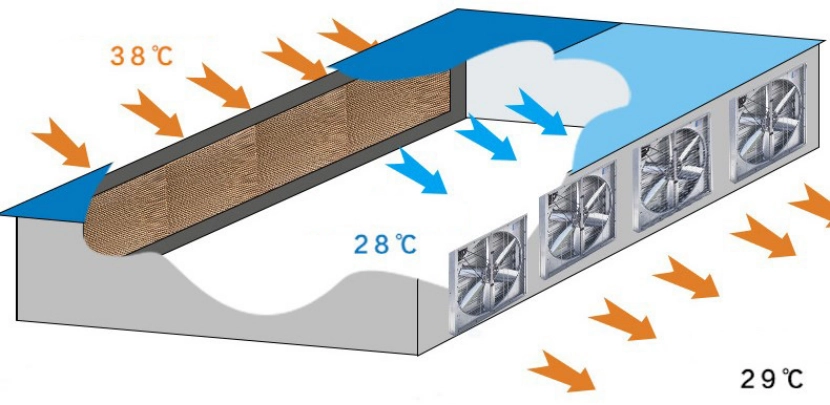
Hot summers in India place significant stress on poultry and dairy farms. High temperatures put animals under stress. This stress reduces productivity and negatively impacts profitability. However, effective solutions are available. Adiabatic cooling systems give farmers a smart and energy saving way to keep conditions inside barns and sheds just right.
What Is Adiabatic Cooling?
Adiabatic cooling is a natural way to cool the air by letting water evaporate. Warm and dry air moves over a wet surface. Some water turns into vapor and takes heat away from the air. This makes the temperature drop. The principle is straightforward. It relies on basic physical principles and does not require refrigerants or complex compressors.
Which Liquid Works Best for Evaporative Cooling?
Water remains the most effective medium for evaporative cooling. It can soak up a lot of heat before it changes into vapor. Other liquids may evaporate at different rates but are generally less efficient.
Why Water Beats Everything Else
Water molecules grab heat energy and turn from liquid into vapor. This change pulls heat out of the surrounding air and creates a cooling effect. The drier the air is, the better this process works. So these systems shine in hot and dry places.
Water Quality Matters
Hard water has minerals like calcium and magnesium. These can build up scale on cooler pads and block airflow.
Treated water helps stop scaling and bacteria. But you still need to handle it carefully so no bad chemicals stay behind.
Recycled water can be a good green choice if you filter it well to remove stuff that might clog pads or pumps.
Keeping the water clean helps the equipment last longer and keeps cooling steady all season long.
What Are Evaporative Cooler Pads Made Of?
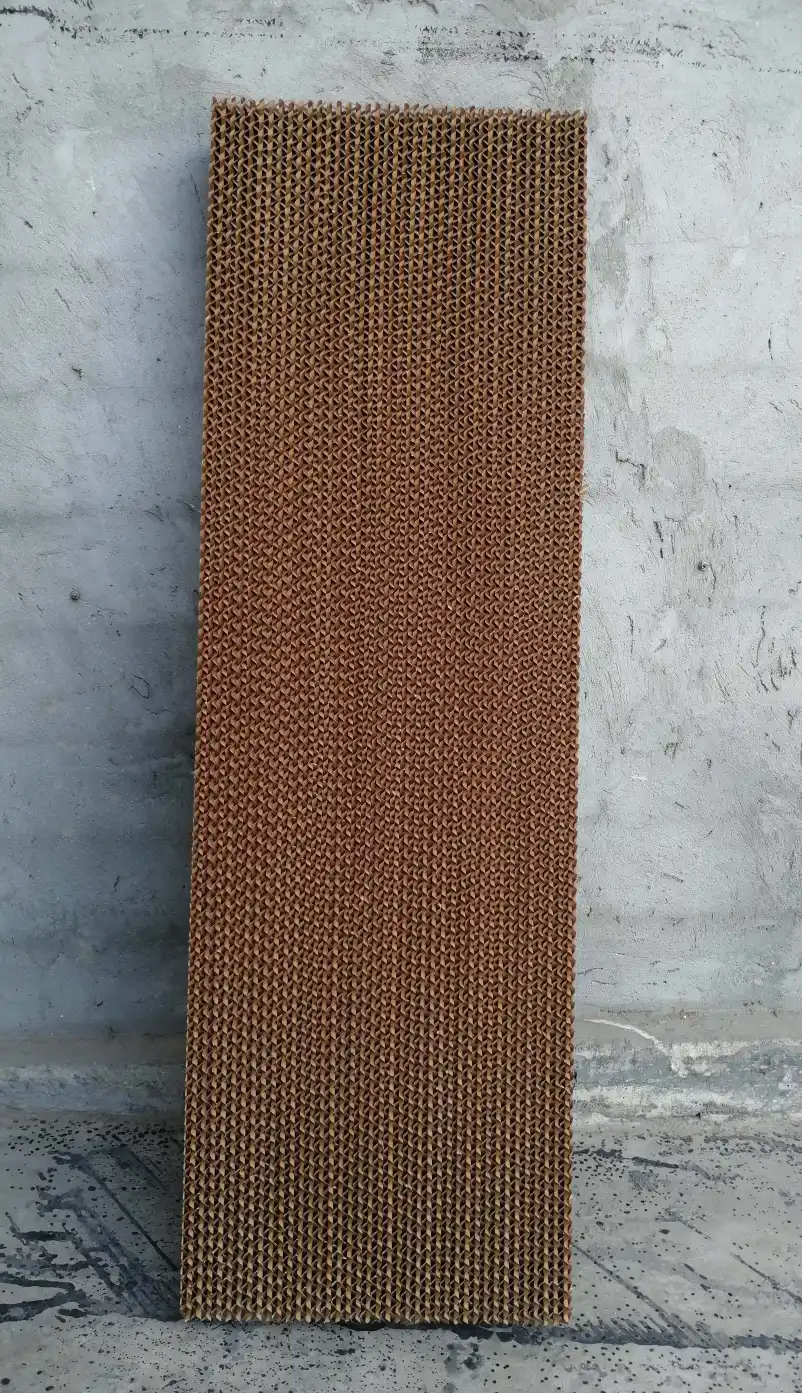
Evaporative cooler pads usually come from good cellulose material. This material gives plenty of surface for water to evaporate while letting air flow smoothly. The pads work like both a filter and a heat exchanger. Hot and dusty air goes in. Cool and cleaner air comes out.
The Evolution of Pad Materials
Earlier systems used materials such as aspen wood shavings or straw. These materials were inexpensive but had a short lifespan and required frequent replacement. Today most pads use special treated cellulose paper. It lasts much longer, holds moisture better, and fights mold growth.
The 5090 and 7090 Standards
Two common standards shape how these pads look:
5090 Pads: They have 45°/45° flute angles and give medium saturation efficiency.
7090 Pads: They use 45°/15° flutes. These offer higher cooling efficiency but create a bit more resistance to airflow.
Which one you pick depends on your local climate and how your ventilation is set up. In places with higher humidity, 5090 pads often work better because they balance airflow nicely.
The Anti-Rot Treatment
Manufacturers add anti-rot salts to the pads. These stop microbes from breaking them down. They also put in rigidifying agents so the pads stay strong and do not sag when they stay wet all the time. Wettability agents make sure water spreads evenly across the surface. That gives steady cooling every day.
How to Make Evaporative Cooling Work Best?
Any good adiabatic system needs three important things: strong pad performance, even water distribution, and proper installation.
Pad Thickness and Air Speed
How thick the pad is decides how long the air touches the water:
| Pad Thickness | Typical Use Case | Cooling Efficiency |
| 4-inch | Light-duty ventilation | Moderate |
| 6-inch | Standard poultry houses | High |
| 8-inch | Industrial scale dairies | Very High |
Thicker pads let more evaporation happen. But they also need stronger fans to push air through. So you have to find the right balance when planning your system.
Water Distribution System
A smart distribution setup makes sure every part of the pad gets wet evenly.
Distribution pipes should send water steadily without leaving dry patches.
The flow rate needs to match the pad size. Too little leaves spots dry. Too much just wastes water.
The pump has to be tough enough to run for long hours in peak summer without breaking down or making noise.
Check the system often. This stops blockages from minerals or algae in the pipes.
Evaporative Cooler Installation
The installation angle of the pads can influence overall system performance. Most people set them with a slight tilt, around 15 degrees. This helps water drain better and stops wet areas where bacteria could grow. Wind direction should also be considered during system design. Pointing the intake toward the natural wind can improve things without needing extra fan power.
How Do Evaporative Cooling Pads Work?
Knowing how the system actually runs helps you use it better in different weather.
The Step-by-Step Process
Step 1: Air Intake – Fans draw warm external air into the system.
Step 2: Air Enters the Pad – It moves through the wet cellulose channels and some water evaporates.
Step 3: Heat Exchange – Heat from the air moves into the water vapor.
Step 4: Cool Air Emerges – The cooled air goes into the barn or shed while extra water drains away so it can be used again.
This loop keeps running and makes the inside several degrees cooler than outside. It does this without using as much electricity as those old compressor systems.
The Role of Climate
Adiabatic cooling works great in dry areas where humidity stays under 60%. In those conditions the temperature can drop 10–15°C depending on how you build the system. In humid places evaporation slows down because the air already holds a lot of moisture. Still, you can get some relief if you manage airflow well.
Conclusion
DAIHO Ventilation has been leading the way in making strong industrial ventilation and energy saving cooling gear for tough farm conditions. Their fans and durable evaporative pads help improve air flow, control temperature, and keep the environment better in poultry houses and dairy farms. For farms fighting those long hot summers, putting money into a well planned adiabatic cooling setup is not just about making animals comfortable. It is about protecting your output and profits season after season.
FAQs
Q1: What maintenance do evaporative coolers require?
Regular cleaning of pads and filters plus checking the pump keeps everything running well through the hot months.
Q2: Can adiabatic cooling work in humid areas?
Yes, though it becomes less efficient when humidity goes up. Extra ventilation can still help keep things bearable.
Q3: How often should cooler pads be replaced?
Usually every 3-6 years. It depends on your water quality and how hard you use them.
Q4: Is treated water necessary for these systems?
Not always. But softened or treated water cuts down scaling problems a lot over time.
Q5: What’s the difference between direct and indirect adiabatic cooling?
Direct systems add moisture straight into the air you send inside. Indirect ones use a heat exchanger so the cooled air stays drier while still getting the cooling benefit.
 English
  Russian
  Arabic
  Spanish
  French
  Italian