

Comment dimensionner un ventilateur d'extraction de toiture pour les bâtiments industriels : débit d'air, pression et nombre de ventilateurs
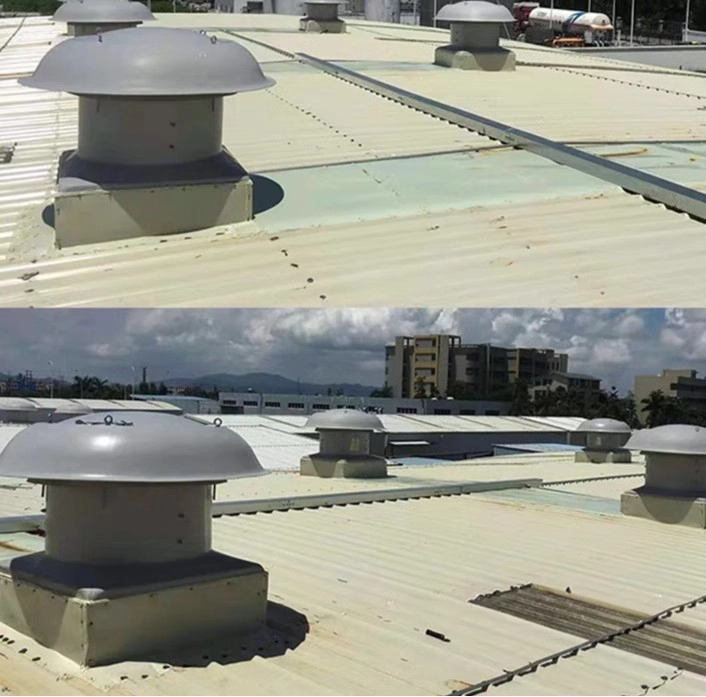
L'importance stratégique de la ventilation des toitures dans les installations industrielles
La chaleur monte naturellement à l'intérieur des bâtiments industriels, ce qui rend les systèmes installés en toiture très efficaces pour évacuer la chaleur accumulée. Dans toute grande usine de fabrication, la chaleur migre naturellement vers le haut par convection. Si cette énergie n'est pas évacuée au point le plus haut, elle s'accumule rapidement, créant un environnement insoutenable pour toute personne se trouvant sur la mezzanine ou dans l'atelier.
Une ventilation adéquate empêche l'accumulation d'air stagnant, d'humidité et de particules dangereuses. Sans une voie d'évacuation dégagée, l'humidité issue des procédés industriels peut se condenser sur les charpentes métalliques froides, provoquant de la rouille et potentiellement des moisissures. Un renouvellement d'air efficace influe directement sur la durabilité des structures et la productivité des employés. Un atelier surchauffé est non seulement inconfortable, mais représente également un risque pour la productivité, réduisant les performances cognitives et augmentant le taux d'erreurs.
Quand faut-il privilégier les ventilateurs d'extraction de toit aux ventilateurs muraux ? Alternatives montées ?
Choisir entre un ventilateur d'extraction de toit et une unité murale dépendent principalement de la taille du bâtiment et de son agencement intérieur.
Évaluation de la géométrie des bâtiments et des obstructions
Les ventilateurs muraux créent souvent des « zones mortes » au centre des bâtiments industriels de grande portée. Si le bâtiment mesure 100 mètres de large, un ventilateur mural peut aspirer l'air sur les 20 mètres les plus proches, laissant le centre comme une zone chaude et stagnante. Ventilateurs d'échappement de toit Fournir un point d'extraction centralisé, assurant un flux d'air plus uniforme sur de grandes surfaces.
En aspirant l'air verticalement depuis le centre de la pièce, on minimise l'effet de « court-circuit » — où l'air entre par une fenêtre et est immédiatement expulsé par un ventilateur voisin. L'espace disponible le long des murs périphériques peut être limité par des rayonnages, des machines ou des bâtiments adjacents, faisant du toit la seule issue possible. Dans de nombreuses zones industrielles urbaines, les bâtiments sont si proches les uns des autres que l'évacuation latérale ne ferait que souffler de l'air chaud dans l'entrée d'air du bâtiment voisin.
Détermination du débit d'air requis : les bases du calcul
Un bon réglage du flux d'air fait toute la différence entre un système fonctionnel et une installation inefficace.
Méthode de renouvellement d'air vs. analyse de la charge thermique
Le calcul du volume total du bâtiment, basé sur les normes du secteur, permet de déterminer le taux de renouvellement d'air nécessaire par heure (TRA). Pour un entrepôt standard, 6 à 8 renouvellements d'air peuvent suffire.
Cependant, dans un atelier de soudage intensif, ce nombre pourrait grimper à 20 ou 30. L'ajustement des débits en présence de sources de chaleur à haute densité ou de machines spécialisées est indispensable.
Si une chaudière est installée au centre d'un étage, la méthode de renouvellement d'air (ACH) seule ne suffira pas, car elle ne tient pas compte de la puissance calorifique locale. Pour prendre en compte l'élimination de polluants spécifiques, de fumée ou d'un taux d'humidité excessif, il est nécessaire de calculer le débit d'air (en pieds cubes par minute, CFM) requis pour maintenir les concentrations de contaminants en dessous des limites d'exposition admissibles (LEA).
Prise en compte de la pression statique et de la résistance du système
La puissance nominale d'un ventilateur indiquée dans son catalogue à « pression statique nulle » ne reflète pas ses conditions de fonctionnement réelles. L'évaluation de la résistance créée par les supports de toiture, les registres et les grilles anti-oiseaux est la première étape du calcul du point de fonctionnement réel. À chaque passage d'air à travers une grille ou un tamis, une perte de pression se produit. Il est donc essentiel, notamment pour les bâtiments à plusieurs étages ou les salles blanches, de comprendre comment les conduits internes ou la filtration spécialisée contribuent aux exigences de pression totale.
L'importance de la disponibilité de l'air d'admission sur la capacité du ventilateur à surmonter la dépression est capitale. Si le bâtiment est étanche et que les grilles d'admission d'air sont insuffisantes, le toit ventilateur d'échappement peut fonctionner, mais fournir un débit d'air minimal en raison d'une pression négative excessive.
Pourquoi les ventilateurs de toit à flux axial excellent dans les hautes températures Volume, faible Scénarios de pression
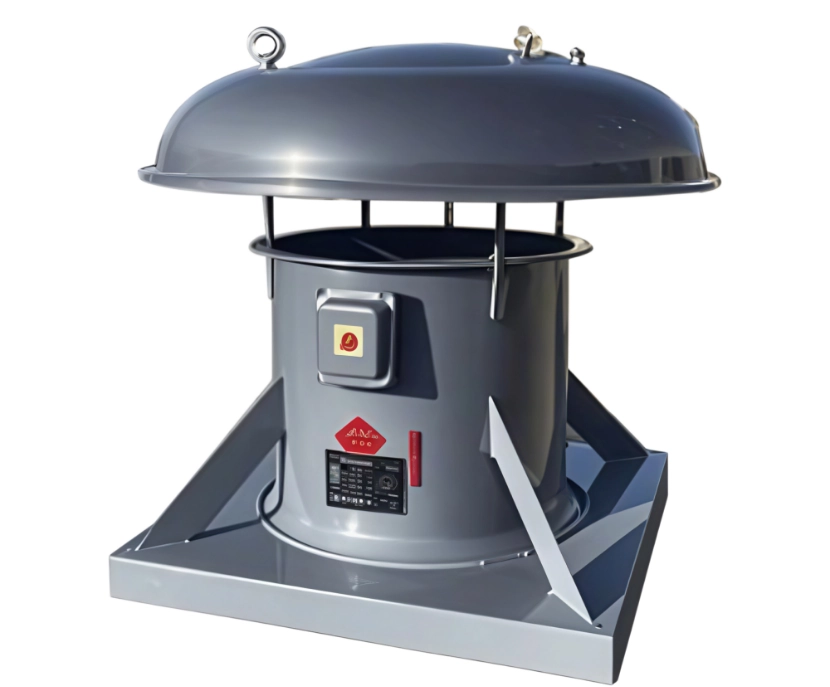
Pour la plupart des systèmes de ventilation industrielle générale, ventilateurs axiaux Les ventilateurs axiaux sont la solution la plus couramment utilisée. Ils déplacent efficacement de grands volumes d'air lorsque la résistance reste relativement faible. Fonctionnant comme une hélice, ils propulsent l'air directement à travers le boîtier dans une direction axiale.
Le flux d'air vertical profilé contribue à évacuer l'air extrait loin de l'enveloppe du bâtiment, empêchant ainsi la réaspiration d'air chaud par les prises d'air. Son poids structurel réduit par rapport aux unités centrifuges simplifie l'installation sur différents types de toitures. Un renforcement structurel aussi important n'est pas nécessaire pour une unité axiale que pour un ventilateur centrifuge lourd de même capacité.
Paramètres techniques critiques pour une sélection éclairée
Choisir un ventilateur nécessite de considérer l'intersection de la physique et de l'économie.
Au-delà du volume d'air : pression totale et efficacité énergétique
L'adaptation de la courbe de performance du ventilateur à la résistance du système calculée, afin d'éviter le calage ou les pertes d'efficacité, est essentielle au choix d'un ventilateur. Si la pression est trop élevée pour un ventilateur axial, celui-ci entre dans une zone de calage où le bruit augmente et le débit d'air chute brutalement. L'étape suivante consiste à trouver un équilibre entre la puissance du moteur et la vitesse de rotation pour optimiser la consommation d'énergie. Parfois, un ventilateur plus grand tournant à un régime plus bas est plus efficace et a une durée de vie plus longue qu'un petit ventilateur fonctionnant à plein régime.
Gestion des niveaux de bruit et de la durabilité des matériaux
Les niveaux sonores doivent respecter les réglementations locales d'urbanisme et de sécurité, mais cette obligation est souvent négligée jusqu'à ce que des plaintes surviennent. Il est essentiel d'évaluer la résistance de l'acier au carbone ou des revêtements spéciaux aux émanations corrosives et aux intempéries extrêmes pour garantir leur durabilité. En zone côtière, une finition galvanisée standard peut durer trois ans ; un revêtement époxy de haute qualité ou de l'acier inoxydable peuvent durer vingt ans.
Adapter la sélection aux environnements industriels spécifiques
Chaque secteur d'activité est confronté à des défis environnementaux différents, tels que la chaleur, la poussière ou l'humidité.
- Entreposage et logistique :Il est essentiel de privilégier un renouvellement d'air important afin de limiter l'apport de chaleur solaire par le toit. L'objectif est simplement d'empêcher la couche de chaleur de descendre jusqu'au niveau du sol.
- Usines de transformation des aliments :L'accent est mis sur la maîtrise de l'humidité et l'utilisation de composants en acier inoxydable ou revêtus pour des raisons d'hygiène. Les cycles de lavage et la vapeur impliquent que le ventilateur doit supporter une humidité de 100 % sans risque de court-circuit ni de corrosion.
- Ateliers de chimie et de métallurgie :Il s'agit de traiter les gaz d'échappement à haute température et d'éliminer les particules fines. Ces environnements nécessitent souvent des moteurs antidéflagrants ou des pales en résine haute température.
Optimisation de la configuration de votre système
L'emplacement est tout aussi important que le ventilateur lui-même. Un positionnement stratégique des unités, évitant les courts-circuits (l'air frais étant évacué avant d'être recirculé), garantit le traitement de l'intégralité du volume du bâtiment.
Une bonne coordination entre les ventilateurs d'extraction et les grilles d'admission d'air contribue à maintenir une pression équilibrée dans le bâtiment et prévient les problèmes tels que les sifflements de porte ou les difficultés d'ouverture. Pour les installations nécessitant des solutions à haute capacité et basse pression, Ventilateur de toit à flux axial en acier au carbone série par Ventilation DAIHO Ces unités offrent une qualité d'ingénierie éprouvée, adaptée aux cycles industriels les plus exigeants. Elles sont conçues pour résister aux vibrations et aux contraintes environnementales typiques des opérations de production fonctionnant 24 h/24 et 7 j/7.
FAQ (questions fréquentes)
Q : Comment savoir si j'ai suffisamment d'air à l'admission ?
Si, en ouvrant une porte piétonne, vous sentez un fort courant d'air ou entendez un sifflement aigu, votre bâtiment est soumis à une dépression excessive. Il vous faut davantage de grilles d'aération ou de ventilateurs d'insufflation pour compenser la capacité de votre extracteur de toiture.
Q : Puis-je utiliser un ventilateur d'extraction de toit pour l'extraction de fumée ?
Les ventilateurs standard ne sont pas conçus pour l'évacuation des fumées en cas d'incendie. Pour des raisons de sécurité incendie, il est impératif d'utiliser des ventilateurs certifiés pour l'évacuation des fumées à haute température, capables de fonctionner à 300 °C ou plus pendant une durée déterminée.
Q : À quelle fréquence faut-il entretenir les ventilateurs de toit ?
Dans un entrepôt propre, un contrôle annuel suffit. Dans un environnement très poussiéreux comme une scierie, des inspections mensuelles des lames et des courroies d'entraînement sont nécessaires pour prévenir les déséquilibres et les pannes de moteur.
 English
  Russian
  Arabic
  Spanish
  French
  Italian