

Ventilateurs d'extraction à entraînement direct ou à entraînement par courroie : quel système est le meilleur pour la ventilation industrielle ?
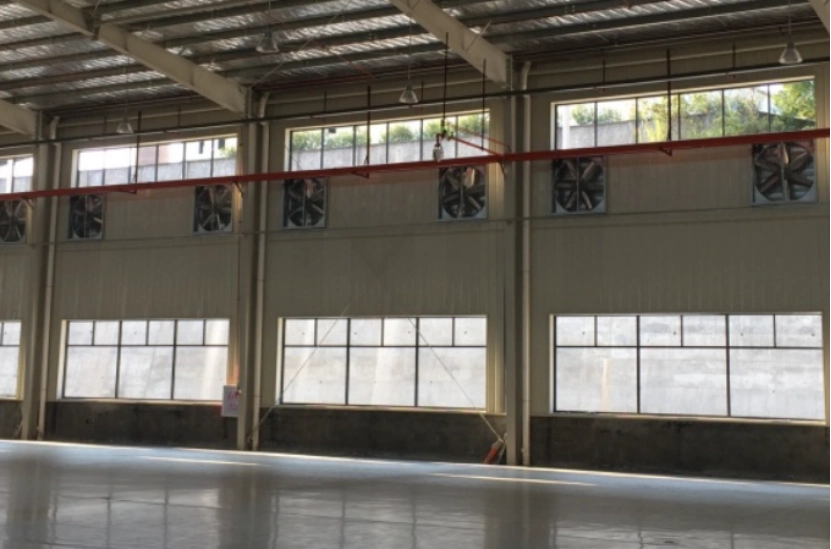
Choisir entre un ventilateur à entraînement direct et un ventilateur d'extraction à entraînement par courroie ne se résume pas au prix initial ; il s'agit aussi de savoir comment le système fonctionnera dans l'établissement au cours des dix prochaines années.
Comprendre les principales différences entre les systèmes à entraînement direct et à courroie
Ventilateurs à entraînement direct Le système d'entraînement par courroie relie directement l'arbre du moteur aux pales du ventilateur, minimisant ainsi les pertes d'énergie grâce à l'absence d'intermédiaire dans la transmission de puissance. À l'inverse, les systèmes d'entraînement par courroie utilisent un mécanisme de poulie et de courroie pour transmettre la puissance, permettant ainsi de régler la vitesse en changeant les poulies.
Bien que cette flexibilité soit attrayante, le choix entre ces deux options a un impact significatif sur les coûts de maintenance à long terme et la disponibilité opérationnelle. Les environnements industriels exigent des caractéristiques de couple et de débit d'air spécifiques qui déterminent le type d'entraînement. Dans la plupart des cas, la simplicité d'une connexion directe est privilégiée dans les installations modernes.
Les avantages mécaniques des ventilateurs d'extraction à entraînement direct
Le principe d'ingénierie est simple : moins de pièces signifie moins de problèmes. Dans le cas d'un ventilateur d'extraction à entraînement direct, l'absence de pont de transmission représente un gain d'efficacité majeur.
Gains d'efficacité sans perte de transmission
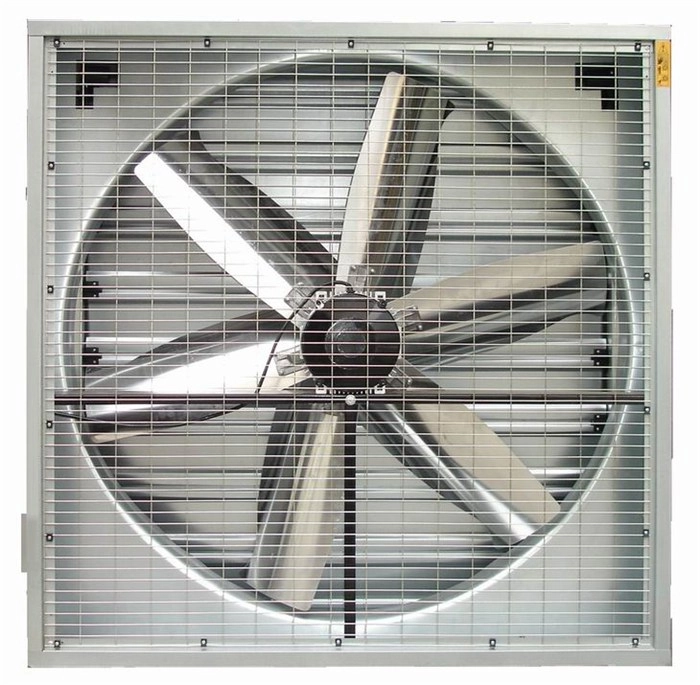
Le Ventilation DAIHOLes pales du ventilateur d'extraction sont entraînées directement par le moteur, éliminant ainsi le besoin d'une transmission par courroie et garantissant un fonctionnement écoénergétique et à haut rendement. L'absence de courroies et de poulies supprime les pertes d'énergie liées au frottement, inévitables lorsqu'une courroie se détend ou patine. La transmission directe de la puissance assure que la pleine puissance du moteur est utilisée pour la ventilation, plutôt que pour l'échauffement d'une courroie en caoutchouc. Une consommation d'énergie réduite se traduit directement par une diminution des coûts d'exploitation dans les grandes installations, un facteur essentiel pour le fonctionnement continu de dizaines d'unités.
Besoins de maintenance réduits
La maintenance des transmissions par courroie est un véritable casse-tête. Avec un ventilateur à entraînement direct, plus besoin de tendre, d'aligner ou de remplacer les courroies, ce qui réduit considérablement les coûts de main-d'œuvre. Moins de pièces mobiles signifient un risque moindre de panne mécanique en pleine activité. D'après notre expérience, la rupture d'une courroie en pleine canicule peut paralyser la production d'un atelier. Conçu pour la sécurité, la durabilité et une performance à long terme, ce système garantit un fonctionnement stable. Sa conception simplifiée facilite le nettoyage et l'inspection dans les environnements industriels poussiéreux où la poussière de courroie s'accumulerait et encrasserait les installations.
Pourquoi certaines installations optent-elles encore pour des ventilateurs à entraînement par courroie ?
Bien que les courroies soient de moins en moins utilisées, leur utilisation reste justifiée par des raisons traditionnelles. Les transmissions par courroie offrent une grande flexibilité de réglage du régime moteur grâce à un simple changement de poulie, ce qui est pratique si les besoins en ventilation sont susceptibles de varier fréquemment. Elles permettent d'isoler le moteur du flux d'air, une solution parfois privilégiée dans les environnements chauds ou corrosifs afin de le protéger de toute contamination. Le coût d'acquisition initial des unités à courroie est parfois inférieur, mais leurs coûts d'exploitation sont généralement plus élevés en raison du remplacement fréquent des courroies et des pertes d'énergie inhérentes au système.
Ingénierie pour la fiabilité : le rôle des matériaux et du boîtier
L'efficacité d'un ventilateur dépend de la qualité de son boîtier de protection. Si le moteur tombe en panne à cause de la poussière, le type d'entraînement importe peu.
Protection contre les éléments industriels agressifs
Le boîtier en aluminium moulé, certifié IP55, offre une excellente étanchéité à l'eau et à la poussière. Cette certification est essentielle car les environnements industriels sont rarement propres. Fabriqué avec une coque en acier inoxydable de 1,0 mm d'épaisseur et un châssis en fer, il garantit une résistance à la corrosion et une durabilité optimales. Son moteur à noyau de cuivre pur et à entraînement direct, sans courroie, améliore l'efficacité énergétique et les performances, tout en offrant une meilleure conductivité thermique et une durée de vie supérieure aux modèles à câblage aluminium.
Réduction du bruit et stabilité structurelle
Doté de roulements à billes importés de haute qualité et de serpentins renforcés, le système de ventilation DAIHO ventilateur d'extraction à entraînement direct Ce système garantit un fonctionnement stable et silencieux. L'entraînement direct élimine le crissement de la courroie souvent associé au démarrage et aux périodes de forte charge. Le rotor à grande vitesse assure un débit d'air important et un fonctionnement stable, sans les vibrations qui affectent les systèmes à courroie mal tendue. Les bobines renforcées et les rotors équilibrés avec précision contribuent à un environnement de travail stable et silencieux, un atout précieux pour les opérateurs.
Comment déterminer quel ventilateur convient le mieux à vos besoins de ventilation ?
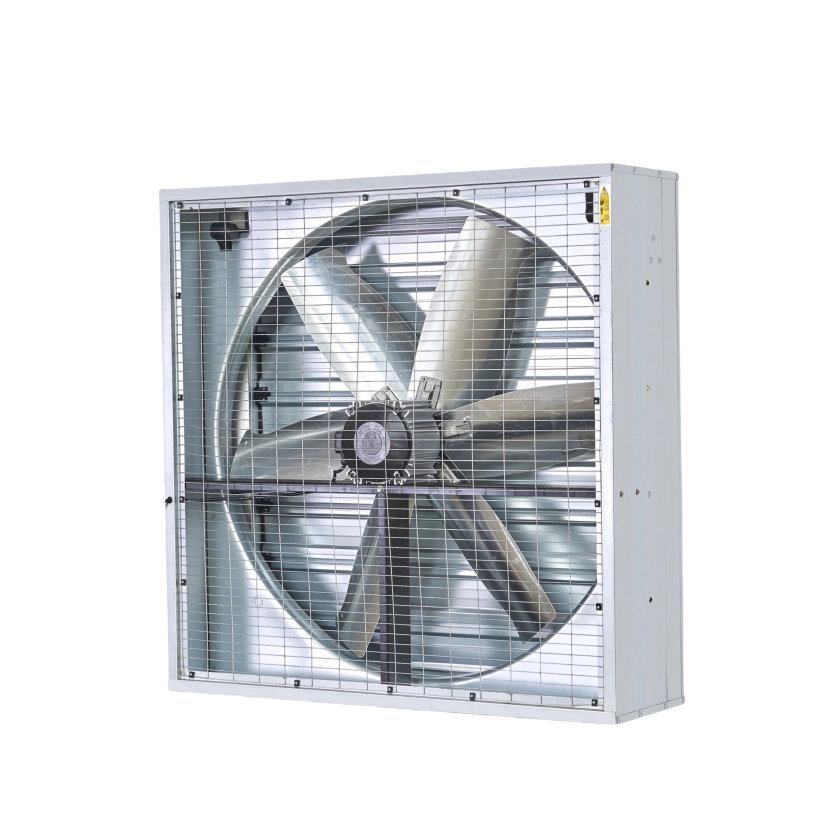
Vous devez évaluer les paramètres techniques. Déterminez le débit d'air requis (en pieds cubes par minute) et la pression statique de votre espace. Par exemple, un DH-1380D (54") il possède une puissance nominale de 1,1 kW / 1,5 CV et fournit un volume d'air de 44 500 m³/h.
Tenez compte du coût des temps d'arrêt ; les ventilateurs à entraînement direct offrent généralement une fiabilité supérieure pour la ventilation des applications critiques.
Évaluer les conditions environnementales, telles que la présence de débris en suspension dans l'air susceptibles de dégrader les performances de la courroie.
De plus, la tension et la fréquence peuvent être personnalisées pour répondre aux différentes exigences régionales ; il convient donc de vérifier la compatibilité de la tension et de la fréquence, notamment pour les installations internationales.
Amélioration de la dynamique des flux d'air grâce à une conception de pale avancée
Le flux d'air ne dépend pas uniquement du moteur, mais aussi de l'aérodynamisme des pales. Les pales de ventilateur en forme de U, embouties en une seule pièce et fabriquées en aluminium aéronautique léger, offrent un flux d'air puissant et sont plus performantes que les pales en acier lourd. Ces pales en aluminium de qualité aéronautique réduisent la charge sur le moteur tout en maximisant le déplacement d'air. La géométrie en U des pales, obtenue par un emboutissage de précision, optimise l'angle d'attaque de l'air. De plus, les volets en acier inoxydable, dotés d'un grand angle d'ouverture pour une ventilation optimale et une résistance à la pluie, doivent fonctionner de concert avec le système d'entraînement afin d'éviter les refoulements.
Les ventilateurs à entraînement direct représentent-ils l'avenir du refroidissement industriel ?
L'évolution vers une production plus écologique fait des systèmes à entraînement direct écoénergétiques le choix privilégié pour les nouvelles installations. Ils offrent une dissipation thermique efficace et une protection intégrée contre les surcharges pour une sécurité accrue. L'intégration de la protection contre les surcharges et des capteurs intelligents est simplifiée dans les configurations à couplage direct. L'analyse du retour sur investissement à long terme met systématiquement en avant la durabilité et la faible intervention requise par la technologie d'entraînement direct. Ces unités sont désormais la norme dans les usines, les ateliers et les sites de production, ainsi que dans les exploitations agricoles et les élevages.
FAQ (questions fréquentes)
Q : Puis-je modifier la vitesse d'un ventilateur d'extraction à entraînement direct ?
A: Bien qu'il soit impossible de modifier la vitesse du moteur en changeant les poulies comme pour une transmission par courroie, il est souvent possible d'utiliser un variateur de fréquence (VFD) pour ajuster électroniquement la vitesse du moteur, à condition que celui-ci soit compatible.
Q : Les ventilateurs à entraînement direct sont-ils plus bruyants que les ventilateurs à entraînement par courroie ?
R : Généralement, non. Bien que le moteur puisse tourner à un régime plus élevé, le bruit mécanique de la courroie et des poulies est éliminé. Des roulements de haute qualité, comme ceux des unités de ventilation DAIHO, assurent un fonctionnement silencieux.
Q : Les frais de maintenance sont-ils vraiment nuls ?
A : Pas zéro, mais presque. Il faut tout de même nettoyer les lames et vérifier que le système d'obturation robuste n'est pas obstrué, mais la liaison moteur-lames ne nécessite aucun entretien.
Q : Que se passe-t-il si le moteur tombe en panne ?
A : Comme il s'agit d'une connexion directe, vous remplacez ou réparez le moteur. Cependant, grâce à la protection intégrée contre les surcharges, le risque de panne totale est considérablement réduit par rapport aux modèles plus anciens.
 English
  Russian
  Arabic
  Spanish
  French
  Italian