

How to Reduce Workshop Cooling Costs Without Central Air Conditioning
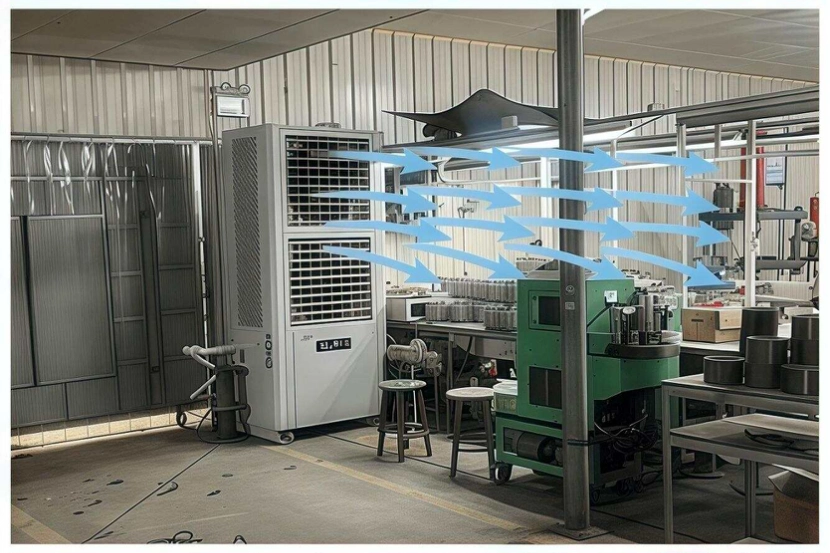
Keeping a workshop cool without central air conditioning is one of the most common challenges for factories and plants. Machinery spits out heat, air barely moves, and vast open spaces make things worse. These conditions increase energy consumption and reduce workplace comfort. You can slash those cooling costs best by blending clever airflow setups with spot-on coolers like heavy-duty AC units and water-based chillers. These tools adjust to changing cooling demands inside your space.
The Nature of Heat Accumulation in Industrial Workshops
Machinery, lighting systems, and people crank out plenty of internal warmth in factories. Bad airflow locks it in. Sun beating down on roofs and walls adds even more heat. When air sits still, simple fans just shuffle the hot stuff around. As a result, heat accumulation continues inside the workshop.
Steamy conditions hurt more than comfort. They drag down output speeds. Delicate gear might overheat or break. Staff tire out quicker. This can reduce operational efficiency and increase workplace safety risks. Fresh air from outside seldom handles the steady heat rush in large industrial workshops. Heat keeps pouring in all day long.
Why Traditional Central Air Conditioning Is Not Always Feasible
Setting up a full central AC in a factory costs a bundle upfront and keeps draining your wallet. Wide-open floors challenge these setups to maintain uniform temperatures. Plus, they battle nonstop against heat from ovens or pumps. As a result, overall energy consumption can become extremely high.
System maintenance and repairs can also become a major challenge. If the main system breaks, your whole production line might halt. Repairs could take time, and for tight deadlines, that hits hard financially. As a result, many facility operators choose more flexible localized cooling solutions. These prove simpler to manage and fix.
Evaluating Energy-Saving Cooling Solutions
You don’t have to skimp on ease to trim cooling bills. Smart gear that chills just the right spots does the trick.
Industrial Energy-Saving Air Conditioner
DAIHO Ventilation products are designed for spacious areas and provide powerful cooling capabilities. Product performance is reflected in daily cooling comfort. These machines mix top-notch efficiency with straightforward handling. They fit shops needing quick setups or layout shifts.
The DAIHO Ventilation energy-saving air conditioner blends strong efficiency, power savings, user-friendliness, and basic controls. It suits factories and business spots where adaptability operational flexibility is highly important.
| Model | Cooling Power | Air Volume | Rated Power | Applicable Temp |
| DH-A-10P | 6.3KW | 10000 m³/h | 4.5KW | 5℃/43℃ |
| DH-A-21PD | 7.5KW | 10000 m³/h | 5.0KW | 5℃/43℃ |
| DH-A-21PYQ | 8.2KW | 10000 m³/h | 6.5KW | 5℃/43℃ |
These specs highlight how energy-saving air conditioners push robust air movement. Yet they draw far less juice than massive HVAC outfits.
The Role of Industrial Air Conditioners in Energy Management
Heavy-duty air conditioners link up with current airflow setups. They improve overall airflow management. By aiming cool blasts at hot spots—like close to big machines—they ease the load on other chillers. This helps reduce peak energy consumption.
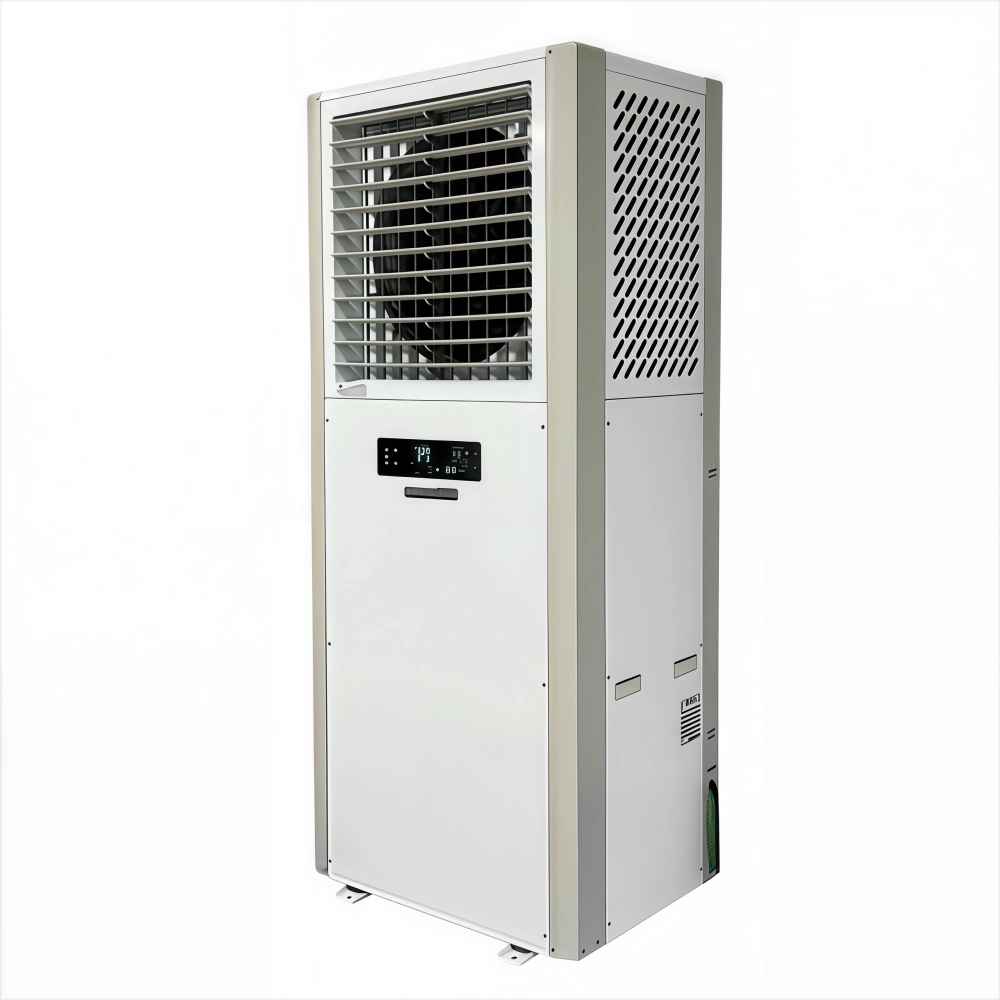
DAIHO Ventilation’s pipe air outlet industrial air conditioner with internal cooling pad handles tough cooling in vast factory settings. Its honeycomb pad design supports energy-efficient operation. It keeps strong air push. Factories or storage spots facing intense outside heat rely on this.
Enhancing Airflow and Ventilation Efficiency
Top gear falls flat without good air movement. How you handle ventilation keeps temps steady across your area.
Strategic Placement of Ventilation Equipment
Warm air climbs up naturally. Therefore, exhaust fans should be installed at elevated positions near roofs or ventilation openings. They pull out trapped heat well. Cool intake spots low down let fresh outside air flow in. It swaps out the warm stuff.
This up-down pattern stops dead zones. Temps won’t jump there. For airflow plans, steady flow beats raw speed. Constant circulation in all work areas dodges spotty cooling. That saves power.
Using High-Efficiency Industrial Fans to Support Cooling Systems
Factory fans vary by type. Axial fans move large volumes of air efficiently. Centrifugal types build pressure for pipe runs. HVLS fans deliver soft, far-reaching flows perfect for open halls. Speed adjustments let you tweak output to match current heat levels. This helps reduce energy consumption during low-production periods. Link them to sensors for auto tweaks. No need for hands-on fiddling every time.
Implementing Smart Cooling Practices for Cost Reduction
Effective cooling strategies go beyond equipment alone. Daily routines and upfront steps cut extra strain on your setup.
Insulation and Heat Control Measures
Wrap roofs and walls to block outside warmth during hot afternoons. Reflective paints on glass roofs or windows help reduce solar heat penetration. Seal cracks by doors or pipes. This helps keep cooled air inside the workspace. These tweaks build lasting system gains.
Scheduling and Zoning Strategies for Optimal Performance
Workshops operate under changing conditions throughout the day. Set auto timers on use or heat readings. This helps ensure energy consumption remains controlled during operation. Break areas into zones for picky cooling. Constant machines get steady air. Quiet storage skips it. Regular checks clear filters. They keep water paths open. This matters for ongoing punch in powered or water systems.
Leveraging DAIHO Ventilation Solutions for Workshop Cooling Optimization
For integrated cooling solutions designed for industrial environments, DAIHO Ventilation‘s product range stands out.
Integrated Cooling Systems Tailored for Industrial Environments
Our pipe air outlet industrial air conditioner with internal cooling pad tackles high-stakes chilling in big factory zones. A top axial fan drives solid air shifts. A flexible water tank backs long runs with minimal maintenance requirements. Loaded with cutting-edge chill tech, it drops temps fast in key spots.
Energy-efficient designs help reduce operating costs immediately. This works for plants and storage where steady heat watch is key. We add products like moisture removers and air pushers. Mix them by shop size or heat checks. You balance temps with cleaner inside air.
Conclusion
Thrifty designs trim running costs straight away. They cut power draw while holding steady output. DAIHO Ventilation uses efficient parts and brainy controls. The systems adjust performance according to actual operating requirements. This helps avoid continuous full-capacity operation. That drives real savings year after year. A chill shop lifts staff drive. It helps firms hit green rules through smart power habits. These improvements also support broader environmental goals.
FAQs
Q: How can I reduce heat buildup in my workshop without installing central AC?
Use industrial energy-saving air conditioner near high-heat zones, improve insulation, and install exhaust fans at ceiling level for better hot-air removal.
Q: What’s the main advantage of an industrial air conditioner?
It provides targeted zone cooling where it’s needed most—saving energy compared to full-space systems.
Q: How often should I maintain my workshop’s cooling equipment?
Clean filters monthly during peak use seasons; inspect water circulation lines every few weeks if using evaporative units to prevent scale buildup.
Q: What type of fan works best alongside industrial air conditioners?
HVLS fans are ideal—they move large volumes of cooled air gently across wide spaces without creating drafts or noise issues.
 English
  Russian
  Arabic
  Spanish
  French
  Italian