

Energy-Saving Factory Cooling Systems for High-Temperature Workplaces
Industrial sites deal with heavy heat from tools, lights, and many people in one spot. Workers get tired quickly in these conditions. Also, sensitive equipment can fail when room temperatures go past safe limits. Over time, this causes lower efficiency and higher maintenance costs. Many plants still use old air conditioning systems. These systems consume excessive energy. They also fail to solve poor airflow and localized hot spots.
An energy-saving air conditioner cools specific zones in factories and workshops effectively. This focused method stops energy waste in areas without cooling demand. It is a smart step toward greener operations.
Why Energy Efficiency Matters in Industrial Cooling
Power prices keep going up around the world. This forces owners to rethink how they handle climate control. Efficient systems lower daily costs and reduce carbon footprints at the same time. Energy-saving cooling systems also help companies meet environmental regulations. It also helps firms reach ESG goals, which is a key factor for today’s investors and clients.
Core Principles of Energy-Saving Factory Cooling Systems
Companies need to understand the technology behind energy-saving cooling systems. Modern industrial cooling systems use intelligent designs and flexible controls. These tools react quickly to changes in the environment.
How Energy-Saving Air Conditioning Works in Industrial Settings
Advanced compressors with variable-speed drives let systems change their output. The system does not operate at full power continuously. It adjusts to actual cooling requirements. Smart sensors check indoor heat to keep a balance between comfort and energy consumption. High-efficiency heat exchangers also improve heat transfer efficiency while using less electricity.
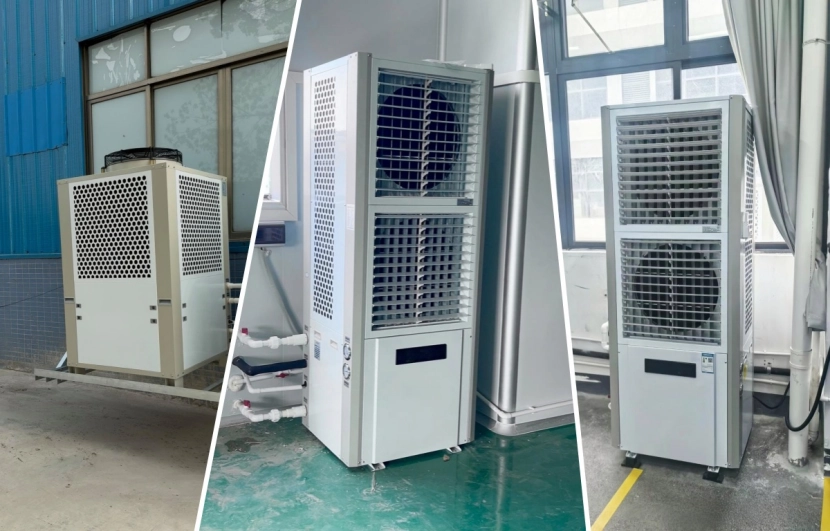
Systems like the cabinet style dual air vents air conditioner use these ideas. They mix modular builds with evaporative cooling parts to fit perfectly in tough industrial settings.
The Role of Airflow Management in Efficient Cooling
Even advanced equipment performs poorly without proper airflow. Good ventilation makes sure the temperature is the same across big factory floors. Fans placed in the right spots get rid of hot pockets near heavy tools. Exhaust systems remove warm air quickly. This prevents heat from returning to the workspace.
Key Technologies Used in Modern Industrial Cooling Systems
Saving energy in a factory depends on many tools working as one team rather than a single machine.
Evaporative Cooling Technology for Large Spaces
Evaporative cooling uses water evaporation to absorb heat naturally. It works very well in open or high-ceiling areas where normal AC is too expensive. The unit has a high-performance honeycomb cooling pad and a built-in water tank. It uses evaporative cooling technology to reduce temperatures efficiently. This path uses much less power than compressor systems and works great in dry air.
High-Efficiency Industrial Air Conditioners
Harsh industrial environments require equipment designed for continuous operation. High-efficiency industrial air conditioners use inverter compressors. These parts change speed smoothly instead of just turning on and off. This design reduces the energy waste common in older systems. EC (electronically commutated) fans also save power by changing speed based on the load.
Smart Control Systems for Energy Optimization
Automation plays an important role in modern energy management. Smart controls look at how many people are present and how heat changes during the day. The system automatically adjusts settings for the best results. Remote tracking lets managers see energy trends and spot repair needs early. Connecting these with building management systems (BMS) lets lights, fans, and AC work together perfectly.
Designing an Effective Cooling Strategy for High-Temperature Workplaces
An effective cooling strategy begins long before equipment installation. It begins by studying how heat moves in your building.
Assessing Thermal Loads and Environmental Factors
Each machine makes heat in a different way. Some give off steady heat, while others peak during busy hours. Checking these heat sources helps engineers pick the right gear size. This approach prevents unnecessary spending on excess cooling capacity.
Roof height, insulation, and window design also affect indoor heat retention. Using airflow tests can find hidden spots where hot air gets trapped. This is very helpful when deciding where to put ducts or fans.
Combining Ventilation and Cooling Technologies for Maximum Efficiency
Hybrid plans mix different tools. For example, they pair evaporative cooling with mechanical fans or precision AC. This approach maintains stable cooling performance during changing weather conditions. Zoning lets you control different work areas on their own. As a result, energy is not wasted on unused spaces. Good ductwork keeps air moving fast and reduces pressure loss.
Selecting the Right Energy-Saving Cooling Partner for Your Factory
The team that designs your system is just as important as the machines you buy.
What to Look for in an Industrial Cooling System Provider
Companies should evaluate more than product offerings alone. Find a partner with a history of custom setups in different industries. The right expert knows about airflow and specific needs like humidity or dust control. The provider should offer integrated solutions that combine ventilation, evaporative cooling, and smart tools into one plan that fits your floor layout.
Why DAIHO Ventilation is a Trusted Choice
DAIHO Ventilation is the preferred choice due to its long history in manufacturing high-efficiency industrial ventilation equipment. Our products operate reliably in demanding industrial environments. Our engineering team provides full assistance from initial thermal analysis to final installation, ensuring that every project achieves its goals within budget. We continuously strive for innovation, keeping our customers at the forefront of industrial cooling technology development.
FAQ
Q1: What is an energy-saving industrial cooling system?
It is a setup that keeps a room comfortable with very little power. It uses smart compressors, clever controls, and better airflow.
Q2: How does evaporative cooling help reduce power consumption?
It uses the natural cooling power of water instead of heavy compressors. This saves a lot of electricity, especially in dry areas.
Q3: Are portable factory coolers effective?
Yes. Portable units give strong air exactly where it is needed. They avoid wasting energy on empty parts of a large building.
Q4: What factors determine which type of industrial cooler suits my workspace?
You should look at the heat level, the building shape, humidity, and how many hours the plant runs.
Q5: Can smart control systems really save noticeable amounts of energy?
Yes. They stop the system from overcooling when no one is there, while keeping it comfortable during the busiest work hours.
 English
  Russian
  Arabic
  Spanish
  French
  Italian