

HVLS Fan Commissioning: What Warehouses Should Verify
A ceiling fan may look satisfactory when viewed from the warehouse floor: the blades turn smoothly and the controller responds. That does not yet prove the installation is ready for daily operation. High racks, overhead services and changing stock levels can alter the airflow reaching the people below.
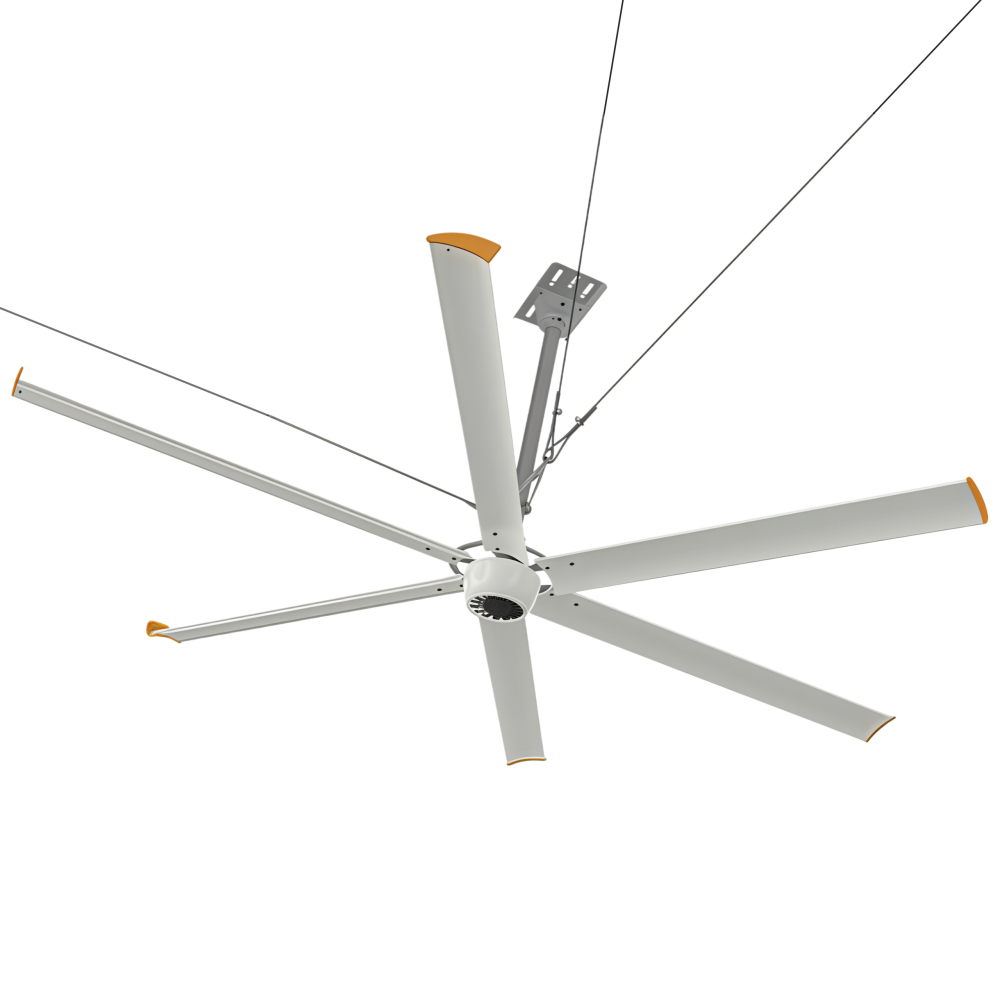
For an HVLS fan handover, the useful question is not simply whether the equipment runs. It is whether the installed fan is mechanically secure, compatible with surrounding systems and delivering air movement where the warehouse actually needs it. A short, documented commissioning test gives the operator a better starting point than a diameter and a catalog airflow figure.
Define What the Fan Is Expected to Do
A warehouse may need air movement at a packing bench, reduced temperature layering near a mezzanine or more even circulation beside tall pallet racks. Those are different objectives. Record the occupied locations and operating schedule before checking performance.
If the facility also has roof exhaust, make-up air openings or air-conditioning, describe their normal operating states. An HVLS fan recirculates indoor air; it does not introduce outdoor air or capture process fumes. The acceptance test should therefore judge circulation separately from ventilation and contaminant control.
Check Structure, Clearances and Building Services
The mounting point must be approved for the fan assembly and its operating loads. A visual inspection of a beam is not a structural assessment. Compare the as-installed bracket, fasteners and any secondary restraints with the manufacturer’s approved drawing, and have the appropriate qualified party verify the supporting structure.
Next inspect the entire blade sweep and the space around it. Racking, lights, cable trays and cranes may be farther from the fan in an empty building than they appear after stock or equipment is added. Fire sprinklers and detection equipment also require a separate review against their applicable requirements. Do not invent a universal clearance: the approved fan instructions and local fire-safety review determine it.
|
Acceptance item |
Evidence to retain |
Why it matters |
|---|---|---|
|
Mounting and restraint |
Approved mounting detail, fixings and sign-off |
Confirms the installation matches the authorized structure |
|
Blade path |
Marked obstacles and measured clearances |
Prevents conflicts as inventory or equipment changes |
|
Electrical supply |
Nameplate, protective devices and controller settings |
Supports safe operation and fault diagnosis |
|
Adjacent systems |
Sprinkler, detection and overhead-service review |
Keeps the fan from interfering with other building functions |
Verify the Exact Model and Control Arrangement
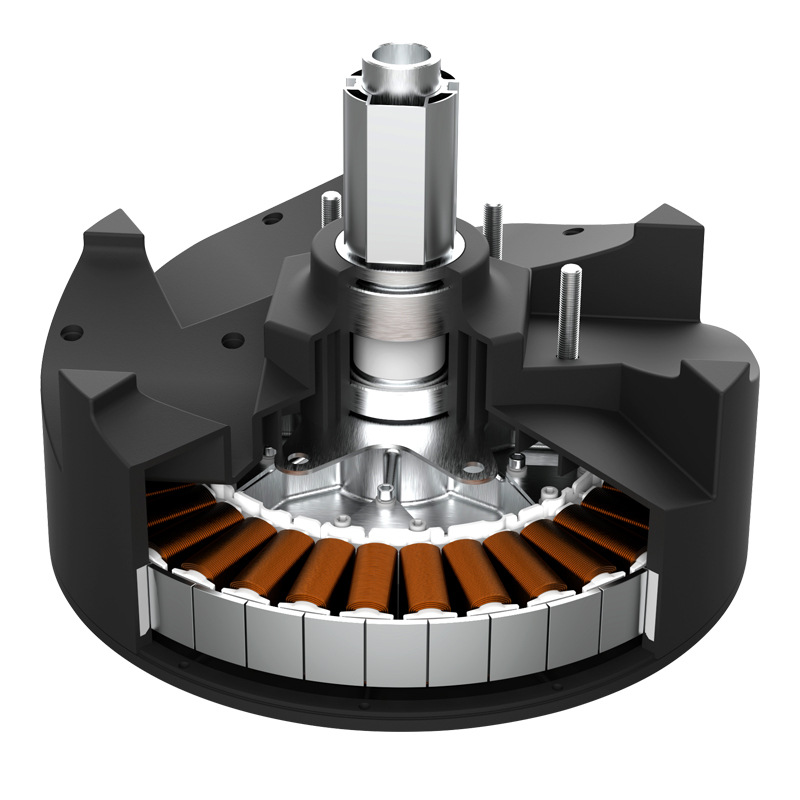
DAIHO publishes more than one ceiling-fan family. Its industrial ceiling fan range includes large-diameter models such as the DH-XC-73, listed at 7.3 m diameter. The commercial ceiling fan range includes smaller examples such as the DH-XC-38, listed at 3.8 m. These are separate published product listings, not interchangeable specifications. Confirm the actual order and motor/controller variant against the nameplate and approved submittal.
During the first run, start with the supplier’s commissioning procedure. Observe the fan from a safe location through its permitted speed range, check unusual vibration or contact noise and confirm the stop function. Any abnormal movement warrants stopping and investigating before normal operation. Do not infer acceptable vibration or noise limits from a different model’s brochure.
Test Air Movement at Working Height
Workers in a high-rack building experience the airflow below the blades, not the flow at the motor housing. Take observations at representative packing stations, aisle crossings and occupied work areas. If instruments are used, record their location, height, fan speed and the operating state of doors and other air systems. Repeat measurements under comparable conditions when adjustments are made.
Look for uneven results. A station directly beneath the fan may have a noticeable breeze while another behind a high rack remains still. In that case, raising the speed may improve one area without solving the blocked route. The remedy might be a revised operating pattern, an additional circulation location or a different arrangement of stock and workstations.
For buildings with separated aisles, DAIHO’s vertical air circulation fan is another product category worth assessing for local air movement. It is not an automatic substitute for a ceiling fan; location, duty and safety requirements still govern the choice.
Check Interaction With Daily Warehouse Operations
Commissioning should include one normal shift, not just an empty-floor demonstration. Forklift routes, tall temporary loads, packaging material and suspended equipment can change exposure and accessibility. Ask operators whether the airflow affects labels, light cartons or tasks that require stable conditions. Check that controls are accessible to authorized staff and that the site has a practical isolation procedure for servicing.
HVLS fans can improve perceived comfort through air movement, but they do not lower the air’s dry-bulb temperature by refrigeration. In a heated warehouse, the circulation strategy may also differ between seasons. Any claimed energy saving needs a measured baseline and operating conditions; it should not be assumed from fan power alone.
Resolve Uneven Airflow Before the Handover
A common mistake is to treat the highest speed setting as proof of good circulation. If a fan creates a strong draft beside a packing bench while another aisle stays still, the site has a distribution problem. Test lower settings and alternative operating schedules before concluding that more power is required. Note the location of each observation so the issue can be reproduced.
When the result is still uneven, compare the current rack plan with the approved layout. A new overhead mezzanine or densely stacked bay may interrupt the downward and outward air path. Any relocation or change to mounting hardware requires a fresh engineering review, not an informal adjustment by warehouse staff.
Build a Handover Record That Is Useful Six Months Later
The handover should identify the installed model, mounting drawing revision, controller settings, date of testing, locations checked, observed air movement, outstanding issues and responsible person. Photographs of the mounting and control equipment make later inspections easier. If the aisle layout changes significantly, review the original assumptions rather than relying on an old coverage estimate.
For early planning—not final acceptance criteria—DAIHO’s article on HVLS fan placement discusses general airflow zoning. The commissioning record should take the next step and describe what the completed installation actually did on site.
الأسئلة الشائعة
Is a fan ready for use as soon as it turns on?
No. Mounting, clearances, electrical protection, controller operation and airflow in occupied zones should be checked under the approved commissioning procedure.
Can one HVLS fan serve all aisles in a high-rack warehouse?
Not necessarily. Tall racks and partitions change the air path. Verify circulation at representative locations rather than applying one brochure coverage figure to every layout.
Does an HVLS fan replace fresh-air ventilation?
No. It moves air within the building. Outdoor-air supply, exhaust and any required contaminant capture need their own design and verification.
What should trigger another airflow check?
Major changes to rack height, aisle arrangement, overhead equipment, fan position or the operation of nearby ventilation systems justify a review.
استنتاج
A sound HVLS fan handover combines the installation record with observations from the working floor. Confirm the hardware, verify controls, test occupied aisles and document any limitations. Buyers can then assess the fan by its installed duty rather than by its catalog diameter alone.
 English
 Russian
 Arabic
 Spanish
 French
 Italian