

Systèmes de refroidissement économes en énergie pour les stades et les arènes
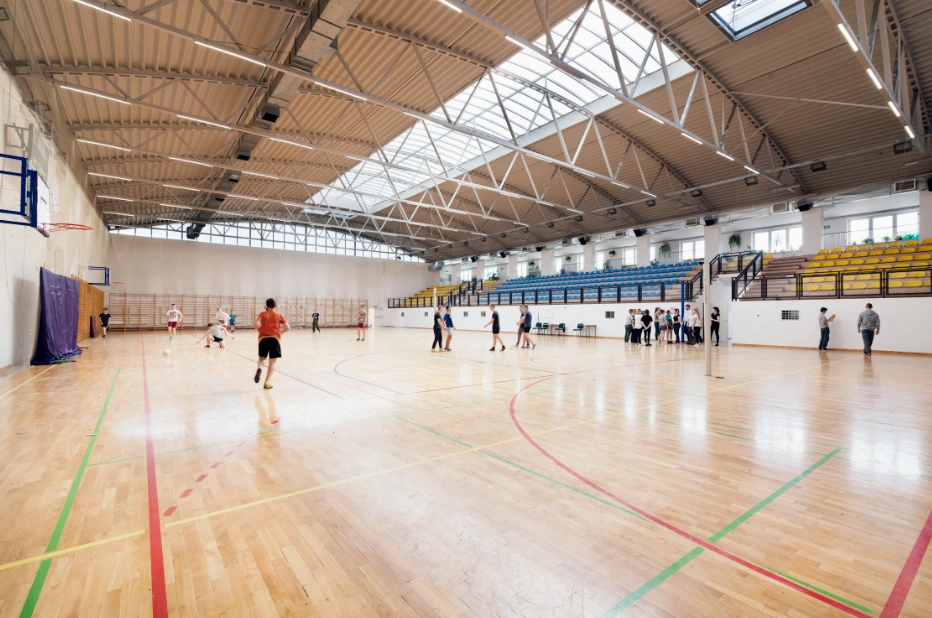
Les salles et arènes sportives présentent d'importants défis en matière de refroidissement. Ces espaces sont vastes, avec de hauts plafonds, et accueillent souvent un grand nombre de personnes en activité. Un système de refroidissement efficace solution de refroidissement économe en énergie Ce système ne se limite pas à une seule solution. Il combine plutôt refroidissement, apport d'air frais, ventilation et, parfois, gestion de l'humidité. De nombreux établissements tirent profit de l'intégration de la climatisation, du refroidissement par évaporation, de ventilateurs industriels robustes et de déshumidificateurs. Cette approche contribue à réduire l'accumulation de chaleur tout en limitant la consommation d'énergie.
Pourquoi les stades et les arènes ont besoin de systèmes de refroidissement économes en énergie
Une salle omnisports se distingue d'un bureau ou d'un magasin classique. Elle présente des volumes d'air plus importants, des plafonds plus hauts et une répartition de la chaleur inégale. Lors des entraînements, des matchs ou des rassemblements, le taux d'occupation peut varier rapidement. Par conséquent, les besoins en climatisation peuvent fluctuer considérablement.
Les installations sportives intérieures sont exposées simultanément à de multiples sources de chaleur. Le corps humain produit de la chaleur pendant l'effort. Les systèmes d'éclairage génèrent également de la chaleur. De plus, les équipements tels que les tableaux d'affichage numériques, les systèmes audio, les appareils de fitness et les présentoirs temporaires pour événements augmentent encore les apports de chaleur. Les toitures absorbent la lumière du soleil pendant la journée et restituent progressivement cette chaleur à l'intérieur.
Un système de refroidissement mal conçu engendre plusieurs problèmes. L'air chaud a tendance à s'accumuler près du plafond. Les joueurs et les invités se sentent souvent mal à l'aise et étouffants. Les coûts énergétiques peuvent augmenter considérablement avec le temps. De plus, les odeurs et l'excès d'humidité deviennent plus difficiles à gérer.
Un système de refroidissement inefficace peut réduire l'utilisabilité des installations. Il peut augmenter les coûts de maintenance, nuire à la satisfaction des visiteurs et diminuer l'efficacité opérationnelle globale au fil du temps.
Facteurs clés à prendre en compte avant de choisir un système de refroidissement
Les propriétaires et les constructeurs de salles de sport doivent évaluer les conditions réelles du site avant de choisir l'équipement. Ce qui convient à une petite salle d'entraînement peut s'avérer inadapté dans une grande salle omnisports. L'inverse est également possible : un système de refroidissement central imposant peut se révéler trop coûteux pour une zone d'entraînement partiellement ouverte.
Les facteurs les plus importants sont les suivants :
Taille de la salle et hauteur sous plafond
Nombre d'utilisateurs aux heures de pointe
Climat local et niveau d'humidité
Principaux types de systèmes de refroidissement à économie d'énergie
Diverses solutions de refroidissement permettent de résoudre des problèmes spécifiques. Certains systèmes privilégient la réduction de la température, tandis que d'autres sont conçus pour améliorer la circulation de l'air. Quelques-uns gèrent l'humidité ou aspirent l'air extérieur. Pour les salles de sport et les arènes, la solution la plus adaptée dépend des besoins opérationnels quotidiens.
Systèmes de refroidissement par évaporation
Le refroidissement par évaporation repose sur la transformation de l'eau en vapeur pour abaisser la température de l'air. Les régions sèches ou relativement sèches donnent les meilleurs résultats, car une faible humidité améliore l'efficacité du refroidissement.
Ces systèmes produisent de l'air en consommant beaucoup moins d'énergie que les compresseurs classiques. Dans les salles de sport semi-ouvertes, les terrains d'entraînement ou les ateliers reconvertis en salles de jeux, ils constituent une solution idéale. Ils assurent un refroidissement efficace tout en réduisant la consommation d'énergie.
Ils assurent un refroidissement efficace tout en consommant peu d'énergie. Un taux d'humidité élevé peut toutefois réduire leurs performances. Si l'humidité est déjà importante, un surplus ne fera qu'accentuer l'inconfort. Il est donc toujours conseillé de consulter les conditions météorologiques locales au préalable.
Systèmes de climatisation à air frais intégrés
Climatisation intégrée à air frais Ces systèmes combinent refroidissement, apport d'air extérieur et circulation en un seul appareil. Les salles et arènes sportives en tirent profit, car elles nécessitent à la fois une régulation de la température et un renouvellement d'air constant.
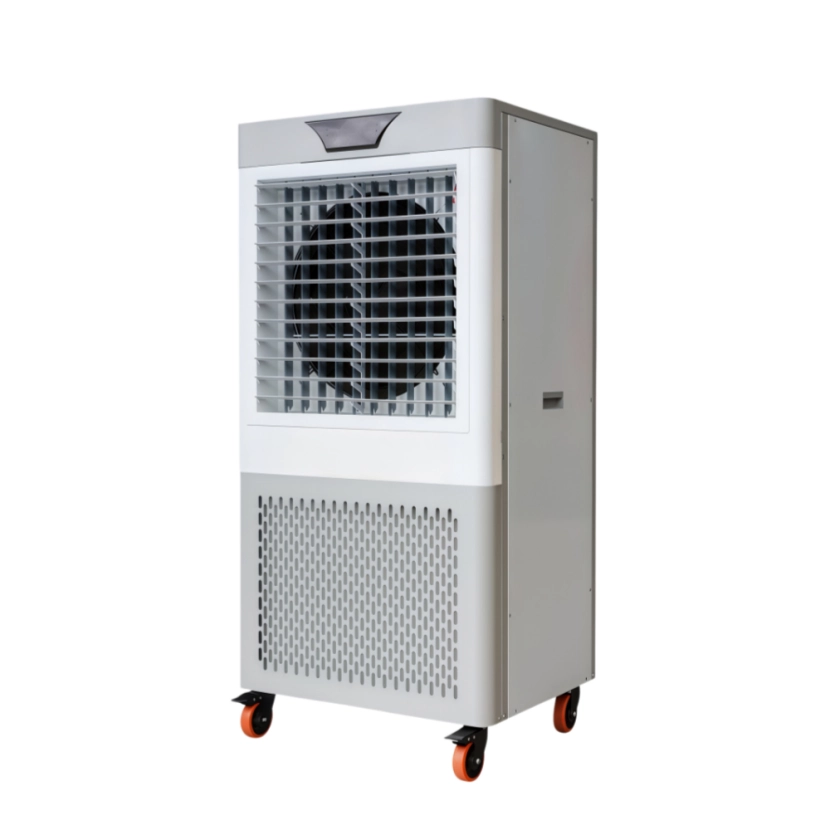
Ces systèmes offrent bien plus qu'une simple circulation d'air. Contrairement aux climatiseurs traditionnels étanches, ils aspirent de l'air extérieur propre pour lutter contre la sensation d'étouffement. C'est particulièrement important dans les gymnases, les terrains de basketball et de badminton, les salles de sport scolaires et les centres d'entraînement intérieurs. Les personnes qui y travaillent génèrent une chaleur et une humidité importantes lors d'une activité physique, rendant ainsi la circulation d'air frais essentielle.
Les systèmes de climatisation à air frais intégrés de DAIHO Ventilation conviennent aux projets nécessitant une prise d'air frais flexible, un refroidissement efficace et une meilleure performance de ventilation. Ils sont particulièrement performants là où une climatisation centrale complète est trop onéreuse et où les ventilateurs classiques s'avèrent insuffisants.
Pourquoi la climatisation intégrée à air frais convient aux installations sportives
Ce type de système convient parfaitement à de nombreuses installations sportives. Il permet de lutter efficacement contre l'accumulation de chaleur et la mauvaise circulation de l'air.
Dans les lieux fréquentés, l'air vicié peut s'accumuler rapidement. L'exercice physique accroît les besoins en air frais. Un système de climatisation qui se contente de recycler l'air intérieur peut certes faire baisser la température, mais il ne résoudra pas le problème de l'air vicié ni des mauvaises odeurs.
Dans les salles et les arènes sportives, la climatisation intégrée à air frais contribue à ces avantages. Elle assure un apport d'air frais pour un confort accru, rafraîchit les zones ciblées pour le jeu ou les spectateurs et optimise la circulation de l'air dans les zones où elle est faible.
Pour des résultats encore meilleurs, associez-le à des ventilateurs ou à des climatiseurs évaporatifs. La climatisation peut rafraîchir les zones les plus chaudes, tandis que les ventilateurs puissants diffusent l'air dans toute la pièce.
Scénarios d'application dans les salles et arènes sportives
Tous les sites sportifs ne se valent pas. Un gymnase scolaire diffère d'une salle de sport privée ou d'un grand stade couvert. Cependant, ils sont souvent confrontés à des problèmes communs tels qu'une forte fréquentation, une ventilation irrégulière et de longues heures d'ouverture.
Il est possible d'intégrer la climatisation à air frais à d'autres solutions de refroidissement écoénergétiques, notamment dans les terrains de basketball intérieurs. Les centres de remise en forme et les salles de sport en tirent également profit. Les centres d'entraînement y trouvent un intérêt certain. Enfin, les salles omnisports s'y adaptent parfaitement.
Certains sites visent à refroidir uniformément l'ensemble de la zone. D'autres adoptent une approche plus ciblée en refroidissant les zones d'activité principales, en améliorant la circulation de l'air autour des occupants et en maintenant des coûts d'exploitation stables.
Comment choisir la solution de refroidissement adaptée
Concevez votre stratégie de refroidissement en pensant au site web, et non aux supports de vente. Identifiez le problème principal que vous souhaitez résoudre.
Dans les régions sèches, l'utilisation de systèmes de ventilation par évaporation ou par renouvellement d'air permet de réaliser d'importantes économies. Les espaces clos assurent un équilibre optimal entre refroidissement et renouvellement d'air grâce à un système de climatisation intégré. Les toitures hautes nécessitent des ventilateurs pour faire descendre l'air frais et disperser les couches d'air chaud.
Dans les environnements à forte humidité, des systèmes de déshumidification peuvent s'avérer nécessaires. Un taux d'humidité élevé peut à lui seul rendre l'atmosphère étouffante. Les lieux modulables accueillant des événements variés se prêtent bien à des équipements modulaires ou portables, permettant des ajustements faciles.
Adaptez également l'aménagement à votre routine quotidienne. Une petite salle de sport ouverte uniquement en soirée évite le rythme effréné d'une salle de compétition ouverte en continu.
Erreurs communes à éviter
De nombreux problèmes de refroidissement proviennent d'erreurs initiales. L'équipement lui-même peut fonctionner correctement, mais un emplacement incorrect ou une application inadaptée peuvent réduire considérablement les performances du système.
Attention aux choix basés uniquement sur le prix d'achat. N'oubliez pas l'importance d'une bonne ventilation. Évitez les climatiseurs de petite taille dans les grands halls. Et ne négligez jamais l'humidité. Une mauvaise conception du flux d'air est un autre problème courant. Vous pouvez diffuser de l'air froid, mais il ne profitera pas à la foule.
Pensez à l'entretien dès le départ. Filtres, conduites d'eau, pales et aérations doivent être facilement accessibles. Un accès difficile entraînera une baisse de rendement à terme.
DAIHO Ventilation pour les projets de refroidissement des installations sportives
Ventilation DAIHO Spécialisée dans les systèmes de ventilation industrielle et les équipements de refroidissement performants, cette entreprise propose une gamme de produits comprenant ventilateurs, refroidisseurs, unités d'évaporation et déshumidificateurs. Ces solutions permettent de créer des systèmes de refroidissement et de ventilation polyvalents pour de vastes espaces intérieurs.
Les salles de sport, les gymnases, les centres d'entraînement et les arènes peuvent tirer parti du système de ventilation DAIHO Ventilation Integrated Fresh Air Conditioning comme solution efficace. Il assure un apport d'air frais, une ventilation optimale et une meilleure circulation de l'air. L'essentiel n'est pas d'opter pour le système le plus imposant, mais d'adapter l'installation à l'espace et à ses utilisateurs.
Conclusion
Le système de refroidissement idéal et écoénergétique des salles et arènes sportives dépend de la superficie, des conditions climatiques locales, de l'affluence, du taux d'humidité et des horaires d'utilisation. Le refroidissement par évaporation, la climatisation intégrée, les ventilateurs industriels, la climatisation de toiture et les déshumidificateurs jouent des rôles distincts. De nombreux sites bénéficient d'un confort supérieur et d'économies d'énergie plus importantes grâce à une combinaison de solutions.
DAIHO Ventilation accompagne les propriétaires, les entrepreneurs et les gestionnaires d'installations dans le choix de systèmes de refroidissement et de ventilation adaptés aux installations sportives intérieures. Contactez DAIHO Ventilation discuter d'un plan de refroidissement adapté à votre salle de sport ou à votre arène.
Questions fréquentes
Q1 : Quel est le meilleur système de refroidissement pour une grande salle de sport ?
Les solutions combinées sont souvent les plus performantes. Climatisation, ventilateurs industriels et refroidissement par évaporation occasionnel fonctionnent de concert.
Q2 : La climatisation intégrée à air frais est-elle adaptée aux arènes intérieures ?
Oui. Il assure le refroidissement, la diffusion d'air frais et une meilleure ventilation dans les grands espaces intérieurs.
Q3 : Comment les salles de sport peuvent-elles réduire leurs coûts énergétiques liés à la climatisation ?
Privilégiez le refroidissement par zone, une meilleure ventilation, un équipement performant et un entretien régulier du filtre.
Q4 : Les installations sportives ont-elles besoin à la fois de systèmes de refroidissement et de ventilation ?
Oui. Le système de refroidissement régule la température, tandis que la ventilation fait entrer de l'air frais et élimine la sensation d'air vicié.
Q5 : La climatisation peut-elle améliorer la qualité de l'air intérieur dans les salles de sport ?
Oui. Cela permet d'apporter de l'air frais et d'éliminer l'humidité accumulée dans les salles de sport intérieures très fréquentées.
 English
  Russian
  Arabic
  Spanish
  French
  Italian