

Rooftop Exhaust Fan Selection for Rain-Exposed Factories
A roof exhaust fan can remove hot air from a high-bay factory without taking space from production walls. For rain-exposed buildings, however, rated airflow is only one part of the specification. The buyer also needs a roof opening that fits the equipment, a weather-resistant roof connection, an adequate replacement-air route and safe access for servicing. Those requirements should be resolved before choosing a fan size.
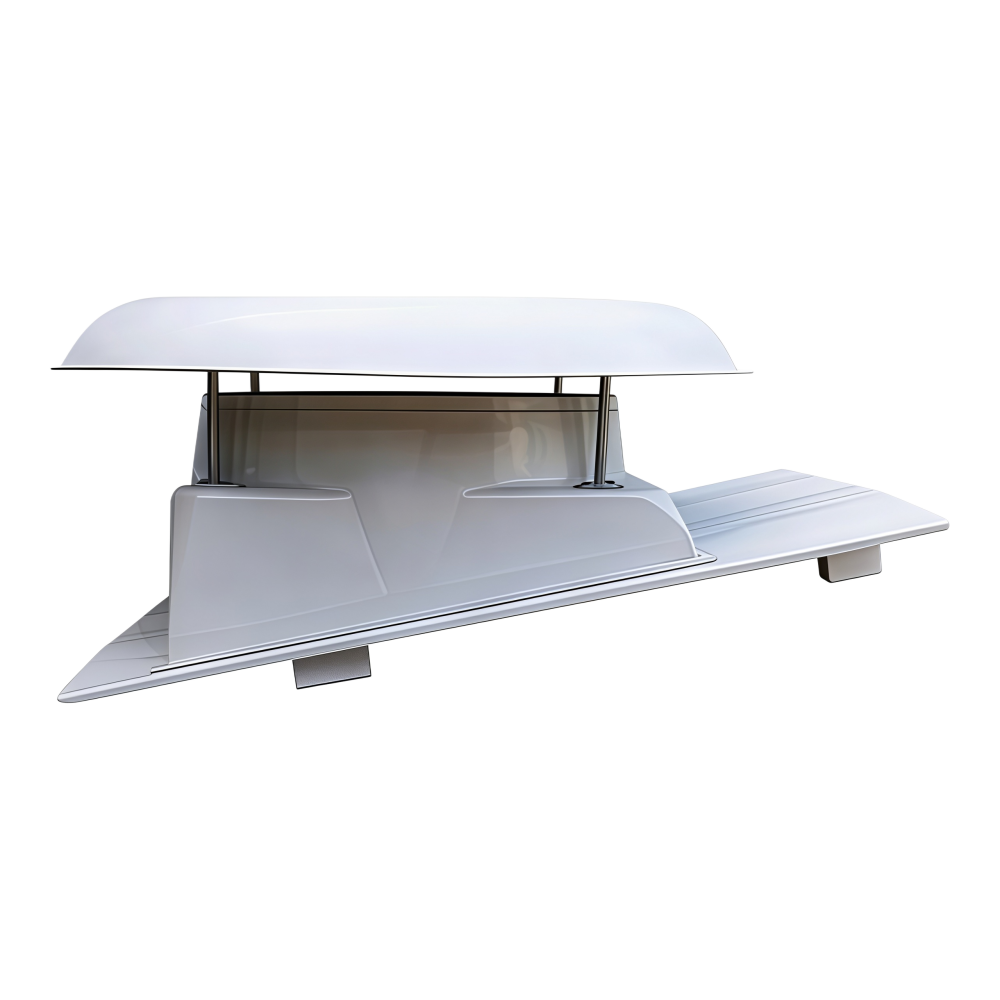
DAIHO lists a Extractor de techo inclinado with a covered exhaust outlet and FRP construction. It is most suitable when the roof layout, weather exposure, and required airflow match the installed assembly—not simply when the largest catalogue number is selected.
Start with the heat source and the available air path
Roof extraction is most relevant when process heat accumulates above work areas and the building provides a practical route for replacement air. Before estimating fan duty, mark the hot equipment, occupied zones, high-level heat pockets, operable wall inlets, and doors that should stay closed. The intended path should carry outdoor air through the useful work zone before it exits at roof level.
A roof fan alone does not guarantee worker-level cooling. If low-level inlets are restricted, air may enter through a nearby roof opening or service door. It can then bypass the hot production zone entirely. Where airborne dust, fumes or process emissions are present, confirm the required source-capture system separately; general roof ventilation must not replace dedicated extraction for hazardous contaminants.
DAIHO DH-WD1460 and DH-WD1060: compare the published values
The two model rows on the official product page provide a useful starting comparison. These values should be evaluated alongside the actual roof opening and project operating conditions.
|
DAIHO model |
Published airflow / power |
Unit size / roof opening |
|---|---|---|
|
DH-WD1460 |
45,000 m³/h; 1.1 kW |
1,460 × 1,460 × 960 mm; 1,400 × 1,400 mm opening |
|
DH-WD1060 |
28,000 m³/h; 0.75 kW |
1,060 × 1,060 × 930 mm; 1,000 × 1,000 mm opening |
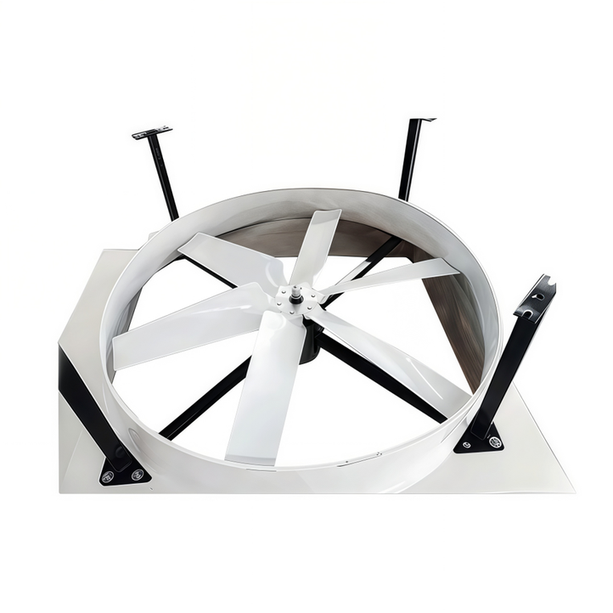
Both rows specify a six-blade assembly at 560 rpm and list 380/220 V, 50 Hz options. The catalogue identifies construction and nominal dimensions; it does not establish delivered airflow at every installed static pressure. Request the operating point and static pressure tolerance when the roof opening, screen, duct, or weather accessories differ from the reference configuration.
The roof opening is not the housing dimension
For the DH-WD1460, the listed 1,400 × 1,400 mm roof opening is smaller than the 1,460 × 1,460 mm equipment footprint. These figures refer to different mounting surfaces. The roof contractor must check the actual curb arrangement, structural support, fixing details and flashing design against the approved installation drawing. The same distinction applies to the DH-WD1060 and its 1,000 × 1,000 mm opening.
On an existing roof, record deck type, roof pitch, curb height, available structural members, nearby drains and waterproofing layers. A product photograph cannot confirm whether a particular curb sits high enough above standing water. Nor can it verify that the roof can carry the equipment and maintenance loads. These items require a project-specific installation review.
Rain protection must work with the complete roof assembly
DAIHO describes a weather-protective cap, wind deflector and FRP casing for the slope type. The housing and six-blade design support outdoor use, but the roof penetration remains part of the building envelope. Ask the installer to confirm flashing continuity, drainage away from the curb, the outlet orientation relative to prevailing wind and the means of preventing water ingress when the fan is stopped.
A weather cover is not proof that every roof detail is waterproof. For a coastal or humid plant, also review corrosion exposure at fixings, motor connections and any added metal accessories. Maintenance access should allow inspection of the cover, impeller and seals without disturbing the waterproofing membrane.
Compare alternatives only when the duty changes
The broader DAIHO roof exhaust fan range also includes different constructions. The FRP axial-flow flat rooftop fan suits applications where its roof cap, pressure range, and accessory options align better with the project requirements. The carbon steel axial-flow rooftop fan provides another model family with published flow–pressure combinations. These are alternatives to evaluate, not interchangeable replacements for the slope type.
When evaluating another family, compare the same project duty—flow at installed pressure, roof opening, rain protection, material compatibility, motor and control options, and safe access. Do not compare a slope fan’s catalogue airflow with another fan’s performance at a different pressure point.
Include these items in the purchase specification
Design airflow and pressure allowance, with the expected measurement point and operating conditions.
Fan model, roof opening, equipment footprint, curb drawing, support and waterproofing details.
Rain and wind exposure, corrosion requirements, outdoor electrical protection and service isolation.
Replacement-air inlets and the intended path through workers and process equipment.
Controls and operating schedule, including how the fan behaves during rain and shutdown.
Acceptance inspection of airflow, noise, water ingress risk and safe access after installation.
For factories with an established high-level heat problem, the right rooftop exhaust fan is the model that can be installed and maintained on the actual roof while delivering the specified ventilation duty. The roof opening and air route should be checked as carefully as the fan rating.
Preguntas frecuentes
Is the DH-WD1460 always better than the DH-WD1060?
No. It has higher published airflow, but it also requires a larger roof opening and different structural and electrical allowances. The right choice depends on the installed duty and roof layout.
Does a weather cap make the roof penetration waterproof?
No. The cap protects the fan outlet, while curb flashing, roof drainage, sealing and installation details protect the building envelope.
Can a rooftop exhaust fan replace local fume or dust extraction?
Not where process contaminants require source capture or dedicated control. Roof extraction can support general ventilation, but it does not automatically meet exposure-control requirements.
What should be verified after installation?
Confirm fan operation, the incoming-air route, ventilation performance under agreed test conditions, weather protection, and maintenance access.
 English
 Russian
 Arabic
 Spanish
 French
 Italian