

FRP vs Metal Exhaust Fans: Which Is Better for Industrial Ventilation?
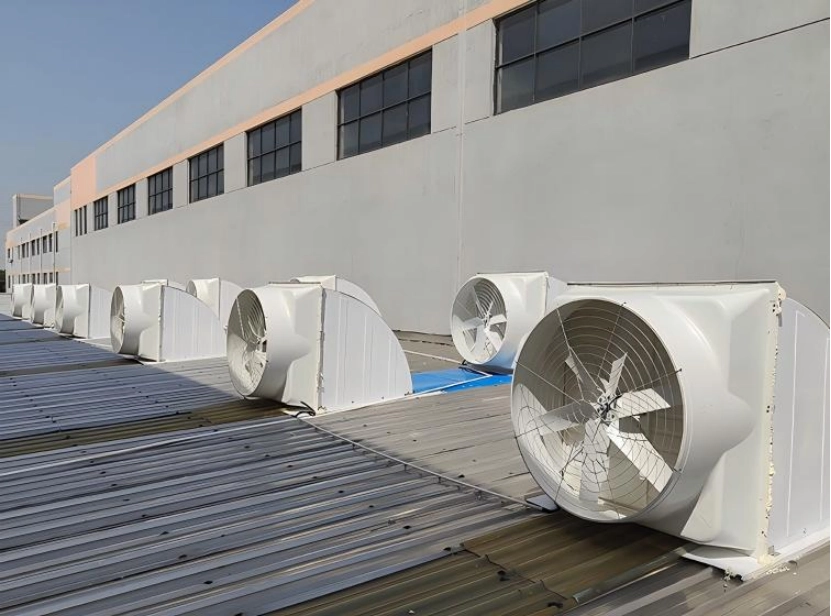
FRP exhaust fans are typically the preferred choice when the surrounding air is damp, highly corrosive, or exposed to harsh weather. Metal exhaust fans are more logical in hot, dry, and heavy-duty locations. In these areas, structural strength matters far more than simple corrosion resistance.
What Are FRP Exhaust Fans?
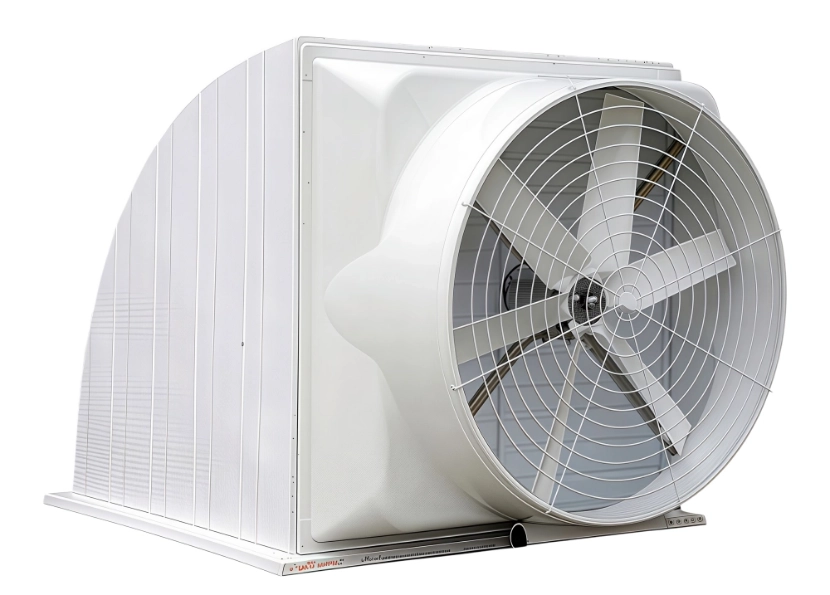
FRP stands for fiberglass reinforced plastic. In modern exhaust fans, manufacturers frequently use this material for housings, sturdy frames, cones, and various other exposed parts. Its primary advantage is exceptional corrosion resistance.
FRP does not rust like standard steel. Furthermore, it generally handles excess moisture and continuous outdoor exposure.
However, FRP is not suitable for every application. Extremely high temperature, proper motor protection, correct fan speed, and overall installation quality still matter greatly. However, when the environment is highly corrosive, FRP offers a clear advantage.
Common Applications of FRP Exhaust Fans
FRP exhaust fans are widely used in chemical plants, busy food processing areas, large greenhouses, crowded poultry farms, humid production workshops, and exposed coastal buildings. An FRP exhaust fan is also quite lightweight. This reduced weight is especially beneficial for rooftops, large greenhouses, busy poultry houses, and older buildings. In those places, adding heavy equipment is simply not ideal.
What Are Metal Exhaust Fans?
Metal exhaust fans are constructed from solid galvanized steel, durable stainless steel, lightweight aluminum, or specially coated steel. They remain widely used globally because they are incredibly strong, very rigid, and completely familiar to most maintenance teams.
Common Applications of Metal Exhaust Fans
Metal exhaust fans are frequently used in busy manufacturing workshops, dry storage warehouses, metal fabrication areas, and general industrial ventilation systems.
A reliable metal exhaust fan performs well in dry workshops, large storage warehouses, and high-temperature production spaces. Premium stainless steel can successfully handle certain corrosive environments. However, the specific metal grade must perfectly match the chemical exposure, which can significantly increase costs.
How Do FRP and Metal Exhaust Fans Compare?
The better material choice depends on the actual working environment, rather than just the initial purchase price.
| Factor | FRP Exhaust Fans | Metal Exhaust Fans |
| Corrosion resistance | Outstanding in humid or corrosive air | Relies heavily on coating or specific metal grade |
| Weight | Notably lightweight | Typically much heavier |
| Strength | Adequate for most industrial uses | Considerably stronger for heavy-duty use |
| Weather resistance | Highly durable outdoors | Acceptable, but often requires protective coating |
| Maintenance | Significantly lower in corrosive sites | Frequently requires active rust prevention |
| Best for | Chemical, agricultural, humid, and rooftop use | High-temperature, totally dry, and heavy-duty use |
A low-cost metal fan installed in a highly corrosive plant can quickly become incredibly expensive. This happens after constant repainting, extended downtime, and surprisingly early replacement. Conversely, a robust metal fan operating in a hot, totally dry workshop may truly be the much smarter choice.
Which Fan Performs Better in Corrosive or Humid Environments?
FRP generally performs better in humid or highly corrosive environments.
If the extracted exhaust air contains heavy water vapor, ocean salt, strong ammonia, acidic particles, or dangerous chemical fumes, standard metal fans can degrade surprisingly quickly. Industrial coatings can improve corrosion resistance. However, these coatings may deteriorate over time due to scratches and environmental exposure. Premium stainless steel might work well. However, engineers must carefully select the appropriate grade to ensure long-term reliability.
FRP is frequently a practical option for humid greenhouse ventilation, demanding livestock ventilation, busy chemical plants, clean food processing areas, and exposed outdoor rooftop ventilation. While mounted on a roof, the unit also faces heavy rain, intense sun, rapid temperature changes, and extremely dirty exhaust air rising from below.
Which Fan Is Better for High-Temperature or Heavy-Duty Industrial Use?
Metal exhaust fans are generally better suited for extreme high-temperature or rigorous heavy-duty industrial use.
Active foundries, busy welding shops, heavy metal processing plants, hot boiler rooms, and intense production lines often require higher heat resistance and mechanical strength. A correctly specified metal fan is usually more suitable for these environments.
Operating temperature should never be guessed. FRP also has specific operating temperature limits. Metal also has its own limits. The actual measured exhaust temperature, total exposure time, specific duct layout, and exact motor position all matter greatly.
Which Option Has Lower Long-Term Maintenance Costs?
FRP usually delivers significantly lower long-term maintenance costs in highly corrosive environments. Meanwhile, metal can be equally economical in perfectly clean, thoroughly dry areas.
Routine maintenance involves more than simply replacing spare parts. It constantly includes regular rust checks, deep cleaning, frequent repainting, tedious fastener replacement, fixing stuck louvers, managing costly downtime, and paying expensive labor.
How Should You Choose Between FRP and Metal Exhaust Fans?
The most useful questions are actually quite simple.
- Is the surrounding air wet?
- Is it highly corrosive?
- Is the fan located entirely outdoors?
- Will it run continuously for very long hours?
- Is there extreme high heat?
- Is heavy physical impact or strong vibration likely?
A ventilation fan intended for a very humid greenhouse and a heavy fan installed in a welding workshop should absolutely not be selected using the exact same logic.
Choose FRP Exhaust Fans If:
Choose FRP exhaust fans when the installation environment is highly humid, corrosive, outdoors, or regularly exposed to heavy washdown. They are also a fantastic fit for harsh chemical air, concentrated animal waste, salty coastal air, and demanding agricultural ventilation.
FRP is also advantageous when reducing overall equipment weight is important. Large roof-mounted systems and older, lightweight structures often benefit from a reduced fan weight. For industrial facilities that desperately need superior corrosion resistance and lasting outdoor durability, an FRP rooftop exhaust fan can be an incredibly practical choice for vastly improving daily air exchange.
Choose Metal Exhaust Fans If:
Choose metal exhaust fans if the specific site strictly requires extreme mechanical strength, reliable high heat resistance, or rugged heavy-duty structural durability.
They are often the preferred option for dry workshops, large storage warehouses, busy welding zones, heavy fabrication areas, and standard general exhaust systems. In these places, active corrosion is simply not the main issue.
Final Recommendation: Which Is Better for Industrial Ventilation?
FRP exhaust fans are frequently better suited for humid, corrosive, agricultural, chemical, greenhouse, poultry, and exposed outdoor rooftop ventilation. Conversely, metal exhaust fans are vastly better for hot, totally dry, exceptionally rugged, or highly impact-prone environments.
Wet or highly corrosive environments generally favor FRP materials.. Extreme heat, physical impact, and the need for heavy structure firmly point toward metal.
Need help choosing the right exhaust fan for your facility?
Contact DAIHO Ventilation today to discuss your application and get a reliable ventilation solution built for long-term performance.
FAQ
Q: Are FRP exhaust fans suitable for outdoor installation?
Yes. FRP effectively resists damaging rust, heavy moisture, and harsh weather exposure far better than ordinary commercial steel.
Q: Are metal exhaust fans stronger than FRP fans?
Usually, yes. Metal fans generally provide higher mechanical strength in extreme high-temperature or rigorous heavy-duty applications.
Q: Which material is better for chemical plants?
FRP is frequently much better whenever highly corrosive chemical fumes or heavy moisture are constantly present.
Q: Which fan is better for greenhouse ventilation?
FRP is usually the better choice. This is because trapped greenhouse air is very humid and can often contain harsh fertilizers or floating organic particles.
Q: Should price decide the fan material?
No. Expected service life, expensive maintenance labor, costly factory downtime, and eventual replacement cost matter far more than the initial purchase price alone.
 English
  Russian
  Arabic
  Spanish
  French
  Italian