

تهوية الضغط السلبي لمنازل الدجاج: دليل عملي
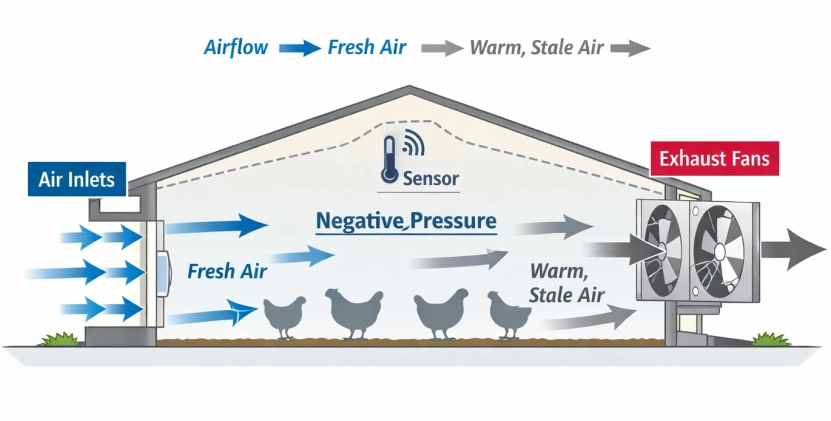
نظام تهوية فعال ضروري للحفاظ على بيئة منزل الدجاج الصحية والفعالة. بدون تدفق هوائي كاف، تتراكم الحرارة والرطوبة بسرعة. هذا يؤدي إلى إجهاد الطيور ، واستخدام الأعلاف أسوأ ، وارتفاع معدلات الوفيات. تعتمد العديد من مزارع الدواجن الحديثة على تهوية الضغط السلبي كحل أساسي. يدير حركة الهواء بعناية للحفاظ على ظروف داخلية ثابتة على مدار السنة.
ما هو تهوية الضغط السلبي
تهوية الضغط السلبي تعمل عن طريق انخفاض ضغط الهواء داخل منزل الدجاج تحت ما’ في الخارج. مروحة العادم تستخرج الهواء القديم. هذا يجذب الهواء النقي من خلال فتحات ذكية. وتضمن هذه العملية المتحكم فيها توزيع تدفق الهواء بشكل موحد في جميع أنحاء المنشأة.
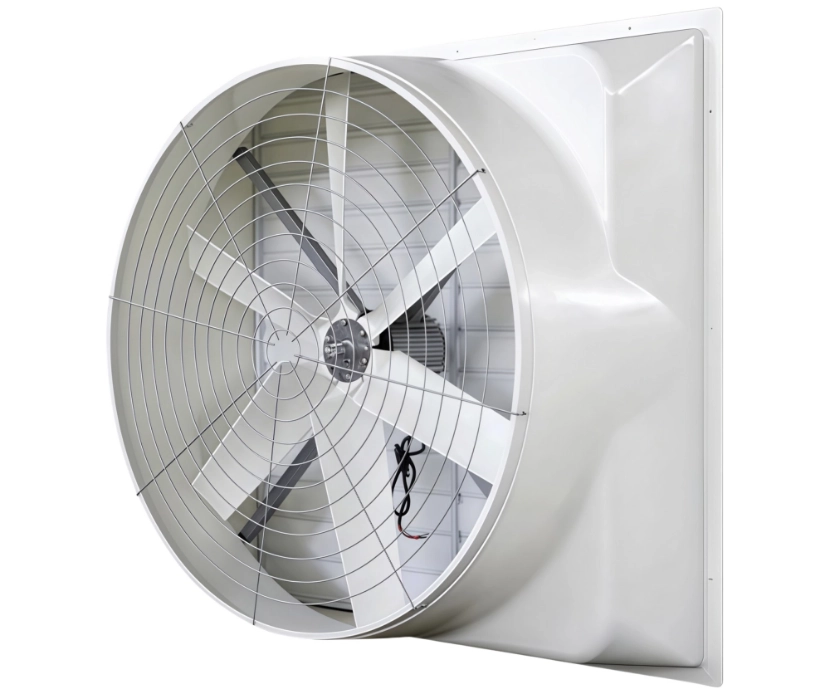
Fمروحة العادم Iberglass يتم استخدامها بشكل شائع بسبب متانتها وكفاءتها. يدفع الهواء عبر الشفرات. هذا يؤدي إلى ضغط سلبي في الداخل. إنهم يزيلون الهواء الملوث في نفس الوقت بينما يجذبون الهواء النقي في الهواء الطلق. هذه المروحة تبقي الهواء يتدفق دون توقف. يبدلون الهواء الدافئ أو القذر بالهواء النظيف والمغلف بالأكسجين من الهواء الطلق.
لماذا تحتاج منازل الدجاج إلى تهوية فعالة
التهوية تفعل أكثر من تبريد الطيور. يدعم صحتهم وإنتاجهم بشكل عام. تدفق الهواء الجيد يتحكم في درجة الحرارة. يقلل من الرطوبة من التنفس والقمامة الرطبة. بالإضافة إلى ذلك، فإنه يزيل الغازات الضارة مثل الأمونيا. الدجاج أفضل في الأماكن النظيفة والهوائية. وهذا يقلل من خطر الإصابة بأمراض الجهاز التنفسي. تحسن كفاءة تحويل الأعلاف في ظروف مثالية. تنمو الطيور بخطوات ثابتة. ومعدلات الوفيات تنخفض كثيرا.
المكونات الرئيسية لنظام تهوية الضغط السلبي
يعتمد نظام الضغط السلبي القوي على ثلاثة أجزاء أساسية: مروحة العادم ومدخلات الهواء وأجهزة الاستشعار التلقائية. وتعمل هذه المكونات معاً للاستجابة بسرعة للتغيرات البيئية.
مروحة العادم ووظيفتها
مروحة العادم تدفع الضغط السلبي. ويؤثر وضعها - إما في طرف واحد أو على طول الجدران الجانبية - بشكل مباشر على توزيع تدفق الهواء عبر الفضاء. حجمها بناء على عدد الطيور لديك وطول المنزل والطقس المحلي.
DAIHO تهوية الصف الصناعي مروحة العادم المثبتة على الجدار يستخدم إطار الصلب المجلفن الصلب. لديها شفرات الألومنيوم الأنيقة لتدفق الهواء القوي والقوة الدائمة. هذا البناء يستمر في إعدادات المزرعة الرطبة. للاستخدام الأفضل للطاقة خلال تشغيلات طوال اليوم ، تقوم محركات الأقراص ذات السرعة المتغيرة (VSDs) بتعديل سرعة المروحة لمطابقة ما ’ احتاج إلى ذلك في الوقت المناسب. إنهم يتجنبون الانفجار الكامل طوال الوقت.
مدخلات الهواء ومراقبة التوزيع
مدخلات الهواء تشكل كيف يختلط الهواء النقي مع الهواء بالفعل في الداخل. تنتشر مدخلات السقف بالتساوي فوق الطيور في الأشهر الأكثر برودة. مدخلات الجدار الجانبي أو النفق تناسب التبريد السريع في الطقس الحار.
لا يؤثر الإعداد على المسار فقط بل على السرعة أيضًا. يمكن لوضع المدخل المصمم بشكل سيء أن يخلق مسودات باردة تزعج الطيور. أو يتركون مناطق ثابتة حيث تتراكم الحرارة. تتيح لك المفاتيح المتحركة ضبط الفتحات حسب الموسم. هذا يضرب المزيج الصحيح من الراحة وتوفير الطاقة.
أجهزة الاستشعار وأنظمة التحكم
اليوم’ بيوت الدواجن تعتمد على الأتمتة لظروف ثابتة. أجهزة استشعار درجة الحرارة تركل على المروحة عندما تتسلق الحرارة فوق الحدود. أجهزة استشعار الرطوبة تتعامل مع الرطوبة. كاشفات الأمونيا تراقب مستويات الغازات الخطرة.
وحدات التحكم الذكية تجمع كل هذه البيانات معا. يتم ضبط أداء النظام تلقائيا في الوقت الحقيقي. المروحة تسرع تلقائيا. تفتح التهويات أكثر إذا لزم الأمر. في الإعدادات الكبيرة مع آلاف الطيور ، يقلل هذا من العمل العملي. يزيد من الاستقرار من قطيع إلى آخر.
تصميم نظام تهوية فعال لمنازل الدجاج
تحتاج إلى تخطيط مدروس لبناء إعداد يناسب مزرعتك ’ إعداد محدد. وينبغي أن يأخذ تصميم النظام في الاعتبار الظروف المناخية المحلية ونطاق الإنتاج.
العوامل التي تؤثر على تصميم النظام
حجم المنزلمساحات أكبر تتطلب المزيد من طاقة معالجة الهواء.
كثافة الطيور: القطيع المزدحمة تجعل الحرارة والرطوبة الإضافية.
المناخالمناطق الدافئة تحتاج إلى تبريد قوي.
مرحلة النموالدجاج الصغار يحتاجون إلى بقع أكثر دفئا من الدجاج المزروعة.
وزن تكاليف الطاقة مقابل ما تريد تحقيقه. الأنظمة الضخمة تهدر الطاقة، في حين أن الأنظمة القليلة الحجم تهدد رفاهية الطيور.
تخطيط التخطيط لتدفق الهواء المثالي
ضع المروحة والمدخلات بحكمة. هذا ينتشر الهواء بشكل متساو عبر المبنى. تصف المروحين مع المسارات التي تقطع البقع الميتة. هذه هي المناطق التي تميل فيها الحرارة إلى التراكم بواسطة السقوف أو في الزوايا.
على سبيل المثال:
| نوع المنزل | وضع المروحة الموصى به | نوع مدخل الهواء |
| منزل النفق | جدران نهاية | أبواب النفق |
| منزل جانب الستار | الجدران الجانبية | فتحات السقف |
| منزل القفص متعدد الطبقات | موزعة على طول | مزيج الجدار الجانبي للسقف |
ابتعد عن المسودات المستقيمة فوق الطيور. هذا يتجنب الإجهاد البارد. وفي الوقت نفسه، يضمن أن الأكسجين الطازج يصل إلى كل جزء من القطيع.
الممارسات التشغيلية للحفاظ على جودة الهواء
تساعد المعدات المتقدمة ، ولكن العادات اليومية تحدد ما إذا كان التهوية الخاصة بك تستمر وتعمل بشكل جيد.
إدارة مستويات درجات الحرارة والرطوبة
تحتاج الدجاجات إلى درجات حرارة مختلفة مع تقدمها في العمر. تتطلب الدجاج البالغة من العمر يومًا درجات حرارة تبلغ حوالي 32 درجة مئوية. هذا يخفف إلى 21 درجة مئوية بحلول الأسبوع السادس. أزواج التهوية مع سخانات. إنه يحرك الهواء الدافئ بشكل متساوي في وقت التغذية المبكرة. في الشتاء ، يمنع تشكيل الرطوبة على الجدران الباردة. القمامة الجافة تقطع الأمونيا. هذا يعزز النظافة في المنزل.
التحكم في مستويات الأمونيا والغبار
يتم توليد الأمونيا من تحلل السماد والقمامة الرطبة. تدفق الهواء المستمر يخففه قبل أن تصبح المستويات سيئة. بعض المزارع تضيف فلاتر ضباب أو دقيقة عن طريق مخرجات المروحة. هذه تمسك الغبار الذي قد يضر بالرئتين أو معدات المعطف.
التحديات الشائعة ونصائح إصلاح المشاكل
حتى الأنظمة المصممة بشكل جيد قد تواجه مشاكل تشغيلية. اكتشفهم بسرعة لتجنب الخسائر في الإنتاج.
تدفق الهواء غير المتساوي أو النقاط الساخنة في المنزل
المدخلات المسدودة أو المفاتيح المكسورة تفوض التدفق. هذا يخلق جيوب دافئة من السقوف. تحقق من الأشياء في كثير من الأحيان للقبض على الكتل في وقت مبكر. حتى خارج سرعات المروحة في الأقسام. هذا يصلح حركة ثابتة قريبا.
مشاكل استهلاك الطاقة المفرط
قفزات مفاجئة في تكاليف الطاقة؟ انظر إلى المعجبين الذين يعملون بجد من الإعدادات الخاطئة. تغيير القديمة إلى VSDs أو المحركات الفعالة. هذه التقطيعات تستخدم الكثير من دون فقدان الناتج.
مشاكل صيانة المعدات
الصيانة المنتظمة تساعد على منع عطل النظام الكبير:
تنظف الشفرات كل أسبوع.
تحقق من الأحزمة كل شهر.
تزيين المحامل كل ربع.
انظر إلى الروابط الكهربائية في كثير من الأحيان. الرطوبة تسبب الصدأ الذي يضر الأداء مع مرور الوقت.
فوائد تهوية الضغط السلبي لمزارعي الدواجن
إعدادها بشكل صحيح، وهذا النظام يجلب مكاسب صحية للطيور بالإضافة إلى توفير المال. ويمكن استرداد الاستثمار الأولي بسرعة.
تحسين صحة الطيور والإنتاجية
درجات الحرارة الثابتة تقلل من أمراض التنفس من الهواء السيئ. الطيور في أماكن متساوية مع الكثير من الأكسجين تنمو بشكل أسرع. ثاني أكسيد الكربون المنخفض يساعد أيضا. هذا يحد استخدام التغذية دفعة بعد دفعة.
كفاءة التكلفة مع مرور الوقت
وفيات أقل تعني خسارة أقل لكل دورة. الأجزاء الذكية تخفض تكاليف التشغيل على مدار السنة. المنتجين غالبا ما يكسرون حتى في موسم أو موسمين. العائدات الأفضل تجعل ذلك يحدث.
اختيار المورد المناسب لمعدات التهوية
اختر شركاء قويين. يتأكدون من أن إعدادك يستمر في حياة المزرعة الصعبة يومًا بعد يوم.
ما يجب البحث عنه في مصنع موثوق
الذهاب إلى الموردين مع خبرة المزرعة. تقدم مساعدة تصميم كاملة ، وليس فقط أجزاء. تناسب مخصصة لنتائج تعزيز التخطيط الخاص بك. الخيارات المتاحة دون’ t تطابق ذلك.
لماذا الشراكة مع DAIHO Ventilation
فوشان دايهو المعدات المحدودة هو مصنع محترف متخصص في تصميم وإنتاج وتوريد معدات التهوية والتبريد. مجموعة منتجاتها تشمل مروحة العادم الصناعية ، مبردات الهواء، وأنظمة التحكم البيئي ، والتي تستخدم على نطاق واسع في التطبيقات الزراعية والصناعية. مروحة العادم الصناعية المثبتة على السطح من DAIHO Ventilation مصممة للتهوية القوية والتعرض على المدى الطويل في الهواء الطلق. حلولنا لا تغطي فقط منازل الدواجن بل أيضا الدفيئات والمصانع والمستودعات التي تتطلب أنظمة مراقبة بيئية دقيقة بنيت للعمل المستمر في المناخ القاسي الشائع في جميع مناطق الزراعة في جنوب شرق آسيا.
الأسئلة الشائعة
س1: ما هو التهوية الضغط السلبي المستخدم في منازل الدجاج؟
يحافظ على تدفق الهواء المتحكم به عن طريق سحب الهواء الداخلي القديم حتى يدخل الهواء الخارجي الطازج من خلال فتحات مصممة ، مما يضمن ظروف معيشة صحية للدواجن.
س2: كم من المرات يجب تنظيف مروحة العادم؟
يجب تنظيف المروحة أسبوعيا خلال فترات الاستخدام الكثيف لمنع تراكم الغبار الذي يقلل من الكفاءة.
س3: هل يمكن أن تعمل أنظمة الضغط السلبي في المناخات الباردة؟
نعم فتحات المدخل القابلة للتعديل تسمح بتقليل معدلات تدفق الهواء مع إزالة الرطوبة دون تبريد الطيور بشكل مفرط.
س4: ما الذي يسبب عدم تكافؤ درجات الحرارة داخل منازل الدواجن؟
عادة ما تخلق فتحات التهوية المغلقة أو سرعات المروحة غير المتوازنة نقاط ساخنة حيث يركد الهواء الدافئ بالقرب من السقوف أو الزوايا.
س5: هل تستحق أجهزة التحكم الآلية الاستثمار فيها؟
توفر الأتمتة وقت العمل مع توفير تعديلات مناخية دقيقة لا يمكن للمراقبة اليدوية تحقيقها باستمرار عبر العمليات على نطاق واسع.
 English
  Russian
  Arabic
  Spanish
  French
  Italian