

Industrial Ventilation for Food Processing Plants: Choosing Corrosion-Resistant Exhaust Fans
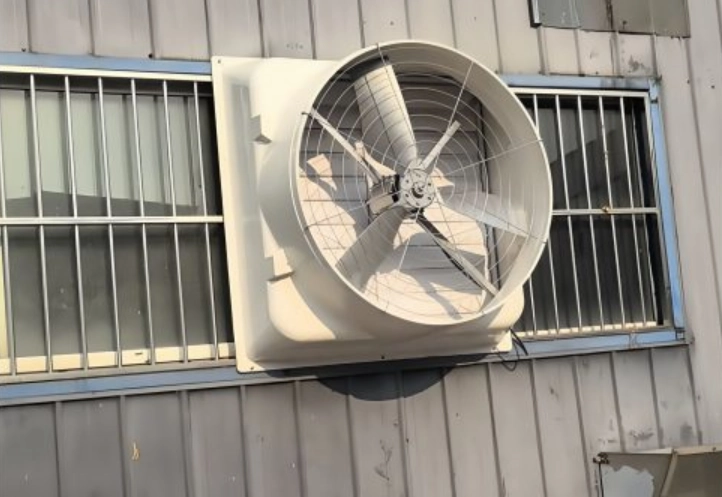
Food processing plants create challenging conditions for ventilation equipment. Steam, condensation, washdown water, salt, oil, flour, and chemical residue all reach fan components.
Airflow capacity is important, but it is only part of the specification. A fan may meet the required volume on day one and become a maintenance problem if its materials are unsuitable for the operating environment.
Why Do Food Processing Plants Need Specialized Ventilation?
Food production combines moisture, heat, airborne material, cleaning chemicals, and controlled hygiene zones.
Heat, Steam, and High Humidity
Cookers, blanchers, fryers, sterilizers, and hot water cleaning processes can release sudden bursts of heat and vapor. A room may feel normal during preparation, then become hazy when two lines start together.
Odors and Airborne Contaminants
Strong process odors usually show that air is lingering around the source. Flour dust, spice particles, oil mist, smoke, and cleaning aerosols behave differently, so one large wall fan may not always provide effective control.
Hygiene and Working Conditions
Airflow direction is a critical consideration. A badly arranged system may carry moisture or airborne material from raw processing toward packaging.
What Causes Exhaust Fans to Corrode in Food Processing Facilities?
Corrosion often begins at vulnerable areas such as blade hubs, fasteners, shutter pivots, motor brackets, and cut edges. The visible housing may still look acceptable.
Moisture is the obvious cause, but chemistry controls the rate. Salt, acidic residue, alkaline detergents, and chlorine based cleaners can attack ordinary coated steel. Light moisture exposure is very different from direct spray during repeated washdown operations.
A fan between a warm room and cool outdoor air may also remain damp long after nearby surfaces appear dry.
Which Exhaust Fan Materials Offer the Best Corrosion Resistance?
No single material fits every plant. Selection should follow the moisture, chemicals, temperature, cleaning method, and budget.
Fan Housing Materials
FRP (fiberglass reinforced plastic) is widely used in humid environments because it does not rust like carbon steel. Stainless steel is durable and easy to clean, but the grade matters around salt and aggressive chemicals. Galvanized steel can work in moderate conditions, though damaged coating and cut edges need attention.
| Material | Corrosion Resistance | Cleaning Considerations | Relative Cost | Recommended Applications |
| FRP / fiberglass | High in many humid areas | Check chemical compatibility | Medium | Wet or mildly corrosive rooms |
| Aluminum alloy | Good, exposure dependent | Watch strong alkalis and salts | Medium | Blades and lightweight parts |
| Stainless steel | High with correct grade | Durable and easy to clean | High | Demanding hygienic zones |
| Galvanized steel | Moderate while coating is intact | Inspect scratches and joints | Low – medium | Drier service |
Blade, Shutter, and Fastener Materials
Housing material gets attention because they are visible, but moving components require the same level of evaluation.
Aluminum blades offer low weight and useful corrosion resistance, though not against every chemical. PVC shutters avoid some rust points and can reduce backflow. Fasteners seem minor until a corroded bolt turns a routine motor replacement into a long repair.
How Should You Choose a Corrosion-Resistant Exhaust Fan?
Selection should start with the operating environment, not the catalog. Two plants processing the same food may need different fans because their cleaning programs, schedules, building pressure, and climate differ.
Define the Processing Environment
Record normal temperature and humidity, startup peaks, visible steam, cleaning frequency, detergent type, salt or acid exposure, and whether direct spray can reach the fan.
Fan location is also a critical consideration. A unit above a wet process sees different exposure from one beside a hose station. Outdoor exposure should also be considered when the fan is not operating.
Calculate the Required Airflow
Room volume and target air changes provide a starting point for airflow calculation.. Process heat, vapor generation, local hoods, open doors, existing HVAC, and seasonal conditions can significantly affect the final airflow requirement.
Makeup air is often overlooked during ventilation design. A fan cannot deliver rated airflow if replacement air has no reasonable path into the room. Doors become hard to open, air whistles through gaps, and actual performance falls. OSHA treats makeup air and pressure differences as part of ventilation performance.
Evaluate the Complete Fan Construction
Review housing, blades, shutters, hub, fasteners, motor, bearings, and drive arrangement. Consider how the fan will be cleaned and how technicians will reach the motor.
Direct drive removes belts from the maintenance list. Motor protection still needs separate confirmation. In washdown or hazardous areas, an engineer should verify ingress protection, electrical classification, and local requirements.
Where Should Exhaust Fans Be Installed in a Food Processing Plant?
Place exhaust close enough to the heat, steam, or odor source to influence it. A fan on the opposite wall may ventilate the room but provide limited control for a boiling vessel beneath a ceiling pocket. Capture effectiveness drops quickly with distance.
Air should generally move from cleaner zones toward wetter or more contaminated zones, then outdoors. Avoid discharging beside an intake, open window, or loading door.
A bakery had enough fan capacity on paper, but the exhaust units sat beside the main air inlet. Fresh air crossed only a few meters before leaving. Repositioning the supply path solved the issue more effectively than adding another fan.
How Can Maintenance Prevent Corrosion and Airflow Loss?
A corrosion resistant fan is not maintenance free. Grease buildup can change blade shape, sticky shutters can reduce airflow area, and loose hardware can create vibration.
Inspections should cover blade buildup, shutter movement, housing damage, fasteners, wiring, motor mounts, noise, and current draw. Cleaning chemicals must suit the materials; a product safe for the floor may not suit aluminum, seals, or FRP resin.
Service records help when technicians investigate airflow complaints.
What Type of Exhaust Fan Fits a Humid Food Processing Area?
A wall mounted fan with a non-rusting housing, corrosion conscious blades, simple drive, and backdraft shutters can suit general heat and moisture extraction where static pressure is low. It will not replace a local hood or ducted high pressure system.
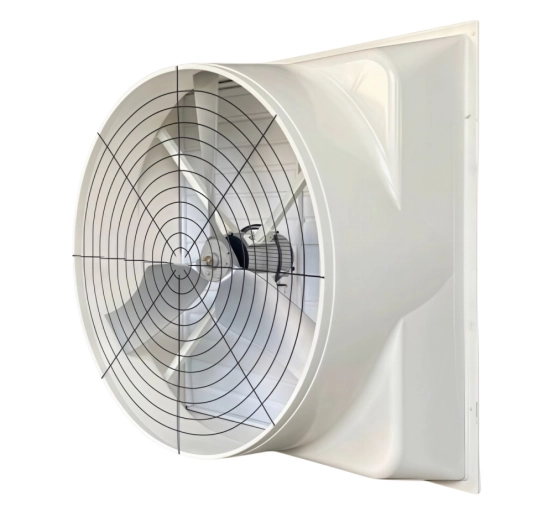
DAIHO Ventilation’s fiberglass exhaust fan with aluminum blades is one configuration worth considering. It combines an FRP housing, die cast aluminum blades, direct motor drive, and PVC shutters. Published models range from 28,000 to 48,000 m³/h, with food processing workshops listed among the applications.
These features help address corrosion-prone housings, belt maintenance, and backflow. Chemical compatibility, motor protection, wall construction, makeup air, and system resistance still need checking. The supplier’s useful role is to match the fan to process data, not simply to the phrase “food factory.”
Conclusion: Match the Fan to the Environment, Not Just the Airflow
A high airflow rating can hide unsuitable material choices. Specifications should describe exposure, construction, cleaning, pressure, and maintenance access alongside capacity.
Provide room dimensions, process type, temperature, moisture sources, cleaning method, and required air direction when requesting a selection.
Share your facility dimensions, processing application, temperature and humidity conditions, cleaning method, and target airflow with DAIHO Ventilation. The technical team can help you evaluate a suitable corrosion-resistant exhaust fan configuration for your operating environment.
Frequently Asked Questions
Q: Is an FRP exhaust fan suitable for food processing plants?
It can suit humid or mildly corrosive areas because the housing does not rust like ordinary steel. Confirm resin compatibility, motor protection, cleaning exposure, and hygiene requirements for the exact location.
Q: Are aluminum fan blades corrosion-resistant?
Aluminum alloy performs well in many damp environments, but resistance depends on the alloy and chemicals present. Strong alkalis, salt, or repeated chemical contact may require another material.
Q: How do I calculate exhaust fan capacity for a food factory?
Start with room volume and a suitable air change target, then adjust for process heat, steam, local extraction, openings, resistance, and makeup air. Check final sizing against tested fan data.
 English
  Russian
  Arabic
  Spanish
  French
  Italian