

Affordable Hammer Exhaust Fan Solutions for Ghanaian Layer Farms
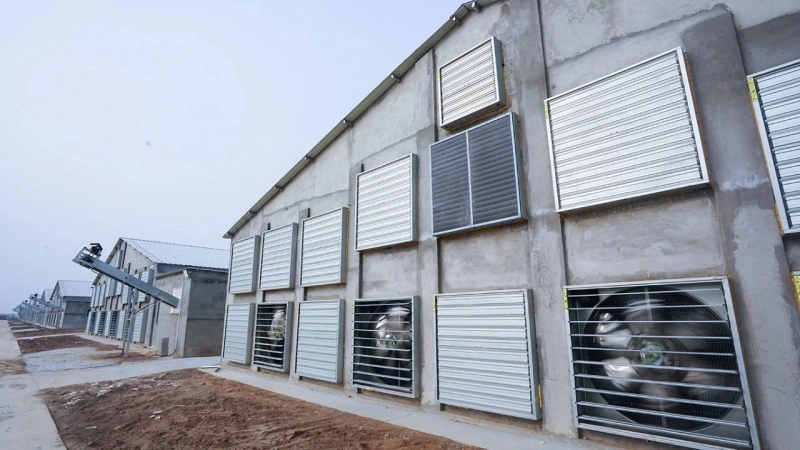
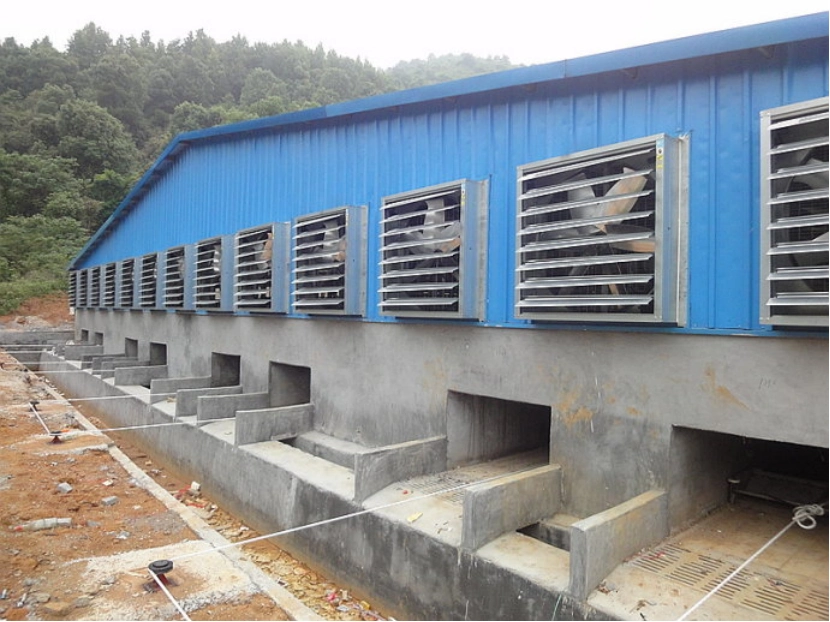
Proper ventilation is the foundation of any successful layer farm in Ghana. Without it, birds deal with heat stress, bad air quality, and fewer eggs. The most cost-effective solution to keep airflow steady and temperature even is to put in a solid hammer exhaust fan setup that fits the farm’s scale and design.
What Are Hammer Exhaust Fans?
Hammer exhaust fans are heavy-duty ventilation equipment built to remove hot, humid, and contaminated air from closed spaces like poultry sheds. These fans create negative pressure in the building. This pulls in fresh air through inlet vents. At the same time, it pushes out old air to the outside.
In layer farms, their role goes further than just comfort. They control temperature, cut down ammonia levels, and manage moisture that might lead to breathing problems in birds. A well-placed industrial exhaust fan gives steady airflow and saves energy.
Importance of Ventilation in Layer Farms
Ventilation involves more than simple air movement. It keeps the right mix of temperature, dampness, and gas levels. In hot places like Ghana, heat can accumulate rapidly and become life-threatening if not handled well. Good ventilation clears extra moisture from waste and bedding. It also brings in oxygen-filled air that birds need for their body processes.
When airflow works right, hens stay lively. They eat better and lay eggs with tougher shells. Bad ventilation causes soggy bedding. This boosts germ growth and ammonia pile-up. Both hurt bird health.
How to Set Up an Exhaust Fan?
Setting up an exhaust fan system starts with figuring out the whole air volume in the poultry house. The basic guideline is to replace the entire indoor air volume at least once per minute in hot times. Place fans on one wall of the structure. Install air inlets right across from them. This lets cross-ventilation flow smoothly.
Install each wall-mounted exhaust fan firmly at hen height or a bit higher for top results. Ensure wiring meets safety rules with good grounding. Test airflow path with smoke or light paper before you finish the job.
Is It Okay to Have 3 Intake and 4 Exhaust Fans?
No, using 3 intake spots with 4 exhaust fans creates an imbalance in airflow. When intakes are fewer than exhausts, negative pressure gets too strong inside. This cuts airflow effectiveness. It might also harm fan motors as they operate under excessive resistance. The count of intake spots should equal or go a tad beyond the number of exhaust fans. This keeps pressure even.
Are 120 or 140 Fans Better?
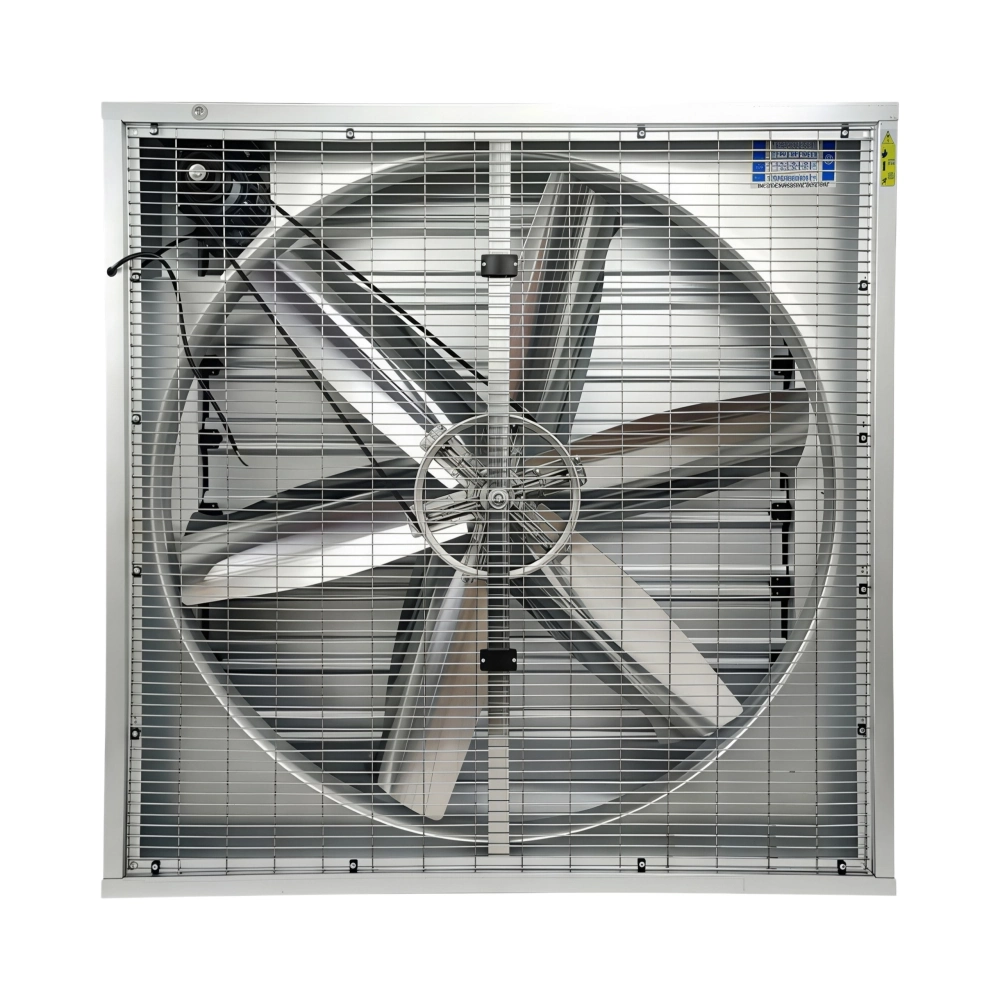
A 120 fan means a type with 120 centimeter blades, while a 140 fan has 140 centimeter blades. The selection depends on your shed size and needed airflow power.
Air Movement Capacity
| Fan Size | Blade Diameter | Airflow Capacity | Suitable Farm Size |
| 127 cm | Medium | 44500 m³/h | Small–medium farms |
| 140 cm | Large | 50000 m³/h | Large-scale farms |
Power Consumption
A 140 cm fan uses more power because of its bigger motor. It runs about 1.5–2 kW, unlike the 1.1–1.5 kW in a 127 cm one. Yet, since it handles more air quickly, energy use per task might still be better. This happens when you need fewer of them.
Installation Requirements
Both kinds need firm wall holds. Still, the weightier 140 cm one may call for extra-strong brackets or concrete support when set as an industrial wall exhaust fan.
Cost Comparison
Upfront prices for bigger fans run higher, by roughly 10–20%. But over time, running costs can drop. This is true if they take the place of several small ones doing the same job.
Can You Run 3 Fans off One Header?
You can run several fans from one header line safely. But only do so after checking the electrical load carefully.
Electrical Load Calculation
First, calculate total current load.
If each fan takes 1 kW at 220V (≈4.5A), three fans add up to about 13.5A total.
Wire Sizing Requirements
Select copper cables rated at least 25% over the expected current. So for this, you need one rated for around 17A at least. This stops overheating or power loss over far runs.
Circuit Breaker Selection
Choose a breaker just over total load but under wire limit. For example, a 16A breaker fits this setup nicely. It gives protection from overloads.
The Safety Warning
Avoid connecting too many power-hungry items on one line without expert review. Uneven pulls can lead to hot spots or fire risks. This is common in outlying spots where power steadiness changes a lot.
Control Considerations
For ease and safety, add separate switches or auto controls. This way, each fan runs on its own based on heat sensors. They will not operate simultaneously if not needed.
Conclusion
Budget-friendly hammer exhaust setups have have become essential equipment for Ghanaian poultry keepers. to ensure stable egg production in tough weather. These systems mix sturdiness with power-saving builds when set up right. This includes even intake-exhaust matches and sound electrical plans.
DAIHO Ventilation—a specialist manufacturer of industrial cooling systems—provides complete solutions. These include fans, evaporative coolers, and dehumidifiers. They suit better air quality in farm spots across Africa. Their know-how makes sure every industrial wall exhaust fan setup works reliably. It also keeps running costs in check.
FAQs
Q: What size hammer exhaust fan is best for a medium poultry house?
A 127 cm model usually provides sufficient airflow for medium-sized layer houses up to about 50 meters long.
Q: How often should I clean my wall mount exhaust fan?
Every two weeks during peak season to prevent dust buildup affecting motor efficiency.
Q: Can I use solar power with hammer fans?
Yes—solar setups can power DC motor versions effectively if panel capacity matches total wattage demand.
Q: Why do my fans make noise after installation?
Likely due to loose mounting bolts or misaligned blades; check alignment before continued use.
 English
  Russian
  Arabic
  Spanish
  French
  Italian