

Refrigerant vs Desiccant Dehumidifiers: Which Is Best?
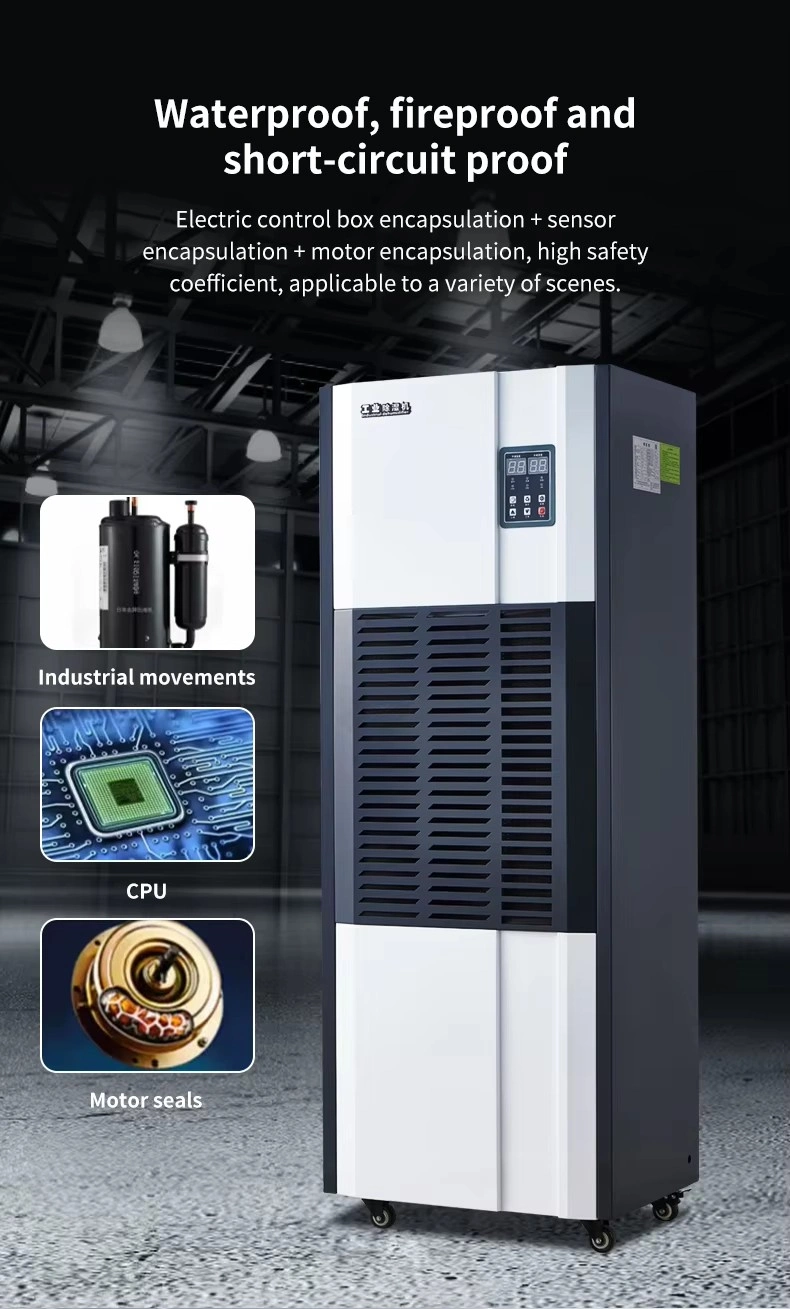
Choosing between a refrigerant and desiccant dehumidifier depends on where and how you plan to use it. For most large or highly humid spaces, refrigerant models perform better and are more cost-effective. However, desiccant models perform exceptionally well in cold or low-humidity environments. Knowing how they work helps you pick the most suitable option for your needs.
Understanding Refrigerant Dehumidifiers
How Refrigerant Dehumidifiers Function
Refrigerant dehumidifiers pull in wet air over cold evaporator coils. When the air gets cooler, water vapor turns into drops. These drops get collected or drained out. The cooling coils are key here. They drop the air temperature below its dew point. This process naturally causes condensation to occur.
Il DH-D-12IH is an industrial dehumidifier made for big humidity control jobs. It can remove 12 liters of water per hour. This strong performance shows how refrigerant systems use tough compressors and heat exchangers to handle moisture well.
Condensation happens when warm, damp air hits the cold evaporator surface inside the unit. The moisture drops then fall into a tank or go out through steady drainage. And that’s important for non-stop work in business settings.
Advantages of Using Refrigerant Dehumidifiers
Refrigerant dehumidifiers do well in spots with lots of humidity. They pull out big amounts of moisture fast. They use less power when temperatures are mild to warm. So they save money for ongoing use.
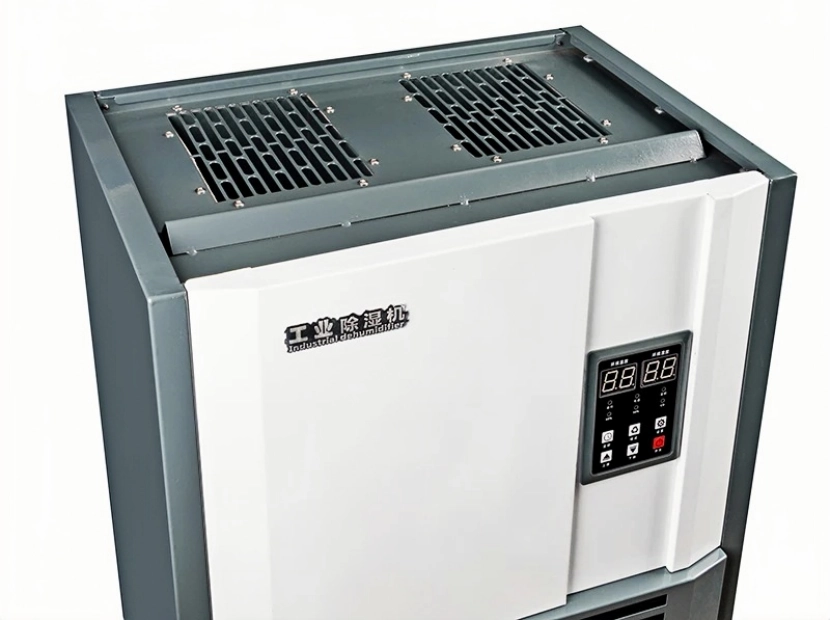
DAIHO Ventilazione vertical industrial dehumidifier with digital control panel is built to take out extra moisture well in large industrial and commercial spaces. Its setup shows how refrigerant systems can deal with daily use and need little upkeep, even in tough spots. Power savings get better with things like smart control panels. These adjust humidity on their own.
Ideal Applications for Refrigerant Dehumidifiers
Refrigerant models fit best for big areas like storage buildings, plants, or cellars where humidity stays high.
It delivers a circulating air volume of 3000 cubic meters per hour (3000 m³/h), making it suitable for areas between 450 and 500 square meters. This makes them ideal as large space dehumidifiers or commercial dehumidifiers that keep steady conditions for tools and stored items.
They work fine in temperatures over 10°C but might slow down in colder weather because frost can build on coils. However, newer models have auto defrost features. These help keep things running smooth.
Exploring Desiccant Dehumidifiers
Mechanism Behind Desiccant Dehumidifiers
Desiccant dehumidifiers use desiccant materials like silica gel to soak up moisture straight from the air. They don’t condense it on cold spots. The full desiccant needs to get refreshed, usually by heating. So it can keep taking in water vapor well. The refresh cycle matters a lot. Without it, the system would stop drying soon.
Benefits of Desiccant Dehumidifiers
Desiccant units shine in cool spots where refrigerant ones have trouble from coil ice. They keep up steady work even when temperatures fall near freezing. Since they skip compressors, these units run quieter and weigh less. That gives them better ease to move around.
Their softer noise makes them good for labs or storage spots that need exact humidity control without bothering nearby work.
Optimal Uses for Desiccant Dehumidifiers
These units get used often in work settings where very low humidity is a must, such as drug making, gadget building, or food packing lines. They’re also handy in unheated storage or cold keeping spots where refrigerant systems don’t do as well.
For example:
Cold climates with frequent frost
Environments demanding below 30% relative humidity
Sensitive material storage areas
Comparing Refrigerant and Desiccant Dehumidifiers
Performance Differences in Various Conditions
Refrigerant types perform optimally at higher humidity levels (above 50% relative humidity) and warmer temperatures. Desiccants systems maintain consistent performance even at temperatures below 10°C. In hot areas like Southeast Asia, refrigerants are common because they save energy in steamy weather.
| Caratteristiche | Refrigerant Type | Desiccant Type |
| Best Temperature Range | 10°C–38°C | -20°C–30°C |
| Typical Use | Commercial & Industrial | Industrial & Low-temp |
| Livello di rumore | Moderato | Basso |
| Efficienza energetica | High at warm temps | Lower overall |
| Maintenance Needs | Moderato | Higher (regeneration) |
Power use differs. Refrigerants need less electricity per liter of water taken out. But they rely a lot on room temperature. Desiccants take more energy during refresh cycles. Yet they give steady drying no matter the weather.
Factors to Consider When Choosing a Dehumidifier
When picking between the two types:
Evaluate the size of your space. Larger areas benefit from high-capacity refrigerant systems.
Figure out your goal humidity range.
Think about working temperature and power bills.
Look at upkeep needs like filter cleaning or rotor swaps.
ventilazione DAIHO dehumidifiers allow precise humidity settings from 30% to 90% relative humidity, making them suitable for diverse industrial applications. This flexibility ensures stable performance across different operating environments without compromising efficiency.
Making the Right Choice: Refrigerant vs Desiccant
Evaluating Your Specific Needs
Begin by checking your setting factors. If your place runs all year in warm spots or deals with big air amounts, a refrigerant model gives better savings. Ensures stable operation even under high-humidity and high-temperature conditions.
That stability is vital for protecting machinery and inventory from mold or corrosion over time. On the flip side, if you’re handling low temperature jobs or need super dry conditions below 30% relative humidity, desiccants will win out every time. Even with more energy use.
Understanding long term costs means factoring not just electricity but also durability and service intervals — both key strengths of well built industrial dehumidifiers like those produced by DAIHO Ventilation, a professional manufacturer specializing in ventilation systems and energy-efficient cooling technologies for commercial environments.
Recommendations Based on Use Cases
For home use: small refrigerants handle daily moisture control efficiently.
For commercial buildings: large space dehumidifiers using refrigerant technology provide balanced cost-to-performance ratios.
For industrial setups: desiccants suit precision processes demanding strict dryness levels year-round.
DAIHO Ventilation’s experience as an integrated supplier of industrial ventilation and cooling solutions positions it well within this field — its equipment supports improved airflow management while maintaining stable environmental quality across various industries.
Domande frequenti
Q: What’s the main difference between refrigerant and desiccant dehumidifiers?
Refrigerants condense moisture using cooled coils; desiccants absorb it chemically using drying materials.
Q: Which type works better in cold rooms?
Desiccant dehumidifiers perform better at low temperatures since they don’t rely on coil cooling.
Q: Are refrigerant models more energy-efficient?
Yes, especially in warm climates where condensation occurs naturally without excessive power draw.
Q: How often do desiccants need regeneration?
It depends on usage hours and humidity load but typically after each absorption cycle through heating processes.
Q: Can one system handle both hot and cold conditions effectively?
Some hybrid designs exist, but generally each type excels within its specific operating range — choosing based on environment remains key.
 English
  Russian
  Arabic
  Spanish
  French
  Italian