

Evaporative Air Cooler vs AC: What’s the Difference?
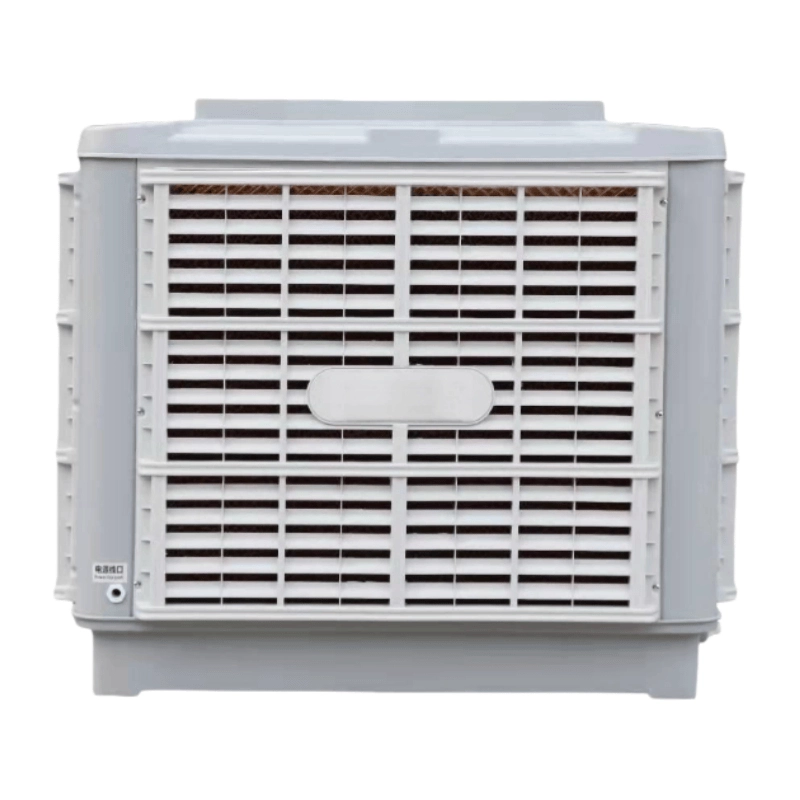
Evaporative coolers and traditional air conditioners both improve indoor comfort during hot weather. But they cool things down in totally different ways. If you’re picking between an evaporative air cooler and a regular AC, the big differences come from how they work, how much power they use, how much upkeep they need, and what kind of weather they’re good for. In hot and dry climates, evaporative cooling systems are often more effective.
How Air Conditioners and Evaporative Coolers Work
The Cooling Mechanism Behind Air Conditioners
Regular air conditioners use special coolants and a sealed compressor setup. They draw warm indoor air into the system. Then that air goes over cold coils with the coolant in them. Finally, the machine blows cooler air back out. This setup also pulls moisture out of the air. That makes the room feel even fresher. So ACs do best in closed-up spaces. They perform best in enclosed environments where outdoor heat intrusion is limited.
How Evaporative Coolers Operate
Evaporative coolers, also known as swamp coolers, cool things using plain old evaporation. They pull in warm outside air. The air goes through wet pads. Water evaporates and takes heat away from the air. That drops the temperature. Then the cooler air gets blown inside.
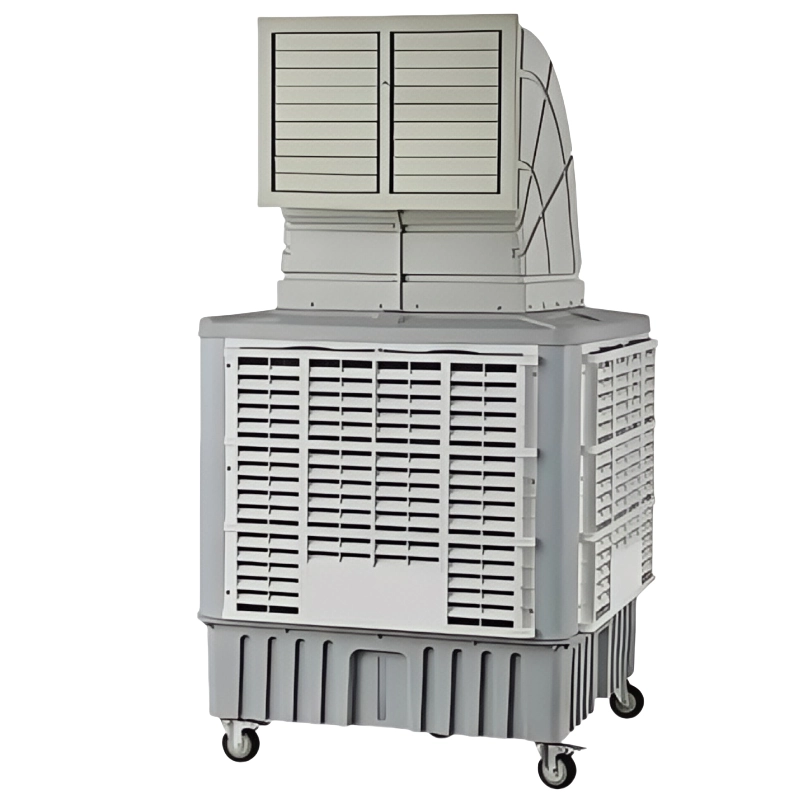
Industrial Models from DAIHO Ventilation made this portable air cooler tough for big industrial spots. It moves a ton of air and doesn’t use much electricity. It has a strong build, different ways to blow air out, and a big water tank. It is widely used in the hot climates of Southeast Asia.
Key Differences Between Evaporative Coolers and Air Conditioners
Confronto dell'efficienza energetica
Refrigeratori evaporativi don’t need nearly as much electricity as ACs. No big compressor or coolant involved. See the comparison below:
| System Type | Average Power Consumption | Cooling Method |
| AC Unit | 1.5–3.5 kW | Refrigeration |
| Evaporative Cooler (e.g., DH-18ASY) | 1.1 kW | Water Evaporation |
They are significantly more energy efficient. This results in lower long-term operating costs.
Impact on Indoor Humidity Levels
ACs take humidity out of the air. This is particularly beneficial in humid climates. But in dry spots it can make your skin or throat feel rough. Evaporative coolers actually add moisture. So they work awesome in dry areas like Arizona or some parts of Australia. In places that are already humid though? Their cooling efficiency decreases significantly in already humid environments.
Air Quality Considerations
Want fresh air coming in? Evaporative coolers are great for that. They keep pulling outside air through those wet pads. The pads catch some dust and bits in the air too.
Evaporative coolers bring fresh outdoor air and filter dust and allergens. ACs just keep recycling the same indoor air. That helps hold the temp steady. But you might need good filters to keep the air clean long-term.
Environmental Impact of Each System
Coolants in ACs can leak sometimes. That adds to greenhouse gases if not dealt with right. Evaporative coolers are environmentally friendly. They rely solely on natural evaporation for cooling. No bad coolants at all. So they hurt the planet less—if the weather fits them.
Cost and Maintenance Factors to Consider
Installation and Upfront Costs
Air conditioning systems typically require professional installation—like ducts, wires, and pros to do it. That costs more at the start. Evaporative coolers?
Cost-effective: They cost less to buy and keep up. Good pick if you’re watching your budget.
Operating Costs Over Time
Evaporative coolers run cheaper every day since they consume relatively low amounts of electricity. Take a mobile one like DAIHO Ventilation’s DH-23ASY. It only uses 1.5 kW but pushes out 23,000 m³/h of air. Plenty for big areas without high bills.
Maintenance Requirements for Each System
ACs need you to swap filters often, clean coils, and check coolant. Evaporative coolers?
You just clean the pads and water tank now and then so nothing builds up or smells bad. For example, DAIHO Ventilation’s mobile industrial evaporative cooler has a 300-liter tank. It requires periodic cleaning, but no complex maintenance procedures are necessary.
Suitability for Different Environments and Uses
Climate Considerations When Choosing a Cooling System
ACs handle humid or dry spots okay. They shine in sealed rooms though. Evaporative systems do best where the air stays dry. The extra humidity actually feels nicer there.
DAIHO Ventilation makes pro industrial evaporative coolers. They’re built for rough spots like Southeast Asia’s crazy heat.
Applications of Mobile and Industrial Evaporative Coolers
Mobile ones work well for cooling one spot:
1. Garages
2. Patios
3. Pop-up event areas
Big industrial models like the DH-30ASY/BP push 30,000 m³/h. Good for:
1. Industrial Workshops: They drop temps in huge factories or plants. Workers feel way more comfy.
2. Agricultural Facilities: They are commonly used in poultry houses, greenhouses, and livestock facilities.
Additional Factors That Influence Your Choice
Noise Levels During Operation
Newer ACs stay pretty quiet on low. But the compressor can get loud when it starts. Evaporative coolers usually hum softly. You might hear the water pump or big fan though.
Flexibility and Portability Options Available
Need something you can move? Evaporative coolers win here.
Portability: They come with wheels. Roll them wherever you want. Easy to switch spots.
Most split or window ACs stay put once set up.
Health and Comfort Preferences
Super dry rooms bother some people’s skin or breathing. Evaporative cooling adds a bit of moisture. That can feel better. But if allergies or asthma bug you, an AC with strong filters might keep things safer.
Domande frequenti
Domanda: Can I use an evaporative cooler in a humid climate?
Not effectively. They need low humidity to cool properly. Otherwise they struggle.
Domanda: What’s cheaper to run: evaporative cooler or AC?
Evaporative coolers are generally more economical to operate. They use way less power.
Domanda: Do mobile evaporative coolers need plumbing?
Nope. Most have tanks built in. Just fill them up yourself.
Domanda: Are evaporative coolers noisy?
Usually quieter than ACs. But fans or pumps make some noise.
Domanda: Which is better for allergies?
ACs with HEPA filters grab more allergens. Evaporative ones have basic pads that help a little but not as much.
 English
  Russian
  Arabic
  Spanish
  French
  Italian