

Di quale capacità di raffreddamento hai bisogno per il raffreddamento localizzato industriale?
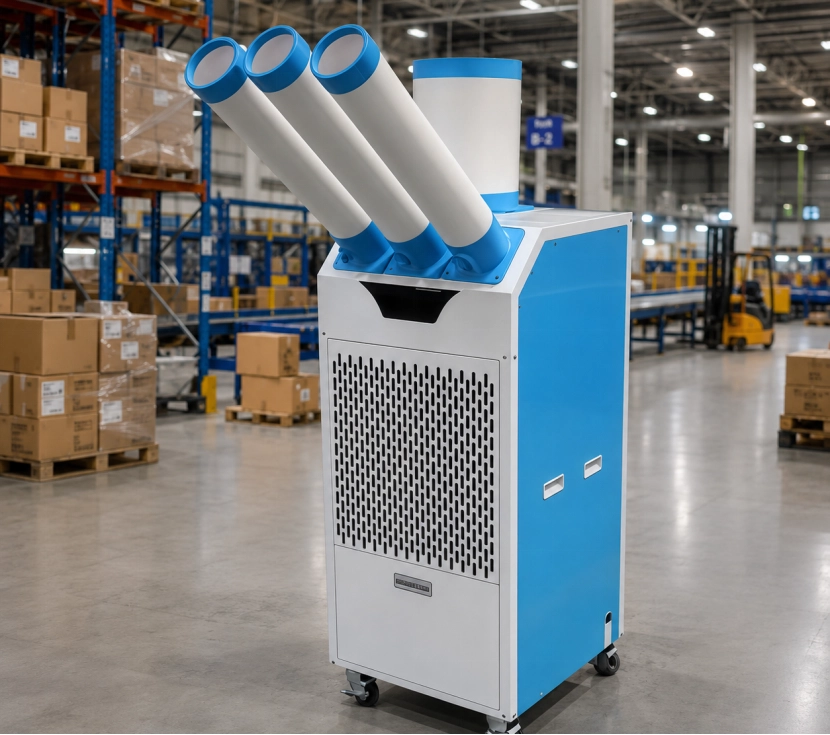
La capacità di raffreddamento deve essere selezionata in base alla zona di lavoro effettiva, piuttosto che alla superficie totale dell'edificio.
Raffreddamento localizzato industriale Non è progettato per raffreddare un'intera fabbrica come un ufficio. Fornisce raffreddamento direttamente ad aree specifiche come una postazione operatore, un banco di imballaggio, una zona a bordo macchina o un'area di riparazione temporanea. Un'unità più grande non è sempre la scelta migliore. Spesso, il corretto posizionamento dell'unità è più importante.
Che cosa si intende per capacità di raffreddamento nel contesto del raffreddamento localizzato industriale?
La capacità di raffreddamento indica la quantità di calore che un'unità può dissipare nel tempo. Viene solitamente espressa in W, kW o BTU/h. Un valore più elevato indica una maggiore capacità di dissipazione del calore.
Tuttavia, la capacità nominale non dovrebbe essere considerata da sola. Lo stesso raffrescatore localizzato potrebbe risultare efficace in una piccola stanza chiusa e insufficiente in un'officina semiaperta. La capacità deve essere valutata in base al flusso d'aria, alla direzione del condotto e alla distanza dal bersaglio. La domanda fondamentale è: l'unità fornisce un raffreddamento efficace alla persona o all'apparecchiatura che ne ha bisogno?
Quale area o zona di lavoro devi raffreddare?
L'obiettivo di raffreddamento deve essere definito chiaramente.
"Raffreddare l'officina" è troppo vago. "Raffreddare due operatori accanto a una macchina sigillatrice" è utile. "Raffreddare il tavolo di ispezione vicino alla porta ovest durante i turni estivi" è meglio.
Una postazione di lavoro fissa richiede in genere una capacità inferiore rispetto a un'area ampia con lavoratori in movimento. Se la zona è estesa, l'unità necessita di un maggiore flusso d'aria o di un migliore controllo dei condotti.
Raffreddare una postazione di lavoro rispetto al raffreddamento di un'intera officina.
Il raffreddamento di una postazione di lavoro dipende dalla direzione e dalla portata del flusso d'aria. L'aria raffreddata deve raggiungere la postazione di lavoro effettiva.
Raffreddare un'intera officina è un'operazione complessa. L'altezza del soffitto, le porte aperte, la ventilazione e il calore generato dai macchinari sono tutti fattori importanti. In molte fabbriche, il raffreddamento dell'intero ambiente è costoso e superfluo. Il raffreddamento localizzato, invece, accetta che l'edificio possa rimanere caldo finché la postazione di lavoro non diventa utilizzabile.
In che modo le fonti di calore influiscono sulla capacità di raffreddamento necessaria?
Le fonti di calore possono aumentare rapidamente la domanda di capacità.
Un tavolo da imballaggio in un'area di assemblaggio leggero rappresenta un caso tipico. Lo stesso tavolo, se posizionato accanto a un compressore, una stazione di saldatura, un forno, una pressa per stampaggio o una linea di produzione di prodotti caldi, potrebbe richiedere una capacità di raffreddamento molto maggiore. L'area può essere la stessa, ma il carico termico è diverso.
Anche il tempo di funzionamento è importante. Il calore continuo richiede un raffreddamento più stabile. Quando le ventole sono già in funzione e i lavoratori continuano a soffrire di stress da calore, il problema di solito non è legato solo al flusso d'aria.
Lo spazio è aperto, semiaperto o chiuso?
Un ambiente chiuso offre generalmente le condizioni più favorevoli per un refrigeratore industriale. L'aria raffreddata rimane più a lungo e il risultato è più facile da controllare.
Un'officina semiaperta è più difficile da raffreddare in modo costante. Porte aperte, traffico di carrelli elevatori, sistemi di aspirazione e continue infiltrazioni di aria esterna possono ridurre l'efficacia del raffreddamento. In queste situazioni, la direzione dei condotti può essere importante quanto la capacità nominale.
I magazzini aperti e le baie di carico sono generalmente più adatti a progetti di raffreddamento mirati. Cercare di raffreddare l'intero volume comporta uno spreco di energia. Raffreddare il banco di imballaggio, il punto di ispezione o la postazione dell'operatore è un obiettivo più realistico.
Quante persone o postazioni di lavoro necessitano di raffreddamento contemporaneamente?
Raffreddare un operatore in una posizione fissa è semplice. Una sola uscita dell'aria può essere sufficiente se il percorso del flusso d'aria non è ostruito.
Diverse postazioni di lavoro sono differenti. Un singolo getto d'acqua fredda può essere utile a un lavoratore ma non agli altri. Questo accade spesso nelle linee di produzione, dove le persone si trovano su lati diversi di una macchina o di un tavolo.
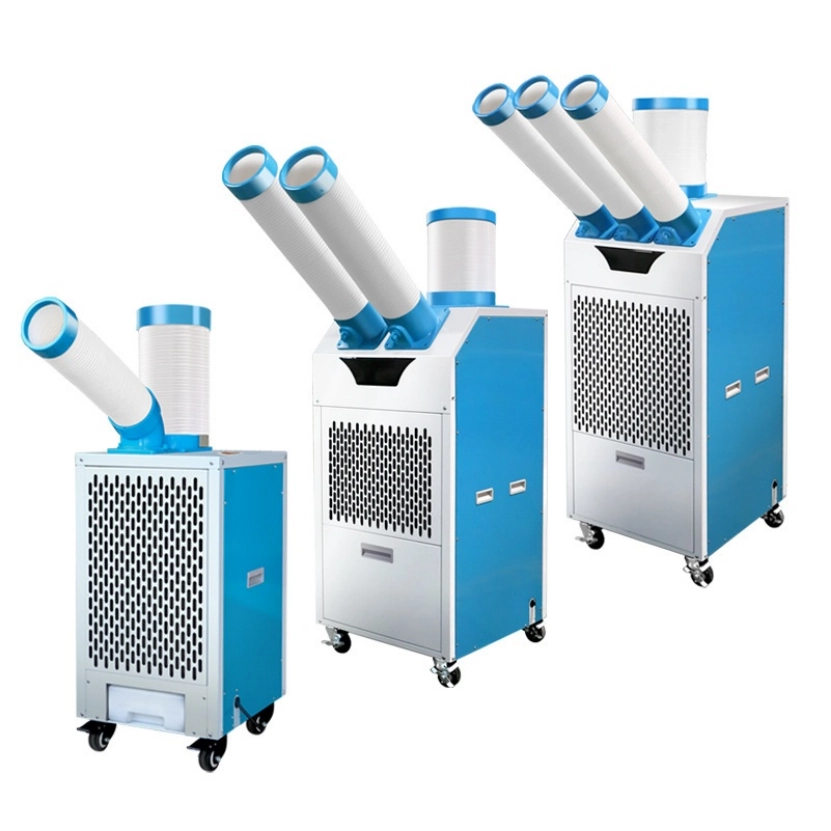
Per più punti fissi, verificare sia il design dell'uscita che la sua capacità. Un raffrescatore spot multicanale può inviare aria raffreddata a più punti da un'unica unità.
Perché la distribuzione del flusso d'aria è importante
La capacità di raffreddamento rimuove il calore. La distribuzione del flusso d'aria determina se il raffreddamento raggiunge il bersaglio corretto.
Un'unità potente può risultare deludente se il condotto è orientato verso un corridoio o ostruito da strutture meccaniche. Un'unità di potenza moderata può invece essere più efficace se l'uscita dell'aria è rivolta verso la postazione di lavoro o verso la fonte di calore.
Qual è la gamma di capacità di raffreddamento tipica dei refrigeratori spot industriali?
Non esiste un'unica capacità corretta adatta a ogni applicazione. La tabella seguente è solo una guida preliminare.
| Scenario applicativo | Riferimento alla capacità di raffreddamento | Riferimento al flusso d'aria (m³/h) | Note sulla selezione |
| Postazione di lavoro fissa singola | Circa 2700 W/9207 BTU | Circa 400 | Adatto a un singolo operatore o a un piccolo punto di lavoro con breve distanza di erogazione dell'aria |
| Piccola area di produzione o confezionamento | Circa 3500 W/11935 BTU | Circa 550 | Ideale per carichi termici moderati, postazioni di lavoro ravvicinate o per un utilizzo prolungato durante la giornata. |
| Diverse postazioni di lavoro lungo una linea | Circa 4500 W/15345 BTU | Circa 800 | Utile quando l'aria raffreddata deve raggiungere più di un operatore o in più di una direzione |
| Magazzino, area logistica o zona di lavoro semiaperta | Circa 6500 W/22165 BTU | Intorno al 1200 | Concentratevi sul raffreddamento delle aree di lavoro piuttosto che dell'intero spazio aperto. |
Una piccola area di lavoro chiusa potrebbe richiedere una capacità inferiore a quella prevista. Un'area di dimensioni simili adiacente a macchinari caldi potrebbe invece richiederne molta di più.
Oltre alla capacità di raffreddamento, quali altre specifiche dovresti verificare?
La capacità è facile da confrontare, ma non dovrebbe essere l'unico fattore nella scelta delle apparecchiature.
Verificare il volume del flusso d'aria, la regolabilità del condotto, l'intervallo di temperatura di esercizio, il metodo di drenaggio, la capacità del serbatoio, il consumo energetico, il livello di rumorosità, la presenza di ruote e l'accesso per la manutenzione. La mobilità viene spesso trascurata nella scelta delle apparecchiature. Se un raffreddatore d'aria industriale portatile è difficile da spostare, potrebbe non essere posizionato dove il raffreddamento è più necessario.
Come evitare di scegliere la capacità di raffreddamento sbagliata?
Descrivi il sito in modo onesto prima di selezionare un modello.
Misurate la zona di lavoro. Individuate le principali fonti di calore. L'impianto di raffreddamento potrebbe non essere posizionato nel punto in cui è più necessario. Verificate se lo spazio è chiuso, semiaperto o aperto. Considerate la stagione più calda, non solo le condizioni medie.
Un piccolo margine di capacità è ragionevole. Tuttavia, è opportuno evitare un sovradimensionamento eccessivo. Costa di più, occupa più spazio e può comportare sprechi di energia.
Quando è opportuno valutare un sistema di raffreddamento localizzato industriale multicanale?
Un raffreddatore localizzato multicondotto è utile quando l'aria raffreddata deve raggiungere più punti.
Tra i casi tipici si annoverano diversi operatori lungo una linea di produzione, due postazioni di lavoro vicine a una macchina o un'area di manutenzione in cui sia i lavoratori che le attrezzature necessitano di raffreddamento. Un raffrescatore d'aria industriale a triplo condotto si rivela ideale in queste configurazioni perché offre un controllo flessibile della direzione del flusso d'aria. L'aria di raffreddamento viene diretta verso le aree in cui gli operatori effettivamente lavorano.
Conclusione: scegliere la capacità in base alle reali condizioni di lavoro.
La scelta del sistema di raffreddamento localizzato industriale dovrebbe essere effettuata partendo dal cantiere.
La superficie è importante, ma le fonti di calore, la posizione dei lavoratori, la direzione del flusso d'aria, l'apertura degli spazi e gli orari di lavoro sono spesso ancora più rilevanti. Un buon sistema di raffreddamento localizzato non mira a raffreddare l'intero stabilimento, ma a creare un ambiente di lavoro confortevole e produttivo.
Hai bisogno di aiuto per scegliere la capacità di raffreddamento più adatta alla tua applicazione?
Contatta DAIHO Ventilation oggi stesso per trovare il sistema di raffreddamento localizzato industriale più adatto al tuo ambiente di lavoro.
Domande frequenti
Domanda: Come si calcola la capacità di raffreddamento per il raffreddamento localizzato in ambito industriale?
Iniziate definendo la zona target, quindi apportate le opportune modifiche in base alle fonti di calore, all'apertura, al numero di lavoratori e agli orari di funzionamento.
Domanda: Una maggiore capacità di raffreddamento è sempre preferibile?
No. Una capacità eccessiva può aumentare i costi, il consumo energetico e l'ingombro. Un dimensionamento corretto è generalmente preferibile a un dimensionamento eccessivo.
Domanda: Un singolo sistema di raffreddamento localizzato può raffreddare più postazioni di lavoro?
Sì, se l'unità ha una capacità sufficiente e una distribuzione del flusso d'aria adeguata. I sistemi multicanale sono spesso più indicati per questo tipo di configurazione.
Domanda: Cosa conta di più, la capacità di raffreddamento o il flusso d'aria?
Entrambi. La capacità dissipa il calore, mentre il flusso d'aria fornisce raffreddamento all'area interessata. Nelle officine aperte, una cattiva direzione del flusso d'aria può ridurne rapidamente l'efficacia.
Domanda: Quando è utile un raffrescatore localizzato a triplo condotto?
È utile quando è necessario raffreddare diverse postazioni di lavoro vicine o quando l'aria fredda deve essere direzionata verso punti diversi da un'unica unità portatile.
 English
  Russian
  Arabic
  Spanish
  French
  Italian