

Best Ventilation Solutions for Poultry Houses with Fiberglass Fans
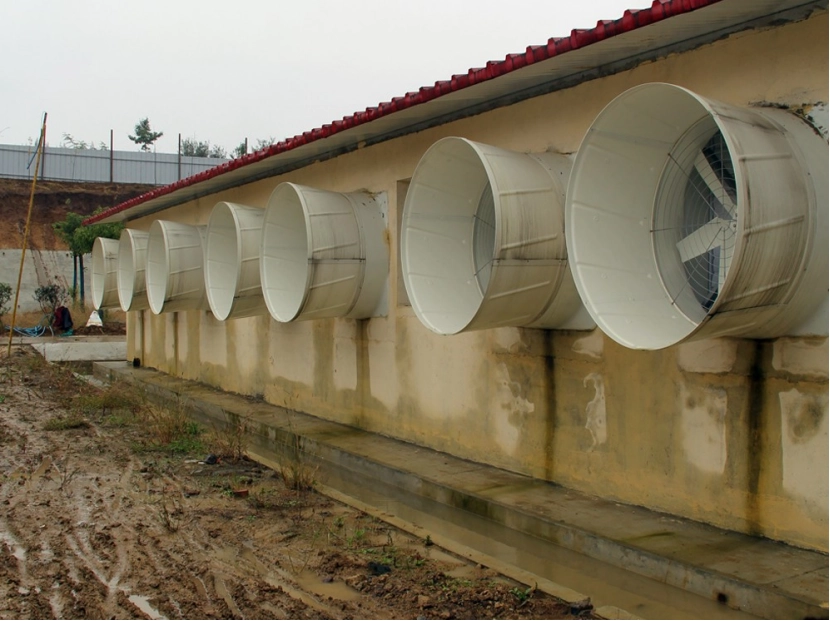
Good ventilation is a must in today’s poultry farming. Without it, bird health, output, and general control of the surroundings drop fast. The fix is not just any fan setup. You need the correct kind of industrial exhaust fan made for poultry challenges. Fiberglass-reinforced plastic (FRP) fans are more and more viewed as a solid pick. They last long, work well, and stand up to tough settings.
Importance of Ventilation in Poultry Houses
Role of Ventilation in Maintaining Poultry Health
Ventilation systems have a main job in keeping a steady small climate inside poultry houses. Right airflow helps manage heat and dampness levels. It stops heat stress in hot times and wet-related breathing issues in cold spells.
Besides heat control, ventilation takes away extra dampness and bad gases like ammonia. Good ventilation also lowers germs in the air and dust. It creates better spots for birds and workers.
Maybe most important, a well-ventilated house helps with the best feed conversion ratios (FCR). Birds in comfy spots show stronger hunger, body work, and growth speeds.
Impact of Poor Ventilation on Productivity
On the other hand, bad ventilation brings big risks. High death rates from lack of air or sickness bursts can happen from weak air swap. Uneven airflow makes birds crowd near fans or openings. This leads to spotty weight gain and care problems.
Overview of Fiberglass Fans as a Ventilation Solution
Characteristics of Fiberglass Exhaust Fans (FRP Fans)
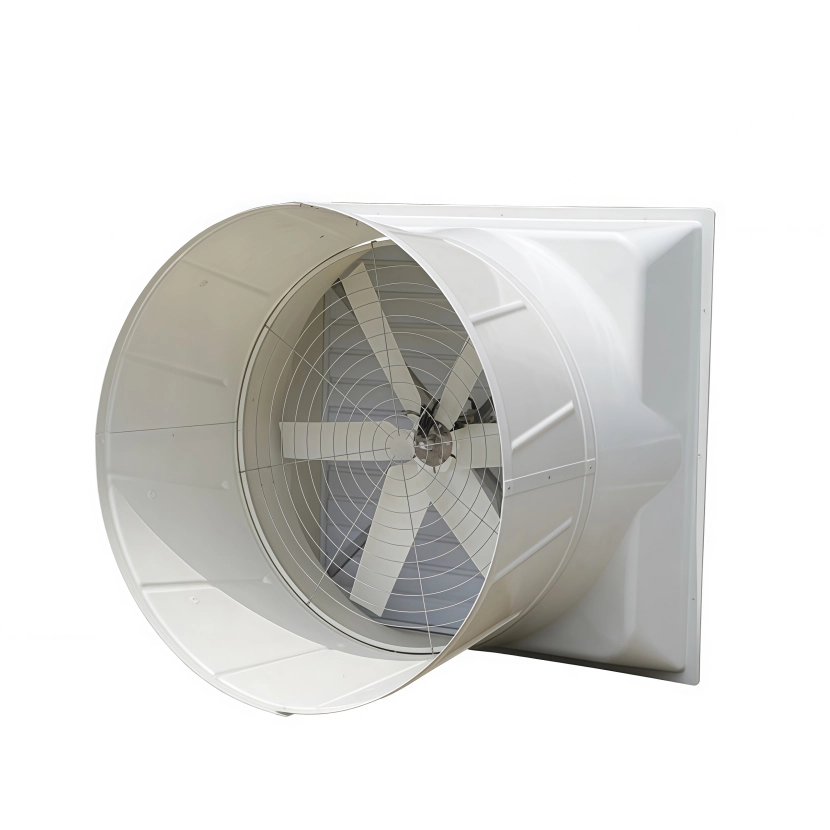
FRP fans are built for places like poultry houses where dampness, dust, and chemicals are always there. DAIHO EC Motor FRP industrial exhaust fan is made for big air flow in hard spots like plants, poultry houses, and greenhouses.
Their key features include:
1. Fiberglass reinforced plastic SMC molding shell, which are both beautiful and durable.
2. The aerodynamic cone design improves air extraction efficiency while reducing energy usage.
3. The motor is directly connected to drive, with simple structure and easy maintenance.
4. The fan blades are made of nylon, which are high in strength, corrosion-resistant.
These traits let FRP fans give steady work with little stop time. That’s a big plus in packed poultry setups.
Comparison with Traditional Metal Fans
Unlike old galvanized steel fans that rust over time from ammonia and dampness, fiberglass kinds hold their shape much longer. They are quieter too, thanks to less shaking. This can cut stress in birds.
Moreover, the fan adopts brushless EC motor with high efficiency, and its energy efficiency is 30% higher than that of ordinary fans. That means lower electricity bills and less frequent maintenance calls.
Types of Ventilation Systems Using Fiberglass Fans
Tunnel Ventilation Systems with FRP Fans
Tunnel systems pull air in a straight line from one end of the house to the other. In hot areas, this makes a wind-chill feel that cools birds a lot. It works even if the air heat doesn’t shift much.
FRP fans like those from DAIHO Ventilation do great here. They have high airflow power and can handle ongoing use in very wet spots. This setup works best in top summer months when fast heat removal matters most.
Cross Ventilation Systems Supported by Fiberglass Fans
In houses with milder weather or during spring and fall changes, cross ventilation is often picked. Air moves side to side across the building width. It uses fans on the side walls.
This plan helps even air mixing and stops heat layers in the house. Because of their light build, fiberglass fans are simple to put up at good spots on side walls. This gives balanced airflow.
Negative Pressure Ventilation in Poultry Houses
One of the most common systems around the world, negative pressure ventilation counts on exhaust fans to lower inside pressure. So fresh air gets pulled through controlled openings.
FRP fans fit this well because they keep up work even with dust buildup or chemical fumes. Steady negative pressure makes sure fresh air spreads evenly. It keeps surroundings stable.
Key Components in a Fiberglass Fan-Based Ventilation Setup
Fan Placement Strategies for Optimal Airflow Distribution
Fan setup is key. For tunnel systems, put high-power industrial exhaust fans like FRP cone fans on end walls. This makes strong flow in one way. For cross or negative-pressure systems, space sidewall fans evenly. It helps avoid dead areas.
Sizing the fan system right means matching airflow power (usually in CFM) with house size and bird numbers. A too-small system causes poor air change. Too-big ones waste power.
Integration with Inlet Systems and Curtains
Fans by themselves can’t handle air quality. They need to work with changeable openings or tunnel doors. These guide new air across tops or along walls. It avoids cooling young chicks too much or making winds near food spots.
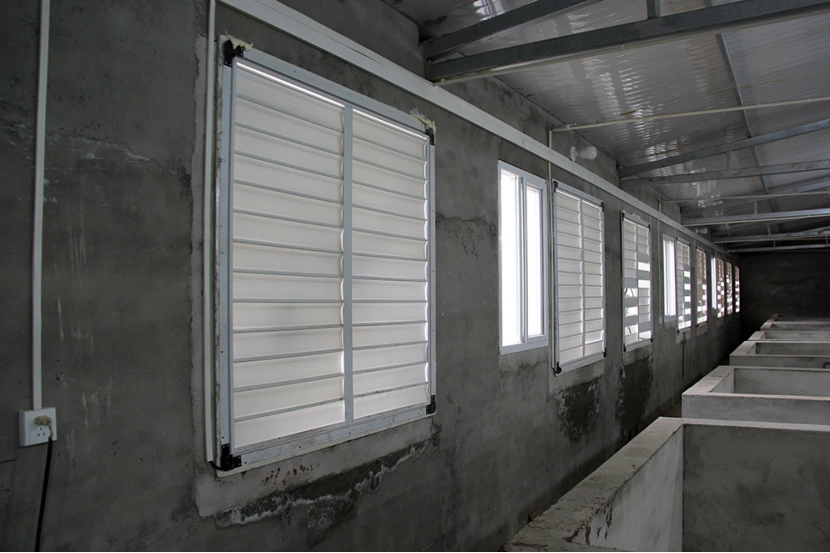
PVC shutters used in some FRP fans are based on the principle of airflow synthesis to prevent flies and backflow of air. Properly integrated inlet systems enhance energy efficiency and improve indoor comfort.
Automation and Control Systems for Fan Operation
Most up-to-date poultry houses use auto controls tied to sensors. These watch heat, dampness, and bird age. Fans run through heat switches or PLCs that change speed and on/off times as needed.
Variable speed can be achieved 0-10VDC, RS485 serial communication. This allows for precise tuning of airflow volumes based on real-time needs—reducing energy consumption without compromising bird welfare.
Performance Advantages of FRP Fans in Poultry Environments
Energy Efficiency and Reduced Operational Costs
FRP fans give a better airflow-to-power ratio than metal ones. That means more air moved per bit of electricity used. Over time, this leads to big savings on costs.
Add to that their strong build. Its fiberglass-reinforced plastic housing ensures excellent corrosion resistance and long service life. And you get good return through fewer swaps or fixes.
Resistance to Harsh Agricultural Conditions
Farm settings are rough: ammonia from waste, steady dampness, feather dust all over. DAIHO Ventilation’s fiberglass fans stand up to ammonia, dampness, and dust without losing work quality.
This makes them perfect for use all year without needing lots of cleaning or part changes.
Enhanced Bird Welfare Through Stable Climate Control
A steady climate means calmer birds. They breathe hard less in hot stress times when airflow stays even. Less crowding cuts injury numbers. Stable spots help with expected growth patterns. That’s needed for good production runs.
Selection Criteria for Industrial Exhaust Fans in Poultry Applications
Key Specifications to Evaluate When Choosing FRP Fans
When picking a fiberglass ventilation fan for poultry use, think about:
1. Airflow capacity (CFM) per unit
2. Static pressure capabilities
3. Motor efficiency rating (such as IE5)
4. Noise level and vibration control
These specs should match your house size, wall padding, and local weather.
Matching Fan Capacity with House Size and Stocking Density
A good guide: Figure needed CFM based on bird weight. Usually around 3–4 CFM per kg for tunnel systems in top heat times. Then split total need by single fan output to find how many you need.
Always plan for extras. Fans might break or need fixes during key times.
Compliance with Industry Standards and Certifications
Make sure chosen fans meet safety rules and work standards (e.g., CE marking). Fitting with auto systems also means better blend with new poultry house setups.
As a specialized manufacturer focused on industrial exhaust solutions, DAIHO Ventilation integrates engineering expertise with practical field knowledge—delivering energy-efficient FRP fans suited for heavy-duty agricultural applications.
FAQs
Q: Why is ventilation critical in poultry houses?
Ventilation controls temperature, humidity, and gas levels—directly impacting bird health and productivity.
Q: What makes FRP fans better than metal ones?
They resist corrosion from ammonia and moisture better, offer quieter operation, and consume less energy over time.
Q: Can FRP fans be used year-round?
Yes, they’re designed to handle both summer heat loads and winter humidity issues without performance loss.
Q: How do I size my fan system correctly?
Calculate total CFM needs based on bird weight or floor area, then match it against fan capacity while accounting for redundancy.
 English
  Russian
  Arabic
  Spanish
  French
  Italian