

Benefits of Adjustable Pitch Axial Fans for Industrial Ventilation
When “Standard” Axial Fans Aren’t Enough
Many engineers jump straight to centrifugal fans for high static pressure ventilation in ducted systems. But adjustable-pitch axial fans often step in as a smarter, efficient alternative in plenty of setups.
Think about the headaches: unstable negative pressure, sky-high energy bills, and big shifts in operating conditions. These issues crop up all the time in industrial spots. Adjustable-pitch axial fans tackle these head-on, offering a flexible fix where rigid options fall short.
In projects supported by DAIHO Ventilation, engineers often switch from oversized centrifugal fans to adjustable-pitch axial fans to balance pressure, energy use, and noise.
What Is an Adjustable-Pitch Axial Fan?
Basic Axial Flow Fan Principles
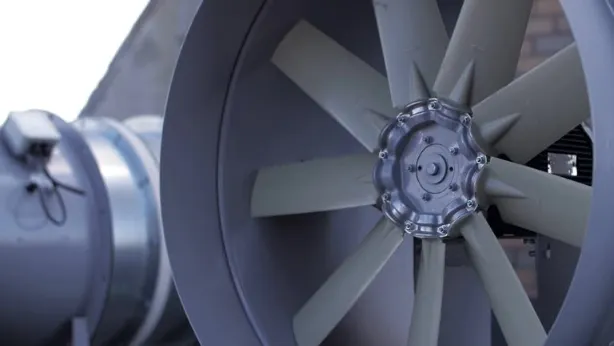
Adjustable pitch axial fans stand out in the ventilation world for their tweakable design. Axial flow fans push air straight along the axis.
They shine in high volume low pressure scenarios, moving lots of air without much resistance. Compare that to centrifugal fans, which excel at high static pressure but might not fit every bill.
Adjustable vs Fixed Pitch Blades
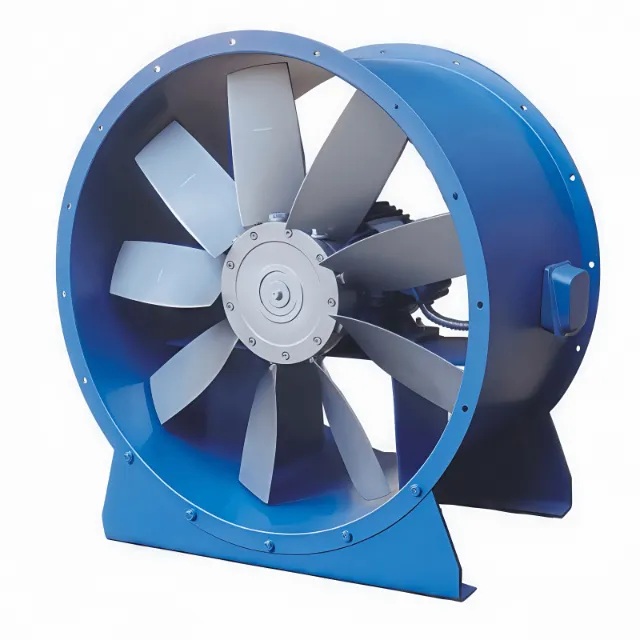
An adjustable-pitch axial fan lets you change the blade angle to tweak airflow and static pressure. Do it at standstill or even while running in controllable pitch versions.
Bump up the blade angle, and you get more static pressure and airflow. Of course, that ramps up power draw too. Fixed pitch blades? Stuck in one spot, no flexibility.
Why High-Pressure Industrial Ventilation Is So Challenging
High-pressure industrial ventilation throws curveballs at every turn.
Typical High-Pressure Scenarios
Picture long ducts snaking through factories, packed with bends, filters, heat exchangers, paint booths, or dust collection setups.
These ducted ventilation systems demand steady pressure to keep processes humming, like in process exhaust or filtration systems.
Limits of Fixed-Pitch Axial Fans in These Systems
Fixed pitch axial fans struggle when conditions shift. The operating point drifts off the best efficiency zone.
Result? Either skimpy airflow or wasteful energy and noise spikes. Fan curves and system curves just don’t align anymore.
Key Benefits of Adjustable-Pitch Axial Fans in High-Pressure Systems
These fans bring real advantages to high pressure axial fan setups, boosting energy efficient ventilation.
1. Match Fan Curve to System Curve More Precisely
Tweak the pitch, and the fan curve adjusts to hug the system resistance curve tighter. That means optimized airflow without excess volume or pressure.
No more wasting effort on overkill.
2. Handle Changing Process Conditions Without Replacing the Fan
Air density flips with temperature or humidity swings. Filters clog, production loads vary.
Adjust the pitch, and the fan adapts on the fly in variable operating conditions. Keeps process ventilation smooth without swaps. Flexible airflow control at its best.
3. Energy Savings Compared with Throttling and Oversizing
Fixed pitch fans with dampers? Big static pressure losses. Just variable frequency drives without pitch tweaks? Efficiency dips in some spots.
Variable pitch energy efficiency shines by running near peak design, slashing fan power reduction needs.
4. Better Noise and Vibration Control
Dial down pitch and speed at low loads for quieter operation. At high loads, smoother aerodynamics cut stall and vibration reduction.
Low noise axial fans like these make noisy plants more bearable. Noise control becomes easier.
5. Longer Equipment Life and Lower Maintenance
Motors avoid overloads, blades and bearings see controlled stress. Fewer starts and stops, less full-throttle runs. That adds up to longer fan lifespan and reduced maintenance. Reliability goes up.
Some DAIHO Ventilation adjustable-pitch axial fans are delivered with recommended pitch settings for different static pressure ranges, making it easier for engineers to fine-tune performance during commissioning.
Adjustable-Pitch Axial vs Fixed Axial vs Centrifugal Fans
Choosing the right fan boils down to needs.
Performance Envelope and Static Pressure Capability
Fixed-pitch axial fans handle high volume but mid-low pressure. Adjustable-pitch axial fans stretch that envelope, covering wider pressure ranges without fuss.
Centrifugal fans push even higher static pressure, though they bulk up in size and cost.
Footprint, Installation and Duct Integration
Axial fans slip into straight ducts and large cross-sections effortlessly. Centrifugals need extra room for turns and setups.
Control Options and Cost of Ownership
Mix in variable frequency drives, pitch tweaks, or dampers. Each combo affects upfront costs and long-term energy bills. Smart picks keep ownership costs down.
How to Specify an Adjustable-Pitch Axial Fan for High-Pressure Ventilation
Getting it right starts with basics.
Step 1 – Define Duty Point: Airflow and Static Pressure
Crunch process needs, ventilation rates, equipment drops to nail the design point.
Step 2 – Choose Fan Type and Diameter
Match airflow and pressure range to pick size and speed.
Step 3 – Select Initial Blade Pitch and Check Power
Scan manufacturer curves for a pitch angle. Double-check motor power and margins.
Step 4 – Consider Materials, Temperature and Environment
Go for aluminum or stainless blades. Factor in corrosion, explosion-proof needs.
Many engineers use DAIHO Ventilation performance charts or selection software to choose the proper blade pitch and diameter for each high-pressure application.
Example Applications of Adjustable-Pitch Axial Fans
These fans pop up in diverse spots.
Long-Duct Factory Exhaust System: Tune pitch to handle added gear or resistance hikes later on.
Heat Exchanger or Air Cooler Fans: Big temperature swings and load changes? Variable pitch controls outlet temps and saves energy.
Parking Garage or Tunnel Ventilation: Switch pitches for daily venting versus emergency smoke extraction.
Common Mistakes When Using Adjustable-Pitch Axial Fans
Avoid these pitfalls to keep things smooth.
Treating Pitch Adjustment as “Set and Forget”: Skip regular checks against real conditions, and you drift off optimal.
Ignoring Power Draw When Increasing Blade Angle: Crank up the angle, power surges. Motors overload easy.
No Coordination with VFD or Damper Control: Layer controls without a plan? Energy waste piles up.
Poor Measurement of System Pressure and Airflow: No solid data means guessing on tweaks. Blind adjustments flop.
Quick Checklist for Engineers and Plant Owners
1. Got a clear design point with airflow plus static pressure?
2. Mapped out possible future expansions or shifts?
3. Verified power and noise at various pitches?
4. Set up pressure and flow measurement spots for later tweaks?
Conclusion
Adjustable-pitch axial fans blend flexibility, energy savings, and easy upkeep in high-pressure industrial ventilation.
Rather than defaulting to bulky centrifugals, a well-designed energy-efficient axial fan makes systems tunable and thrifty.
FAQ
Q: What is an adjustable-pitch axial fan?
An adjustable-pitch axial fan allows the blade angle to be changed to control airflow, static pressure, and power consumption.
Q: Why use adjustable-pitch fans in high-pressure ventilation?
They provide higher static pressure capabilities and better match system resistance compared with fixed-pitch axial fans.
Q: How does changing blade pitch affect performance?
Increasing blade pitch boosts airflow and pressure but also raises power draw; reducing pitch lowers energy consumption.
Q: Are adjustable-pitch axial fans more efficient than centrifugal fans?
In many medium-to-high static pressure systems, adjustable-pitch axial fans offer similar performance with lower weight, footprint, and energy use.
Q: Where are adjustable-pitch axial fans used?
They are used in ducted ventilation, heat exchangers, cooling towers, process exhaust, and industrial buildings requiring variable operating conditions.
 English
  Russian
  Arabic
  Spanish
  French
  Italian