

How Do I Determine the Number of Fans in a Greenhouse?
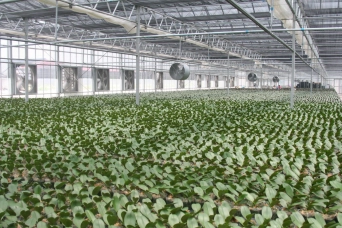
Determining the right number of exhaust fans in a greenhouse isn’t just about installing as many as possible — it’s about finding the sweet spot that balances airflow, temperature control, and energy efficiency. The core answer? It depends on the greenhouse’s volume, crop type, climate, and how air moves inside. Let’s break it down step by step to ensure proper ventilation and plant health.
Key Elements That Influence the Number of Fans in a Greenhouse
Greenhouse Size and Volume Considerations
First things first: the size of the greenhouse sets the baseline. What matters is not just square footage but the total cubic volume — length × width × average height. That’s because air exchange is calculated in cubic feet per minute (CFM), and CFM is volume driven. A large structure may need several exhaust fans to keep airflow uniform across all zones.
If you’ve got a high ceilinged structure or hanging equipment, airflow stratification can occur. That’s when warm air pools at the top while the bottom stays cool. Fixing that may require vertical circulation or repositioning of fans.
Type of Crop and Its Ventilation Needs
Different plants, different rules. Leafy greens like lettuce prefer cooler, consistent environments, while tomatoes tolerate a bit more warmth but still need humidity control. High density planting increases transpiration and heat buildup, which means stronger ventilation is necessary.
If you’re using grow lights or running hydroponics, that’s extra heat and moisture to deal with. You’ll likely need more exhaust capacity per fan to compensate for that internal load.
Climate and Geographic Location
External conditions shape how hard your ventilation system needs to work. In hot, humid areas, you’ll need more frequent air exchanges to remove heat and moisture. Colder climates may require fewer air changes but more intelligent air mixing to prevent cold spots.
Wind also plays a role. If prevailing winds naturally flow through your structure, you might reduce mechanical fan dependency slightly — although relying only on passive airflow is risky for consistent performance.
Greenhouse Construction and Layout
Material choice affects insulation and heat retention. Polycarbonate greenhouses, for instance, hold heat better than glass but may need more aggressive ventilation during summer.
Layout complexity also matters. Internal partitions or benches can block or redirect air, leading to hotspots or dead zones. That often necessitates additional fans or even fans tube systems for more targeted airflow.
Step by Step Process to Calculate Fan Requirements
Estimating Air Exchange Rate Based on Greenhouse Use
A typical guideline is 1–2 air changes per minute (ACM) during summer months for effective cooling. That means replacing the entire air volume once or twice every 60 seconds.
For crops that are heat sensitive or environments with supplemental heating/cooling systems, you might tweak this rate. Specialty crops could even require rates above 2 ACM depending on their stress tolerance.
Calculating Total Required CFM (Cubic Feet per Minute)
Use this basic formula:
Greenhouse Volume (cubic feet) × Desired ACM = Total CFM
Say your greenhouse measures 100 ft × 30 ft × 10 ft:
That’s 30,000 cubic feet. At 1.5 ACM:
30,000 × 1.5 = 45,000 CFM total needed.
If you’re dealing with internal shade cloths or grow lights, consider increasing that figure by 10–15% to account for extra heat accumulation.
| Greenhouse Volume | Desired ACM | Required CFM |
| 30,000 cu ft | 1.5 | 45,000 |
| 20,000 cu ft | 2.0 | 40,000 |
| 50,000 cu ft | 1.2 | 60,000 |
Determining the Number of Exhaust Fans Needed
Once you’ve got your target CFM, divide that by the CFM rating of each exhaust fan:
Total CFM ÷ Fan Output (per fan) = Number of Fans
If you’re using industrial fans rated at 10,000 CFM each:
45,000 ÷ 10,000 = 4.5 → round up to 5 fans
Always round up to ensure coverage and consider redundancy in case of failure or dust buildup over time.
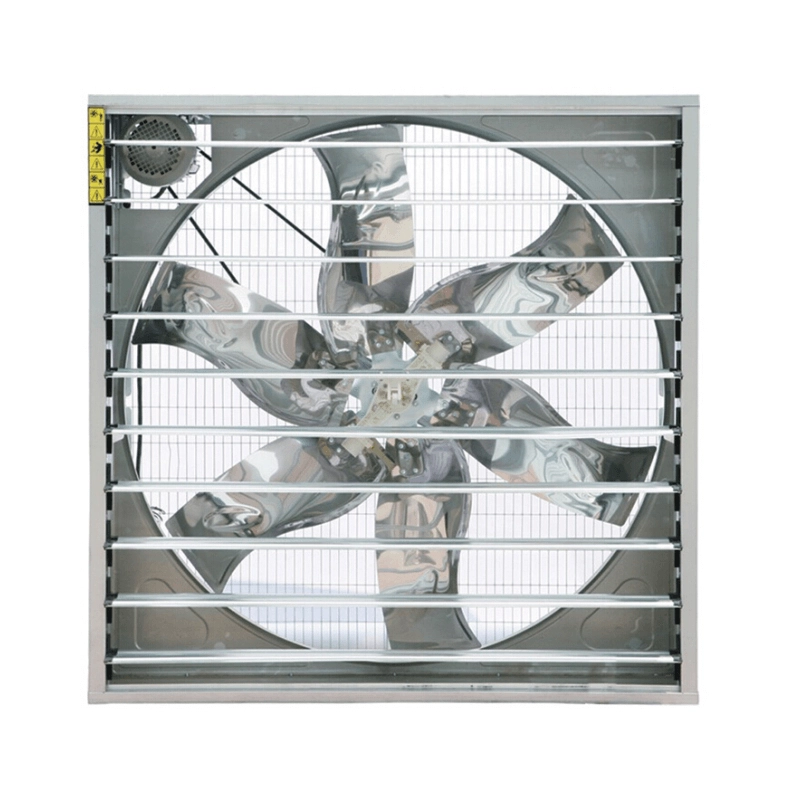
The push pull type fan is mainly made up of blade, Centrifugal Opening Device, motor, outer frame, protecting nets, supporting frames, shutters. The shutters are automatically opened after starting. These types of fans are widely used in greenhouses and farms due to their durability and automatic operation features.
Optimizing Fan Placement for Efficient Airflow
Proper Spacing Between Exhaust Fans
Place exhaust fans evenly along one end wall and inlets on the opposite side. This ensures a uniform draw of air across the entire structure. Avoid clustering fans unless targeting a specific microclimate zone.
Take advantage of natural wind direction by placing fans downwind — this reduces resistance and boosts performance.
Integration with Inlet Louvers or Vents
Your exhaust system must be balanced with intake vents. If not enough air comes in as is pulled out, negative pressure can warp walls or stress fans.
Coordinate your fans with automated louver systems that open proportionally as fans activate. That ensures steady pressure and even air distribution.
Impact of Fan Tube Systems on Air Distribution
Fan tubes — long perforated ducts — help distribute air from a single fan along the length of planting beds. These are especially useful in long tunnel greenhouses or multi bay structures.
With efficient fans tube layout, you might reduce the number of required exhaust fans because each unit covers more area with directed airflow.
Additional Factors to Improve Ventilation Efficiency
Vertical Air Circulation Techniques
Installing vertical circulation fans mixes warm upper layer air with cooler bottom layer air. This reduces stratification and helps maintain a stable environment throughout the canopy.
It’s particularly important for taller crops or greenhouses over 12 feet high.
Energy Efficiency Considerations in Fan Selection
Choose exhaust fans with high efficiency ratings — look for EC motors or variable speed drives (VSDs). VSDs let you adjust fan speed based on real time conditions instead of running full throttle all day.
Also monitor power draw versus performance over time. An aging fan might still spin but deliver reduced CFM — skewing your whole airflow model.
DAIHO Ventilation manufactures high efficiency industrial exhaust fans designed specifically for agricultural use cases like greenhouses and livestock farms. Their product line includes push pull centrifugal systems and energy efficient motor technologies that help optimize airflow while minimizing energy costs.
When to Consult a Ventilation Specialist
Complex Layouts or Multi Zone Greenhouses
If your structure has multiple compartments or irregular layouts — think L shaped tunnels or overlapping bays — airflow becomes unpredictable. That’s where custom CFD (computational fluid dynamics) modeling might be needed.
Ventilation specialists can simulate airflow digitally and recommend exact fan counts and placements based on real scenarios.
Integration with Automated Climate Control Systems
If your greenhouse is integrated with environmental sensors (temperature, humidity, CO₂), syncing them with fan operation ensures more responsive climate management. Professionals can wire fans into these systems so they activate dynamically based on sensor inputs.
DAIHO Ventilation also provides integration support for climate control systems as part of their complete ventilation solutions portfolio.
Retrofitting Existing Structures with New Ventilation Systems
Older greenhouses often lack sufficient airflow due to outdated equipment or changed crop types. Before retrofitting new exhaust fans, assess insulation performance, existing ducting (if any), and available power supply.
A full audit by an expert helps avoid over installation or underperformance due to mismatched equipment.
FAQs
Q: How do I know if my greenhouse needs more ventilation?
Watch for excess condensation, uneven temperatures across zones, or signs of plant stress like yellowing or mold — these are red flags for poor airflow.
Q: Can I use just one large fan instead of multiple small ones?
You can if it meets your total CFM requirement and airflow is evenly distributed — but multiple units offer redundancy and better zoning flexibility.
Q: Do exhaust fans work at night?
Usually not needed unless internal heat or humidity builds up due to lighting or dense crops. Automated systems can trigger them as needed.
Q: What maintenance do greenhouse fans require?
Clean blades and grills regularly; check motor function and shutter operation every few months to ensure performance isn’t degrading.
 English
  Russian
  Arabic
  Spanish
  French
  Italian