

What Is the Purpose of a Pad in Evaporative Cooling?
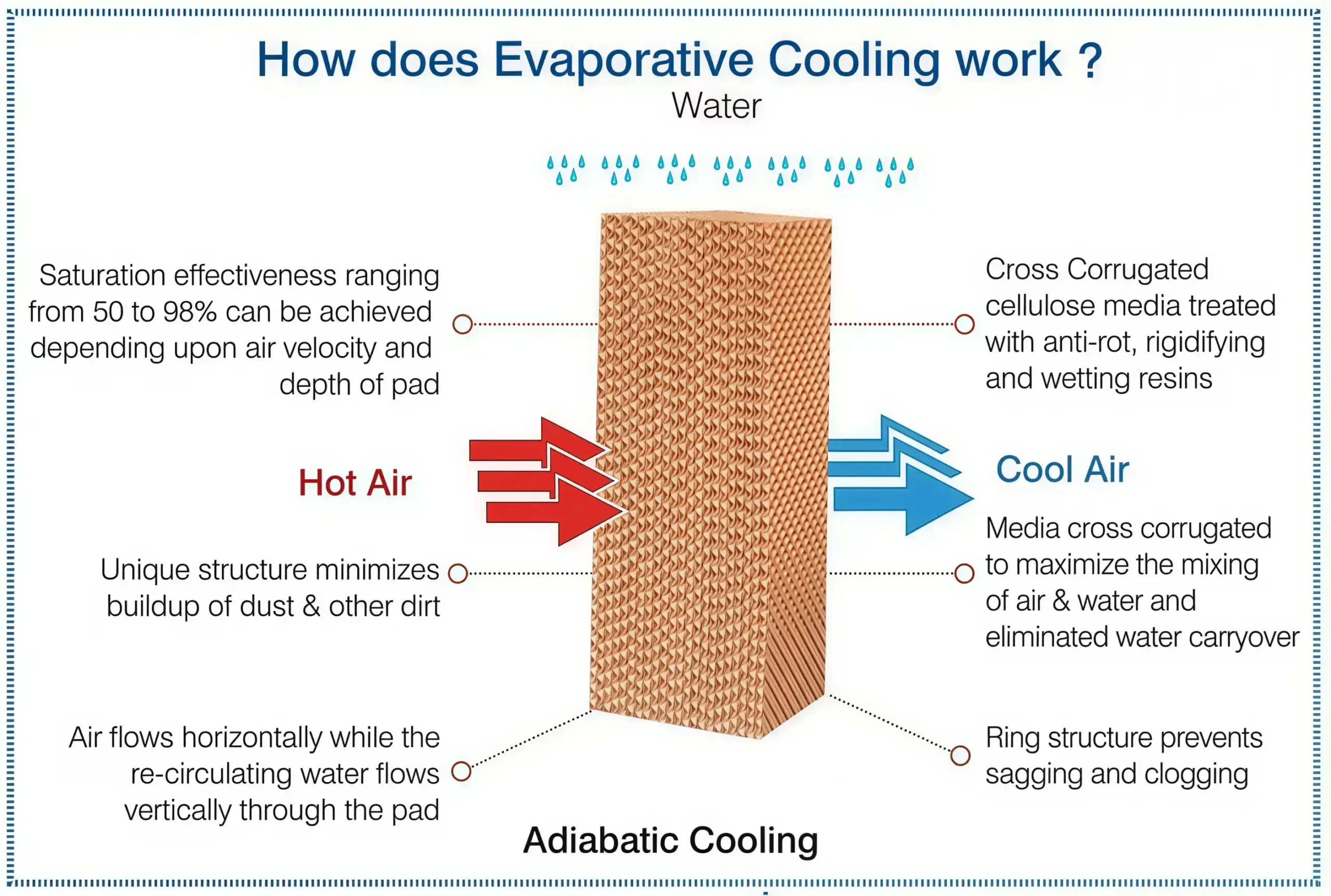
Evaporative cooling relies on a basic but strong idea: water takes in heat as it turns into vapor. The pad is the core component of an evaporative cooler. It’s where air, water, and heat swap places. Without the pad, the system would be unable to deliver the natural, refreshing cool air it is known for. This is why many industrial and commercial operations rely on evaporative cooling technology.
Understanding Evaporative Cooling
The Basics of Evaporative Cooling
تبريد التبخر works by using exhaust fans to pull warm air through wet pads. There, water takes heat from the air and evaporates. This change lowers air temperature. It also raises humidity a bit. Then, the cooled air moves into the area. This creates a comfortable indoor environment with minimal energy consumption.
Traditional air conditioning uses refrigerants and compressors. Evaporative cooling uses just water and air flow. It saves a lot of energy. Plus, it’s kinder to the planet. It does not release harmful greenhouse gases. It does not need much power. In dry areas or big factory spaces, this way keeps temperatures nice. It costs less too.
How Cooling Pads Work in an Evaporative Cooling System
In an evaporative cooling system, several components work together to create continuous airflow and temperature reduction. These systems are commonly used in factories, warehouses, greenhouses, and livestock farms where large-scale ventilation is required.
A typical evaporative cooling system usually includes:
Exhaust Fans – Installed on one side of the building to pull air through the system and create negative pressure.
Water Circulation System – Pumps water to the top of the cooling pads and keeps them evenly wet.
Evaporative Cooling Pads – Installed on the air inlet side and act as the medium where evaporation takes place.
When the مروحة العادم operate, warm outside air is drawn through the wet cooling pads. As the air passes through the pad material, water evaporates and absorbs heat from the air. This process lowers the air temperature before it enters the building.
The Role of Pads in Evaporative Cooling
Maximizing Cooling Efficiency
The pad is essential to the overall performance of an evaporative cooling system. Its structure determines how efficiently water evaporates. It also affects how smoothly cool air spreads. Good pads make sure all warm air touches a wet spot. Then it leaves as cool air.
Evaporative Surface Area
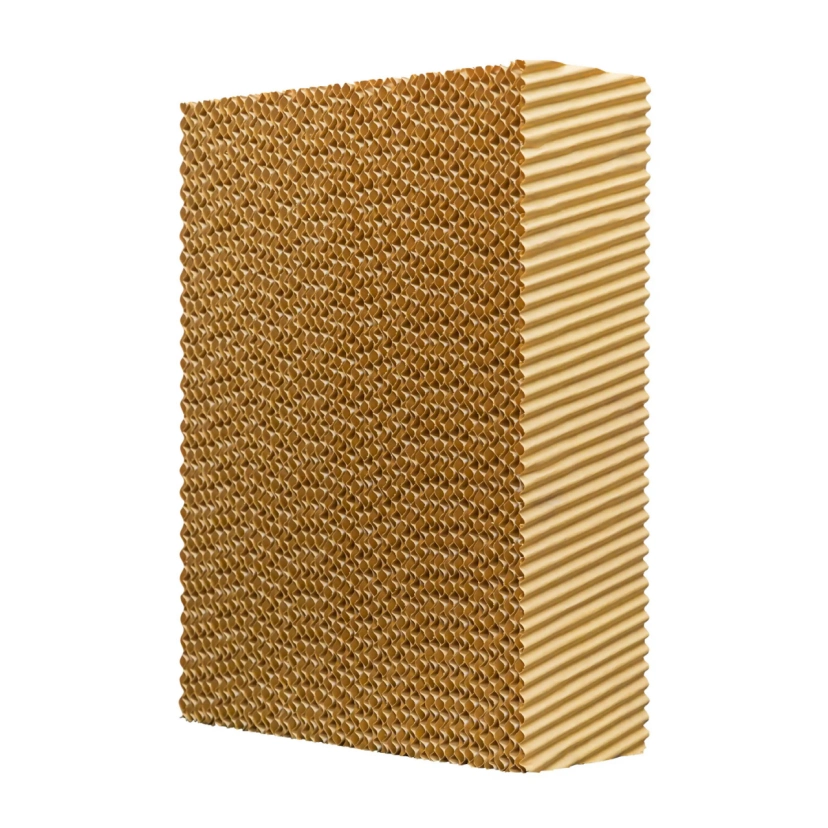
Pads are made from highly absorbent materials such as cellulose or synthetic fibers. Think cellulose or fake fibers. They enhance evaporation by providing a larger surface area for heat absorption. Honeycomb-type evaporative cooling pads are particularly effective. Its shape lets air and water touch more. The bigger the space, the quicker the evaporation. So, cooling gets better.
Airflow Distribution
A well-designed pad promotes even airflow across its entire surface. This prevents hot spots and temperature inconsistencies within the space. Even air flow helps the whole system work better. Every part of the pad helps with cooling the same way.
Water Distribution
Uniform water distribution across the pad is essential. This prevents dry areas that would otherwise reduce cooling efficiency. A properly designed system ensures consistent saturation from top to bottom. So, each bit joins in the evaporation. Inconsistent moisture levels compromise performance. It can also accelerate pad deterioration due to mineral buildup or material breakdown.
Filtering Airborne Particles
Evaporative cooler pads catch dust, pollen, and other bits in the air. They stop these from getting inside. This extra job helps with cool air and clean air at once. It’s super useful in factories with lots of particles.
Benefits of Using Honeycomb Type Evaporative Cooling Pads
Honeycomb type evaporative cooling pads beat old flat or messy fiber types in many ways:
Efficiency and Performance Advantages
Their structured design enhances contact between water and airflow, while maintaining low airflow resistance. So, evaporation happens quicker. And it does not need extra power from fans or pumps.
Environmental and Cost Benefits
They use just water turning to vaporeliminating the need for chemical refrigerants or large compressors. This significantly reduces greenhouse gas emissions. They consume up to 80% less electricity compared to conventional air conditioning systems. Maintenance requirements are also significantly lower.
The table below compares key features of honeycomb and traditional cooling pads:
| ميزة | Honeycomb Pad | Traditional Pad |
| Material | Cellulose-based structured design | Synthetic fiber mesh |
| Energy Use | منخفض | Moderate to High |
| كفاءة التبريد | High (greater surface area) | معتدل |
| تردد الصيانة | منخفض | Higher due to clogging |
| Lifespan | Longer (2–5 years) | Shorter (1–2 years) |
These traits fit honeycomb type evaporative cooling pads for spots like factories, storage buildings, plant houses, chicken farms, and other big air systems. There, steady work counts a lot.
Maintenance and Care for Evaporative Cooler Pads
Good upkeep keeps your evaporative cooler going strong over time.
Routine Maintenance Tips
Check pads often for salt buildup or mold. Clean them using a mild soap or vinegar solution if deposits accumulate. Make sure water flows right. Dry parts mean blocked tubes or pump problems.
Enhancing Pad Longevity
Swap pads when they get stiff or soak less. Using soft or treated water reduces mineral scale accumulation. Check fans and water holders now and then. When all parts work together, the system lasts longer.
Contact DAIHO Ventilation Today
DAIHO التهوية is a professional manufacturer specializing in industrial ventilation and energy-efficient cooling systems including fans, air conditioners, dehumidifiers, and advanced evaporative coolers designed to enhance airflow quality across diverse environments such as workshops, agricultural facilities, and production plants. Their expertise ensures optimal integration between mechanical design and environmental performance—precisely what’s needed for reliable long-term operation with honeycomb type evaporative cooling pads.
الأسئلة الشائعة
Q: Which material is most effective for evaporative cooler pads?
Cellulose-based honeycomb structures are most effective due to their high absorption rate and durability.
Q: How often should I replace my cooler pads?
Typically every 3–6 years depending on usage conditions and water quality.
Q: Are honeycomb pads effective in humid climates?
They perform best in dry regions but can still provide moderate cooling even under higher humidity levels.
Q: Can I clean my evaporative cooler pads myself?
Yes—use mild cleaning agents; avoid harsh chemicals that may degrade cellulose fibers.
Q: What makes DAIHO Ventilation products a preferred choice?
Because they combine industrial-grade reliability with energy-efficient design tailored for demanding environments using advanced evaporative technologies like honeycomb type cooling pads.
 English
  Russian
  Arabic
  Spanish
  French
  Italian