

Aluminum Alloy vs Stainless Steel Frames for Evaporative Cooling Pads
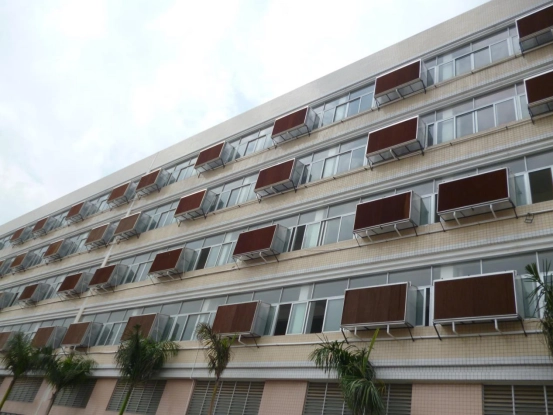
Cooling pad media receives most of the focus in an evaporative cooling system. Buyers often inquire about thickness, airflow, and water absorption. The frame is often considered a less important part.
That is a costly oversight.
A frame remains exposed to moisture for extended periods. It supports the pad, holds water distribution components in position, and must survive cleaning and vibration. Aluminum alloy and stainless steel can both perform well, but they suit different operating conditions.
What Role Does the Frame Play in an Evaporative Cooling Pad System?
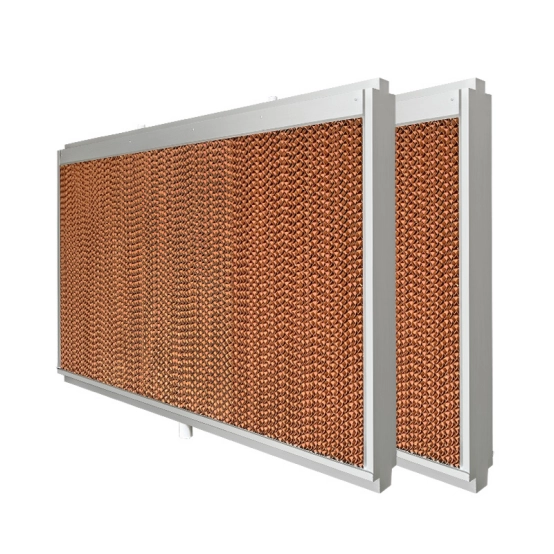
The frame holds the cooling pad flat. It creates a tight seal along the edges. If the pad begins to sag or small gaps appear, air flows around the media instead of moving through the wet surface. As a result, cooling performance decreases. This can occur even when the pad appears to be in good condition.
The frame also supports the upper water distribution channel. It holds side retainers and the drainage section in position.
What Are the Main Characteristics of Aluminum Alloy Frames?
Aluminum alloy is widely used in the industry. It offers low weight along with decent strength and solid resistance to typical wet conditions.
Lightweight and Easy to Install
Aluminum sections are easier to carry, cut, position, and support on site. This advantage is especially valuable for large cooling walls and retrofit projects.
At one workshop installation, the cooling wall had to fit behind an operating production line. Most sections could be assembled manually. A heavier frame would have required lifting equipment and a longer production shutdown.
A modular aluminum alloy frame evaporative cooling pad is particularly suitable for projects where panels must be moved through narrow service areas or installed around existing machinery.
Lower weight reduces the load on brackets and nearby structures.
Corrosion Resistance and Maintenance
Aluminum forms a protective oxide layer and performs well in many continuously wet environments. It does not require paint, and routine cleaning is usually straightforward.
However, aluminum is not completely corrosion-proof. Salt exposure, strong alkaline cleaners, acidic vapors, or contact with incompatible metals can cause pitting or galvanic attack. Coastal sites deserve closer review.
What Are the Main Characteristics of Stainless Steel Frames?
Stainless steel is However, typically specified when strength, hygiene, or corrosion resistance Take precedence over weight and initial cost.
The stainless steel grade must be specified. A 304 frame and a 316 frame may look similar when new but behave differently in chloride-rich environments.
Strength and Structural Stability
Stainless steel frame offers high mechanical strength and good resistance to impact. It suits loading areas, livestock buildings, and production spaces where equipment may strike the cooling wall.
It is also useful for tall or heavy duty installations with long unsupported spans. Reduced flexing can improve sealing performance and panel alignment.
The trade off is weight. Heavier sections increase handling effort and may require stronger supports.
Performance in Corrosive Environments
A suitable stainless steel grade performs well in high humidity areas, washdown zones, and some chemically aggressive environments. Food plants and coastal facilities are typical examples.
Stainless steel is not automatically free from corrosion issues. Chlorides can damage unsuitable stainless steel grades. Welds may need proper finishing. Contamination from carbon steel tools can produce rust staining. Good material still requires proper fabrication practices.
How Do Aluminum Alloy and Stainless Steel Frames Compare?
The main differences are easier to judge side by side.
| Comparison Factor | Aluminum Alloy Frame | Stainless Steel Frame |
| Weight | Lightweight | Heavier |
| Corrosion Resistance | Good in most wet environments | Very good, depending on grade |
| Structural Strength | Suitable for standard systems | Better for heavy duty applications |
| Installation | Easier to handle | More labor or support may be needed |
| Maintenance | Generally low | Generally low |
| Initial Cost | Usually lower | Usually higher |
| Typical Applications | Factories, greenhouses and poultry houses | Coastal, hygienic or highly corrosive sites |
There is no universal best choice. Aluminum is often the better engineering choice for standard duty systems. Stainless steel earns its cost when the environment is severe enough to justify it.
Which Frame Material Is Better for Different Applications?
The building type alone does not determine the best frame material. Water quality, cleaning chemicals, airborne contaminants, and maintenance access are equally important factors.
Factories, Warehouses and General Industrial Buildings
For ordinary factories and warehouses, aluminum alloy is usually sufficient. It remains lightweight. It resists corrosion. It adapts easily around existing openings.
Stainless steel grows more appealing near chemical processes, wet production lines, or areas exposed to frequent high pressure washing.
Greenhouses and Poultry Houses
Large cooling walls make low weight and modular installation valuable, so aluminum is widely used.
Poultry environments can be more demanding than they appear. Ammonia, dust, moisture, and disinfectants collect around the sump, lower channels, and fasteners. Those areas need closer inspection. A frame may remain clean at eye level while corrosion develops near the drainage channel.
Coastal or Highly Corrosive Environments
Salt-laden air can significantly change material selection considerations. A suitable stainless steel grade may offer better long term reliability where shutdowns are expensive.
Other surrounding components must also match the corrosion requirements. Stainless framing with low grade fasteners or poorly coated brackets only transfer the corrosion problem to other components
Which Option Has the Lower Long Term Cost?
Aluminum usually has lower costs for purchasing, transportation, and installation. In a standard project, it is often the lower cost option.
Stainless steel can become more economical in a severe environment where aluminum would need early replacement. Initial cost is easy to see; downtime, labor, and repeated panel removal are often overlooked.
A fair comparison should include installation hours, cleaning methods, corrosion exposure, replacement access, and the cost of stopping ventilation equipment. For a small cooling wall, the difference may be modest. Across a long production building, it can become significant.
What Should Buyers Check Before Choosing a Cooling Pad Frame?
Check the water source, mineral content, cleaning chemicals, humidity, salt exposure, and nearby process emissions. Confirm the wall size and whether technicians can reach the frame safely.
Fastener compatibility deserves attention. Mixed metals in a wet assembly can create galvanic corrosion, especially when drainage is poor.
Also review how pad sections are removed during maintenance. A frame may look neat on a drawing but become awkward once pipes, guards, or machinery are installed in front of it. Maintenance access should be considered during the original design.
Aluminum Alloy or Stainless Steel: Which Should You Choose?
For most factories, greenhouses, poultry houses, and commercial evaporative cooling systems, aluminum alloy offers the more balanced choice. It remains lightweight. It remains practical for standard operating conditions. It lasts under normal wet conditions.
Stainless steel is worth the added cost in coastal, hygiene sensitive, highly corrosive, or heavy duty installations. The grade must be named. “Stainless” is not enough information.
The frame should match the real environment, not the clean conditions shown on a drawing. Contact DAIHO Ventilation today to discuss your project requirements and find the cooling pad system that delivers reliable performance, durability, and energy efficiency.
FAQ
Q: Does the frame material affect cooling efficiency?
It does not affect cooling efficiency directly. Cooling efficiency depends mainly on pad condition, airflow, water distribution, and ambient humidity. A rigid and properly sealed frame stops bypass air. It helps the pad perform as intended.
Q: Is aluminum suitable for continuous wet operation?
Yes, in most normal industrial and agricultural environments. Water chemistry, drainage, cleaning products, and fastener compatibility still need checking.
Q: Is stainless steel always more corrosion resistant than aluminum?
No. Performance depends on the stainless steel grade and the type of exposure. An unsuitable grade can suffer chloride attack, particularly in coastal or saline environments.
Q: Which frame is easier to maintain?
Both can be low maintenance. Aluminum is easier to handle during pad replacement. Stainless steel may tolerate aggressive cleaning and rough service better when the correct grade and finish are used.
Q: Can aluminum and stainless steel components be used together?
They can, but direct contact in a wet environment may cause galvanic corrosion. Compatible fasteners, isolation materials, and proper drainage should be included in the design.
 English
  Russian
  Arabic
  Spanish
  French
  Italian